System Description
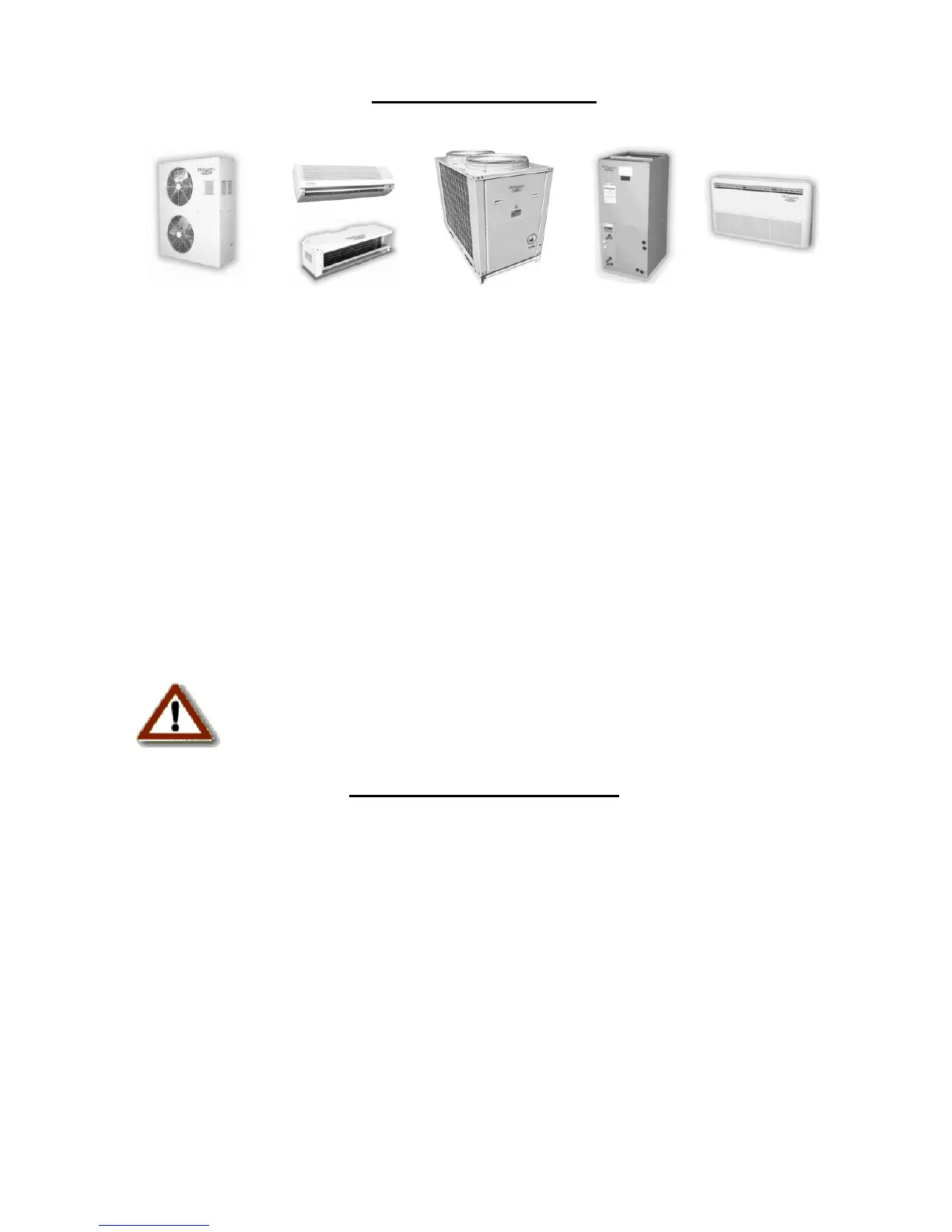
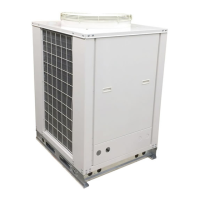
The Multiaqua Chiller is a self-contained, air-cooled condenser, coupled with an insulated,
brazed plate heat exchanger (evaporator). The system utilizes scroll compressors to circulate
refrigerant between the condenser and heat exchanger. The refrigerant is metered into the heat
exchanger with a thermostatic expansion valve. Protecting the system are high and low
pressure switches as well as a liquid solution flow switch.
Liquid solution (water and Propylene Glycol) is circulated through the heat exchanger by the
chillers integral pump. The liquid solution flows through the heat exchanger to the system's
supply piping and on into the air handlers.
A solenoid-operated, motorized valve (or circulator) controls the flow of the chilled liquid
solution through the air handlers. The valves, or circulators, can be actuated by a variety of
different control schemes.
Liquid solution temperature is controlled by a chiller-mounted digital electronic control. A
system sequence of operation, individual control description, troubleshooting information,
and a schematic are included in the controls section.
It must be recognized that ferrous pipe may cause accelerated
deterioration of the brazed plate heat exchanger and could void the heat
exchanger warranty.
Cooling Load Diversity
Equipment sizing for a chilled liquid solution system can utilize Cooling Load Diversity.
Diversity is described as the actual amount of cooling needed (heat load) by various sections
of a structure at a given time. Conventional air conditioning systems are designed for the
highest structure heat load. The conventional system determines and selects equipment based
on the peak heat load demanded by the structure. A system sized to take advantage of
diversity would determine the heat load by the time of day, building exposure, and usage. As
an example, the sections of a structure facing west demand more cooling in the afternoon than
sections facing east. The opposite of this is true in the morning where the east section is
exposed to a higher heat load requiring more cooling. Utilizing diversity, the chiller system
would adapt to the needs of each side of the structure during peak demand by delivering more
cooling to that area and less to the areas that do not need it. A structure utilizing a
conventional DX system that requires 8 tons of cooling at peak load could utilize a much
smaller capacity system (potentially 4 or 5 tons) if the system installed could take advantage
of load diversity. Load diversity would supply the necessary amount of cooling to the space
when or as needed instead of keeping a total larger capacity available at all times.
Page 4 of 28



 To Next Page