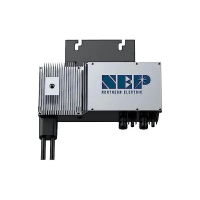
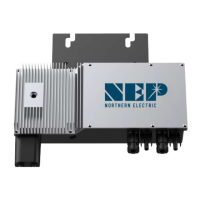
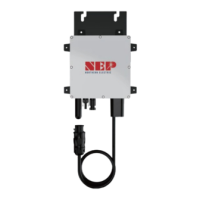
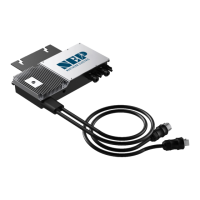
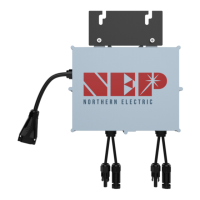
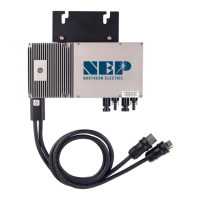
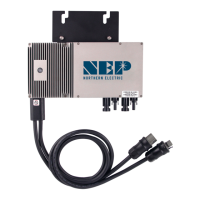
The BDM-600 is a micro inverter designed for use in photovoltaic (PV) systems, converting direct current (DC) from solar panels into alternating current (AC) for grid connection. This device is intended for both "Qualified Persons" who have the necessary skills and knowledge to install and maintain electrical equipment, and "End Users" who will operate the product.
Function Description
The BDM-600 micro inverter operates by converting the DC power generated by individual PV modules into AC power that can be fed into the public utility grid. Each micro inverter is designed to work with one or two PV modules, allowing for independent power optimization and monitoring of each module. This distributed architecture helps maximize energy harvest, especially in conditions where some modules might be shaded or perform differently. The device includes integrated surge protection to safeguard against voltage spikes, although additional external surge protection is recommended as part of any solar installation.
The BDM-600 features multiple protective functions that enable it to stop output power in case of a fault. Fault messages are communicated via power line communication (PLC) to a connected BDG-256 gateway or, for BDM-WiFi models, through a WiFi internet connection, allowing users to monitor system performance and alerts via NEPViewer software. This communication system provides detailed error codes, indicating issues such as DC over/under voltage, hardware errors, AC voltage/frequency deviations, temperature overruns, and communication errors.
The micro inverter is designed for direct grid-tie applications, meaning its AC output is intended solely for feeding power into the utility grid. Connecting it to any other AC output source or equipment is not permitted and will void warranties. The device is powered by DC power from the PV modules, and its operational status is indicated by an LED display that shows different flashing patterns and colors for standby (OK, error, no communication) and producing (standby, grounding fault, no communication) states.
Usage Features
The BDM-600 is designed for straightforward integration into PV systems. Installation involves mounting the micro inverter to the racking system, connecting the AC output cables to an AC branch circuit junction box, and then connecting the DC input cables from the PV modules. The AC output cables come with oppositely sexed connectors, allowing for easy inter-connection of multiple BDM-600 units to form a continuous AC branch circuit. For balcony solutions, a single inverter is used, and monitoring is achieved via a WiFi dongle connecting to a home router.
The system includes an integrated ground protection circuit, with grounding typically achieved through the trunk cable connected to the junction box, or optionally through the racking itself. A connection map is crucial for tracking the physical location and serial numbers of each BDM-600, which are then entered into the BDG-256 gateway to create a virtual array for monitoring.
Commissioning the system involves a sequence of steps: turning on AC disconnects or circuit breakers for each BDM-600 branch circuit, then turning on the main utility-grid AC circuit breaker. The system will begin producing power and sending performance data to the gateway after a brief waiting period. The LED display provides immediate visual feedback on the inverter's operational status, helping users quickly identify if the unit is functioning correctly, in an error state, or experiencing communication issues.
Maintenance Features
Maintenance of the BDM-600 primarily focuses on ensuring safe operation and proper functioning. The manual emphasizes that the product contains no user-serviceable parts, and any attempts to repair it should be avoided. In case of persistent troubleshooting issues, the device should be returned to the distributor for maintenance.
Regular checks include verifying the utility grid connection, ensuring AC and DC voltages and frequencies are within allowable ranges, and inspecting all AC and DC wiring for damage or improper connections. The integrity of the AC branch circuit interconnection harness between all BDM-600 units should also be checked. For DC connections, it is critical to ensure that PV module DC voltage is within the specified range.
Troubleshooting guidance includes checking PLC signal quality, which can be affected by distance from the gateway or interference from other electronic devices. Moving the gateway or installing a signal filter (LCF) can improve communication.
For safety during maintenance or disconnection, strict procedures must be followed by "Qualified Persons." This includes always disconnecting AC power first by opening the branch circuit breaker, then disconnecting the first AC connector in the branch circuit. PV modules should be covered with an opaque cover to prevent DC power generation. Before disconnecting DC wires, it is essential to verify that no current is flowing using a DC current probe. Disassembly tools should be used for PV connectors, and cables should never be pulled directly. After disconnection, suitable measuring devices must be used to ensure no voltage remains at the DC or AC inputs.
Cleaning the product should be done using a wet cloth with clear water, as aggressive chemicals or cleaning agents can damage the components. Proper disposal of the inverter, when it is no longer needed, must follow local regulations for electronic waste, and it should not be disposed of with normal household garbage. The original packaging or suitable packaging should be used if the inverter needs to be stored or shipped.


 To Next Page
 General