Exposure
compensation
In
TTL or non-TTL automatic operation with a dark sub-
ject (one with low reflectivity) or one light
in
tone (having
high-reflectivity), over- or underexposure may occur.
To
prevent
t-his,
exposure compensation is required.
Note:
If
you photograph a subject
of
very high reflectivity. such as when
shooting directly into
a mirror
or
metallic surface. underexposure
is
~
certain to occur. In this case. take the picture on manual.
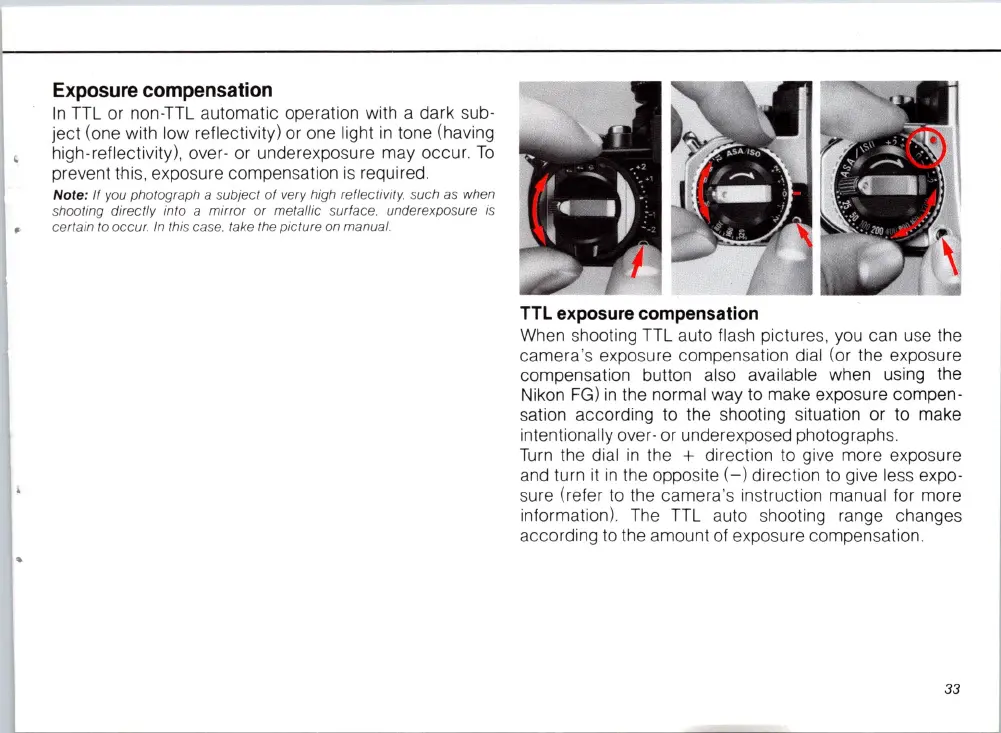
TTL exposure compensation
When shooting TTL auto flash pictures, you can use the
camera
's
exposure compensation dial (or the exposure
compensation button also available when using the
Nikon
FG)
in
the normal way to make exposure compen-
sation according
to
the shooting situation or to make
intentionally over- or underexposed photographs.
Turn
the dial
in
the + direction
to
give more exposure
and turn
it
in
the opposite
(-)
direction
to
give less expo-
sure (refer
to
the camera
's
instruction manual for more
information
).
The
TTL auto shoot
ing
range changes
according
to
the amount of exposure compensation.
33





 To Next Page