EasyManua.ls Logo

Nikon SC - User Manual

Nikon SC
16 pages
Print Icon
To Next Page IconTo Next Page
Loading...
Nikon
MICROSCOPE
MODEL
SC
Instructions
NIPPON
KOGAKU
K.K.
Question and Answer IconNeed help?

Do you have a question about the Nikon SC and is the answer not in the manual?

Summary

Handling Precautions

Lock Screw and Component Handling

Remove lock screw; handle gently to avoid knocks.

Lamp Bulb and Fuse Replacement

Turn off power and unplug before replacing bulb or fuse.

Usage Environment and Lens Care

Avoid dusty, high temp, moisture; keep lenses clean.

Accessory Compatibility

Use only SC type objectives and eyepieces.

Care and Maintenance

Cleaning Procedures

Use brush for dust, alcohol for grease; avoid solvents on paint.

Storage and Servicing

Cover when not in use; periodic checks recommended.

Microscope Nomenclature and Function

Key Microscope Components

Identifies main parts like eyepiece, nosepiece, stage, and focus knobs.

Microscope Assembly

Eyepiece Tube and Eyepiece Attachment

Securing the eyepiece tube and inserting eyepieces.

Stage and Objective Mounting

Installing the mechanical stage and objectives.

Condenser and Lamp Bulb Installation

Attaching the condenser and replacing lamp bulbs.

Microscope Observation

Specimen Setup and Illumination

Placing specimen, adjusting light source and brightness.

Focusing and Eyepiece Adjustment

Aligning eyepieces and using focus knobs.

Objective Handling and Working Distance

Using objectives, understanding working distance.

Condenser Control and Oil Immersion

Adjusting condenser, diaphragm, and oil-immersion technique.

Optical Features and Terms

Key Optical Definitions

Explains magnification, N.A., resolving power, working distance, etc.

Troubleshooting Guide

Optical System Issues

Diagnosing and fixing problems with the optics.

Manipulation System Issues

Resolving problems with stage and focus controls.

Electrical System Issues

Troubleshooting lamp, fuse, and power problems.

Electric Specifications

Summary

Handling Precautions

Lock Screw and Component Handling

Remove lock screw; handle gently to avoid knocks.

Lamp Bulb and Fuse Replacement

Turn off power and unplug before replacing bulb or fuse.

Usage Environment and Lens Care

Avoid dusty, high temp, moisture; keep lenses clean.

Accessory Compatibility

Use only SC type objectives and eyepieces.

Care and Maintenance

Cleaning Procedures

Use brush for dust, alcohol for grease; avoid solvents on paint.

Storage and Servicing

Cover when not in use; periodic checks recommended.

Microscope Nomenclature and Function

Key Microscope Components

Identifies main parts like eyepiece, nosepiece, stage, and focus knobs.

Microscope Assembly

Eyepiece Tube and Eyepiece Attachment

Securing the eyepiece tube and inserting eyepieces.

Stage and Objective Mounting

Installing the mechanical stage and objectives.

Condenser and Lamp Bulb Installation

Attaching the condenser and replacing lamp bulbs.

Microscope Observation

Specimen Setup and Illumination

Placing specimen, adjusting light source and brightness.

Focusing and Eyepiece Adjustment

Aligning eyepieces and using focus knobs.

Objective Handling and Working Distance

Using objectives, understanding working distance.

Condenser Control and Oil Immersion

Adjusting condenser, diaphragm, and oil-immersion technique.

Optical Features and Terms

Key Optical Definitions

Explains magnification, N.A., resolving power, working distance, etc.

Troubleshooting Guide

Optical System Issues

Diagnosing and fixing problems with the optics.

Manipulation System Issues

Resolving problems with stage and focus controls.

Electrical System Issues

Troubleshooting lamp, fuse, and power problems.

Electric Specifications

Overview

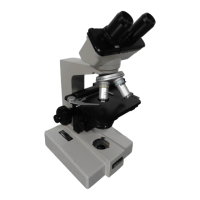
The Nikon Microscope Model SC is a versatile instrument designed for various observational purposes, offering both binocular and monocular eyepiece tube types. This manual primarily covers the binocular type, with most instructions applicable to the monocular version as well.

Function Description:

The microscope allows for detailed observation of specimens through a combination of objectives and eyepieces, providing adjustable magnification and illumination. Key components include:

  • Binocular/Monocular Eyepiece Tube: For viewing the specimen. The binocular type features an eyepiece sleeve for interpupillary distance adjustment and a diopter ring for eyesight adjustment. The eyepiece tube clamp screw allows for rotation of the tube.
  • Revolving Nosepiece: Holds up to four objectives, allowing for quick changes in magnification.
  • SC Objectives: Specific to the SC model, these objectives provide various magnifications (4XSC, 10XSC, 40XSC, 100XSC) and working distances. The 40X and 100X objectives are equipped with a safety device to prevent damage to the specimen.
  • Stage: A platform for placing specimens. It can be a mechanical stage with X and Y-axis travel knobs (range: 38 x 76mm) or a simpler stage with clips for holding slides. A slide holder is also present.
  • Condenser: Located beneath the stage, it focuses light onto the specimen. It includes a diaphragm control ring for adjusting the numerical aperture and a condenser focus knob for vertical movement. A condenser clamp screw secures it in place.
  • Illumination System: Features a lamp bulb (30W for base-built, 10W/12W for simplified illuminator) and a power switch with a brightness control dial. Filters (33mm or 45mm diameter) can be used with the filter holder/receptacle.
  • Focus Knobs:
    • Coarse Focus Knob: Moves the stage approximately 24mm per rotation, used for initial focusing and with the 4X objective.
    • Fine Focus Knob: Moves the stage approximately 0.2mm per rotation, used for precise focusing with 10X or higher power objectives. It has a range of 2.2mm and a white line to indicate the center of its focusing range.
  • Arm and Microscope Base: Provide structural support for the instrument.

Important Technical Specifications:

  • Power Source: Available in 100V, 115/120V, and 220/240V configurations.
  • Light Source:
    • Tungsten lamp bulb (built in the base): 100V-30W, 115/120V-30W, 220/240V-30W.
    • Lamp bulb (in the simplified illuminator): 100/120V-10W, 220/240V-12W.
  • Fuse: 1A/250V.
  • Optical Features (with Eyepiece 10xSC, field number 18):
    • 4XSC Objective: Total Magnification 40x, Numerical Aperture (N.A.) 0.1, Real Viewfield 4.5 mm, Depth of Focus 63.2 µm, Resolving Power 2.8 µm, Working Distance (W.D.) 28 mm.
    • 10XSC Objective: Total Magnification 100x, N.A. 0.25, Real Viewfield 1.8 mm, Depth of Focus 10.1 µm, Resolving Power 1.1 µm, W.D. 8 mm.
    • 40XSC Objective: Total Magnification 400x, N.A. 0.65, Real Viewfield 0.45 mm, Depth of Focus 0.97 µm, Resolving Power 0.42 µm, W.D. 0.73 mm.
    • 100XSC Objective: Total Magnification 1000x, N.A. 1.25, Real Viewfield 0.18 mm, Depth of Focus 0.33 µm, Resolving Power 0.22 µm, W.D. 0.16 mm.
  • Mechanical Tube Length: Length from the objective's attaching surface on the nosepiece to the top end of the sleeve where the eyepiece is inserted.
  • Stage Travel Range: X-axis: 76mm (2.99 in), Y-axis: 38mm (1.5 in).
  • Condenser Diaphragm Opening: Adjustable from 2.2mm to 30mm diameter.

Usage Features:

  • Assembly: Involves attaching the eyepiece tube, eyepieces, mechanical stage, objectives, condenser, and lamp bulb. A red-colored lock screw must be removed before handling. Specific tools (A, B, C) are available on order for tightening components.
  • Specimen Setting: Place the specimen on the stage, securing it with the slide holder or stage clips.
  • Illumination Adjustment: Insert the power cord, raise the condenser, fully open the diaphragm, and use the power switch/brightness control dial to light the lamp. Brightness increases by turning the dial towards the thicker end of the arrow.
  • Focusing:
    • Coarse Focusing: Use the coarse focus knob for initial focus and with the 4X objective.
    • Fine Focusing: Use the fine focus knob for precise focus with 10X or higher objectives. The white line on the fine focus knob should be aligned with the end of the coarse focus knob for optimal range.
  • Interpupillary Distance Adjustment (Binocular): Adjust the eyepiece sleeves until both viewfields merge into one.
  • Eyesight Difference Adjustment (Binocular): First, focus with the right eyepiece using the 10X objective and focus knobs. Then, view through the left eyepiece and turn the diopter ring to achieve sharp focus without touching the focus knobs. The diopter ring has a "0" index.
  • Condenser Adjustment: For general use, raise the condenser to its upper limit. For non-stained specimens, lowering the condenser can improve contrast more effectively than closing the diaphragm.
  • Condenser Diaphragm: Adjusts the numerical aperture, not brightness. It should be stopped down to 70-80% of the objective's N.A. for appropriate image contrast.
  • Oil-Immersion Observation (100X Objective): Apply Nikon immersion oil between the coverglass and the objective's front lens. If air bubbles appear, remove them with lens tissue or apply more oil. For higher resolving power, oil can also be applied between the glass slide and the condenser top lens.
  • Safety Features: The 40X and 100X objectives have a safety device to prevent pressing on the specimen due to their small working distances.

Maintenance Features:

  • Cleaning Lenses: Remove dust with a soft hair brush or gauze. For finger marks or grease, use a soft cotton cloth, lens tissue, or gauze lightly moistened with absolute alcohol (ethanol or methanol). For objectives and immersion oil, use xylene. Always handle alcohol and xylene with caution.
  • Cleaning Painted Surfaces: Avoid organic solvents (thinner, xylene, ether, alcohol) as they can damage painted and plastic parts.
  • No Dismantling: Never attempt to dismantle the instrument to avoid impairing efficiency and accuracy.
  • Storage: When not in use, cover the microscope with the accessory vinyl cover or store it in its case (available on order) in a place free from moisture and fungus.
  • Periodical Checking: Recommended to maintain performance. Contact dealers for details.
  • Exchanging Lamp Bulb and Fuse: Always turn the power switch to OFF and unplug the power cord before replacement. Use a cloth or gloves when handling the lamp bulb to avoid finger marks. Use the specified Nikon bulb and a 1A/250V fuse.

Nikon SC Specifications

General IconGeneral
BrandNikon
ModelSC
CategoryMicroscope
LanguageEnglish

Related product manuals