Need help?
Do you have a question about the Novatel AG-Star and is the answer not in the manual?
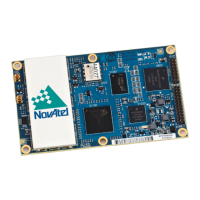
Details the various AG-Star models and their key features, including receiver capabilities and communication ports.
Outlines the content covered by the user manual, focusing on installation and operation.
Explains the symbols, formatting, and conventions used throughout the AG-Star User Manual for clarity.
Lists necessary external components for setting up the AG-Star GNSS receiver system.
Provides step-by-step instructions for connecting and powering the AG-Star receiver.
Covers guidelines for securely mounting the AG-Star receiver in various environments for optimal performance.
Explains the meaning of AG-Star's LED indicators and provides troubleshooting tips for status issues.
Describes how to establish and manage communication with the AG-Star receiver via serial ports.
Details using a computer and software like NovAtel Connect for interacting with the AG-Star receiver.
Explains how the AG-Star can transmit or receive DGPS corrections for improved position accuracy.
Provides specific commands for configuring the AG-Star as a DGPS base station.
Describes the optional GLIDE positioning algorithm for enhanced accuracy in dynamic applications.
Explains how to configure the Emulated Radar (ER) output for vehicle speed sensing applications.
Introduces Bluetooth wireless communication for the AG-Star receiver, utilizing the COM2 port.
Step-by-step guide for pairing an AG-Star receiver with a computer via Bluetooth.
Instructions on how to find the assigned COM port for the AG-Star's Bluetooth connection.
Information on obtaining and applying firmware updates and model upgrades for the AG-Star receiver.
Detailed instructions for using the WinLoad utility to update or upgrade AG-Star firmware.
Alternative method for updating AG-Star firmware using SoftLoad commands and S-Records.
Details key performance specifications like channel configuration, position accuracy, and data rates.
Covers electrical, physical, environmental, and regulatory specifications for the AG-Star.
Describes the specifications and pinouts of the AG-Star communication and power cable.
Explains the rules and formatting for entering commands to the AG-Star receiver.
Details the COM command for configuring serial port settings on the AG-Star.
Explains how to use the LOG command to request and retrieve data logs from the AG-Star.
Describes the RADARCFG command for configuring the Emulated Radar output parameters.
Lists and describes the available position logs, including NMEA and NovAtel formats.
Specific information on configuring and outputting NMEA position logs like GPGGA.
Covers other log types generated by the AG-Star, such as RADARSIGNAL and VERSION.
Details the RADARSIGNAL log, which provides Emulated Radar and position data.
Lists available replacement parts for the AG-Star receiver and related accessories.
Lists the reference user manuals for the AG-Star and OEMStar systems.

 To Next Page
 General