EN
EN
12 ROYL
™
instructions 13ROYL
™
instructions
Using Vehicle Belts
Vehicle belt type is based on mode, as specified
below:
Lap/Shoulder Belt (A)
Harness mode
(forward facing)
Booster Mode
Lap Belt Only (B)
Harness mode
(forward facing)
Belts MUST be able to be locked. Refer to your
vehicle owner’s manual to determine if the belts
in your vehicle lock by: A) switching the seat belt’s
retractor by pulling the belt all the way out, or
B) a locking latch plate that locks the vehicle’s
seat belts so they will not move freely.
If the belt cannot be locked using one of these
methods, contact Nuna Customer Service for
a locking clip.
Tether
The child restraint’s tether strap must ALWAYS
be used in Harness mode (forward facing) as it
provides a more secure installation and is proven
to be safer. In a crash, the tether limits a child’s
forward movement, protecting their head and
neck and reducing the risk of injury.
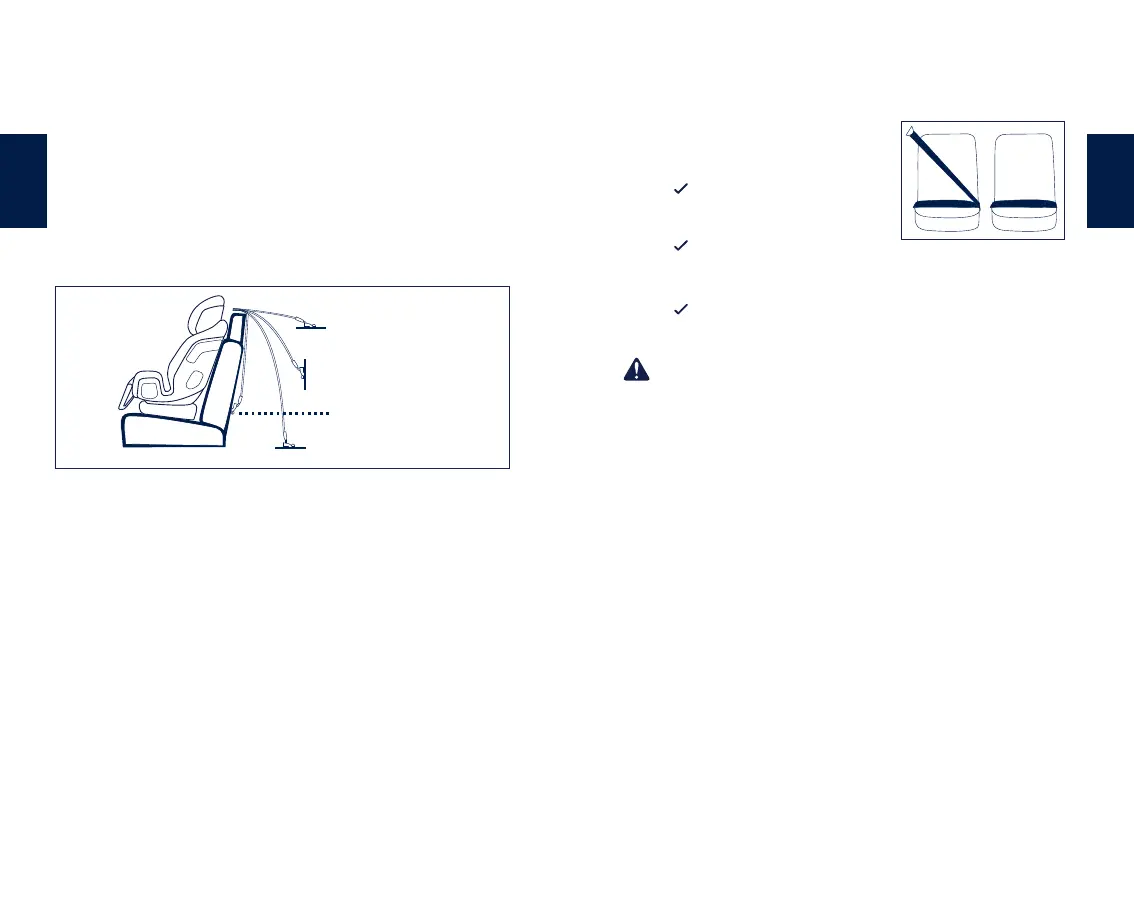
Common tether locations (consult your vehicle
manual):
UAS in Booster mode (without built-in
harness)
Non-standard spacing of the lower anchors is
allowed in booster mode ONLY IF the vehicle
manufacturer allows it; consult your vehicle
owner’s manual.
An example of non-standard spacing is installing
the booster in the center seating position of your
vehicle where there are no lower anchors and
using the closest lower anchors from the outboard
positions instead.
When using non-standard spacing, lower anchors
MUST NOT interfere with the vehicle seat belt.
Rear Shelf
Back Wall
Back of Seat
Vehicle Floor
A
B


 To Next Page