OFITE, 11302 Steeplecrest Dr., Houston, TX 77065 USA / Tel: 832-320-7300 / Fax: 713-880-9886 / www.ote.com 2
Introduction
When there is relative motion between two contacting bodies, frictional forces
that resist motion always come into play. Frictional resistance to rotation of
the drill string is called torque, and is especially enhanced when drilling a
deviated hole. Serious casing wear occurs in deep and ultra-deep wells. The
main inuential factor of casing wear is rotation of the drill pipe, horizontal
drilling, and tripping in and out of the hole. Many materials, such as Graphite,
Fine Mica, and Diesel or Crude Oil, have been used to improve lubricity.
Since evaluation of the various materials cannot realistically be done on the
drill string, a lubricity test was designed to simulate the speed of rotation of
the drill pipe and the pressure with which the pipe bears against the wall of
the bore hole. The OFITE combination EP (Extreme Pressure) and Lubricity
Tester is a high-quality instrument used to measure the lubricating quality
of drilling uids, provide data to evaluate the type and quantity of lubricating
additives that may be required, and predict wear rates of mechanical parts in
known uid systems.
Inch – Pounds
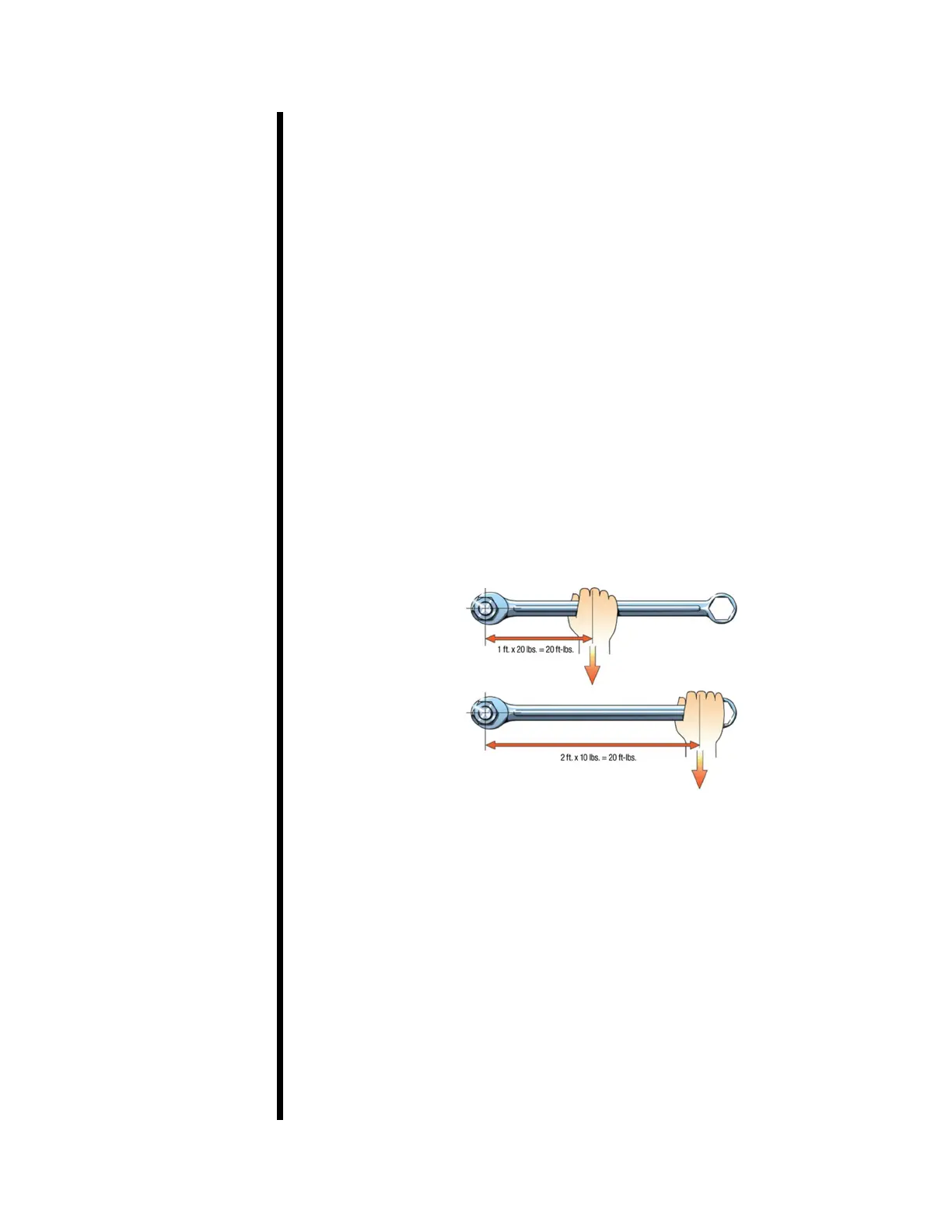
Torque is dened as the measure of force applied to produce rotational
motion (usually measured in foot-pounds). Torque is determined by
multiplying the applied force by the distance from the pivot point to the point
where the force is applied. Inch-pounds × 0.0833 = Foot-pounds
Torque is measured in units of distance multiplied by force. A force of ten lb
acting through a distance of two feet produces exactly the same torque (20
ft-lb) as a force of twenty lb acting through a distance of one foot.


 To Next Page