OFITE, 11302 Steeplecrest Dr., Houston, TX 77065 USA / Tel: 832-320-7300 / Fax: 713-880-9886 / www.ote.com 6
Safety
The safe operation of the EP-Lubricity Tester requires that the technician be
thoroughly familiar with the proper operating procedures and the potential
hazards that are associated with operating the instrument. Therefore it is
important to read the instructions and store the instructions in a place known
to all laboratory personnel for frequent consultation.
Mechanical
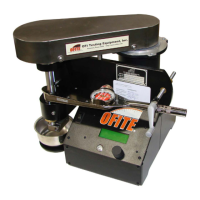
The large silver colored belt guard protects the V-belt drive which is
connected to the main shaft assembly. Be very careful to keep hands, loose
clothing, and other objects away from all rotating parts and away from the
shielded belt guard. Do not put hands, ngers, or clothing in or near the
sample cup and test block while the machine is running.
Temperature
The test ring and test block will become hot due to friction generated during
the test. This is especially true when performing the Extreme Pressure (EP)
test. The test uid, stainless steel cup, and the ring and block can cause
severe burns if handled immediately after a test.
Clothing and Protective Gear
Wearing loose clothing should be avoided when operating equipment that
can potentially snag a loose cuff, collar, or tie. Always wear a lab coat when
performing tests and always wear protective eye glasses. Know in advance
where the eye-wash station is and the nearest exit from the laboratory and
the building in case of a re.
Electrical
This instrument is powered by 115 or 230 Volts AC. The motor is ½ HP. 90
Volts DC, and as with all electrical components there is a potential for danger.
Understanding safe test procedures while practicing a degree of common
sense when around electricity is vitally important.
The control panel contains electronic control components. The front panel
should never be opened to make repairs. Only a qualied OFITE technician
or an OFITE representative should perform repairs on these parts.
As with all electrical assemblies, make sure the machine is unplugged when
cleaning and/or moving it. Do not allow the LED panel to get wet. If test uid
or water is spilled on it be sure to wipe it clean immediately with a cloth.
Excessive water on the panel could cause the electrical components on the
underside of the panel to short out causing an electrical shock hazard.
At the end of the day ALL power cords should be unplugged from the wall
outlets, unless a test must be extended overnight.


 To Next Page