
 Need help?
Do you have a question about the Olivetti MF254 and is the answer not in the manual?
This document outlines the procedure for replacing the Main Function Panel Board (MFPB) in Olivetti MF254, MF304, and MF364 models. It serves as a comprehensive guide for technicians, aiming to ensure correct replacement and minimize issues that might arise from unclear information in the standard service manual. The procedure covers the entire process from initial board removal to post-recovery checks, addressing critical steps and potential pitfalls.
The MFPB is a central component responsible for the overall functionality of the multifunction printer. It integrates various sub-components such as the eMMC (embedded MultiMediaCard), EEPROMs (Electrically Erasable Programmable Read-Only Memory), and RAM (Random Access Memory) module, which are crucial for the device's operation, firmware storage, and data processing. Replacing the MFPB involves transferring these essential components from the old board to the new one, followed by a firmware update and system configuration to ensure the device operates correctly. The process is designed to restore the machine's full functionality after a board failure, ensuring that all features, from printing and scanning to network connectivity, are operational.
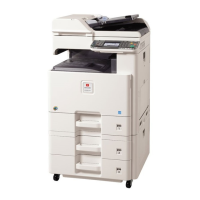
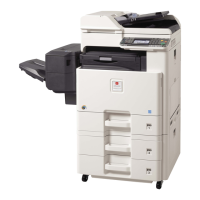
The procedure is specifically tailored for Olivetti models MF254, MF304, and MF364. These models are part of a newer generation, succeeding models like C364e, C284e, and C224e. While they share common functionality with their predecessors, their internal electrical board structure is significantly different, necessitating a specific replacement protocol. The MFPB replacement requires careful handling of sensitive electronic components, including the eMMC, two EEPROMs, and the RAM module. The correct positioning and orientation of the EEPROMs are critical for the board's functionality. Firmware updates are performed using a USB memory stick, which must contain the "FW0002" folder saved directly in its root directory. The firmware update process involves specific user inputs on the control panel, including selecting the correct "Machine Type" and "Type" values based on the first four digits of the machine's serial number. For example, a serial number starting with "A7PU" corresponds to Machine Type 6 and Type 1, while "A7PY" corresponds to Machine Type 6 and Type 2, and "A7R0" corresponds to Machine Type 6 and Type D. These specific inputs ensure that the correct firmware and configuration are applied to the device.
The MFPB replacement procedure is a critical maintenance task that directly impacts the usability of the multifunction printer. A properly replaced MFPB ensures that all user-facing features, such as printing, scanning, copying, and faxing, function as intended. The process involves several user interactions with the control panel, particularly during the firmware update and post-recovery configuration. Users are guided to press and hold the "Stop" button during power-on to initiate the firmware update mode, wait for specific on-screen prompts, and input machine-specific values. The procedure also addresses potential fault codes that may appear after the replacement, such as C-FA14 or C-D390, and provides steps to resolve them through the service mode. This includes performing a "Logical Format" of the HDD and, if necessary, recovering data. The post-recovery checks ensure that critical settings like "Marketing Area," "Document Feeder," "Date & Time," "HDD setting," "Administrator Password," "Software Switch Settings," and "Network settings" are correctly configured, thereby restoring the machine to its optimal operational state for end-users.
The document itself serves as a key maintenance feature, providing a structured and detailed guide for technicians. It emphasizes the importance of careful handling of components, such as marking EEPROMs before removal to ensure correct re-installation. The procedure highlights the necessity of transferring original components (eMMC, EEPROMs, RAM module, and HDD) to the new board, underscoring the fact that these components contain critical machine-specific data and configurations. The firmware update process is a crucial maintenance step, ensuring that the new MFPB is loaded with the correct software for the specific machine model. The document also anticipates common issues, such as the appearance of fault codes (e.g., C-FA14 instead of C-D390), and provides explicit instructions for troubleshooting these problems within the service mode. The "Required check after recovery" section is a comprehensive checklist designed to ensure that all critical settings are verified and corrected after the board replacement, preventing potential operational issues. This includes verifying marketing area settings, document feeder configuration, date and time, HDD settings, administrator passwords, software switch settings, and network configurations. By detailing these steps, the document aims to streamline the maintenance process, reduce diagnostic time, and ensure a successful repair, ultimately extending the lifespan and reliability of the Olivetti multifunction printers.
 General
| Brand | Olivetti |
|---|---|
| Model | MF254 |
| Category | All in One Printer |
| Language | English |




 To Next Page