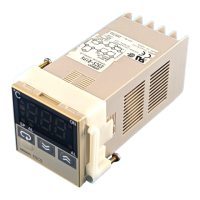
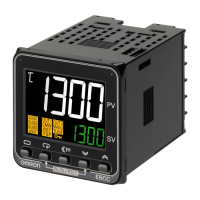
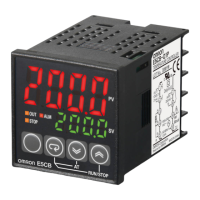
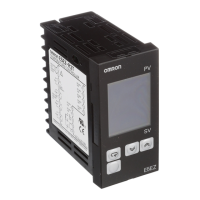
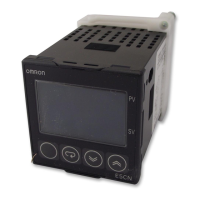
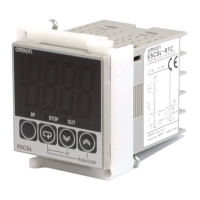
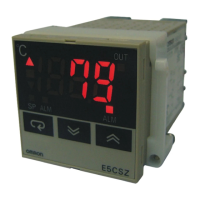
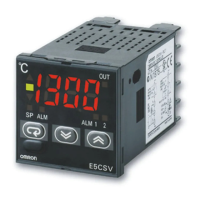
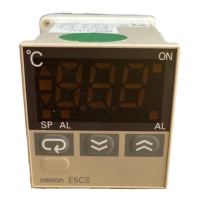
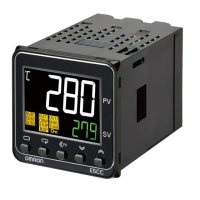
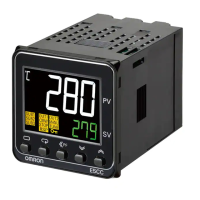
OMRON E5CSL/E5CWL Temperature Controllers
The OMRON E5CSL and E5CWL are simple and new temperature controllers designed to facilitate easy temperature control in various applications. These controllers offer a straightforward approach to managing temperature, making them suitable for users who require reliable and user-friendly temperature regulation.
Function Description
At its core, the E5CSL/E5CWL functions as a temperature controller, capable of receiving sensor inputs and providing control outputs to maintain a desired temperature. The device supports both thermocouple and platinum resistance thermometer (Pt100) inputs, offering flexibility in sensor selection to match different application requirements. The E5CSL is a single-display model, while the E5CWL features a dual display, allowing for simultaneous viewing of the process value (PV) and set point (SP).
The control output can be either a relay output or a voltage output for driving a Solid State Relay (SSR). This dual output option provides adaptability for various heating or cooling elements. The controllers support ON/OFF control and 2-PID control with auto-tuning, enabling precise and stable temperature regulation. Auto-tuning simplifies the setup process by automatically determining the optimal PID parameters for the specific system.
Alarm functions are integrated into the controllers, with the E5CWL model specifically including an alarm relay output. A variety of alarm types are available, including deviation upper/lower limit, deviation upper limit, deviation lower limit, deviation upper/lower range, and absolute value upper/lower limit. These alarms can be configured with or without a standby sequence. The standby sequence feature is particularly useful as it blocks the alarm until a safe-state is reached, preventing unwanted alarms during start-up or when the set point or temperature input offset is changed.
The controllers feature a 4-digit display for clear indication of temperature values and parameters. The character height is designed for easy readability, with the E5CSL offering a 21.7 mm height and the E5CWL providing a 16.2 mm height for the PV. Digital setting is performed using front panel keys, allowing for intuitive adjustment of parameters. Individual indicators are also present to show the status of control output, alarm, and operation.
Usage Features
The E5CSL/E5CWL is designed for ease of use, even for those new to temperature control. Its simplified parameter setup means fewer adjustments are needed to get the controller operational. The compact design, with a depth of only 60 mm beyond the front panel, makes it suitable for installation in control panels where space is limited.
The front panel keys provide direct access to settings and modes. The "Level Key" changes the setting level, while the "Mode Key" changes the parameter within the setting level. Dedicated "Up" and "Down" keys allow for easy adjustment of numerical settings. Special key combinations enable access to the Protect Level for advanced configurations and initiation of auto-tuning or operation start/stop.
The controllers are compatible with a range of thermocouple types (K, J, T, R, S) and platinum resistance thermometers (Pt100), making them versatile for different temperature sensing applications. The sampling period of 250 ms ensures a relatively fast response to temperature changes, contributing to stable control.
For mounting, the E5CSL/E5CWL can be individually mounted to a panel or group-mounted. The panel cutout dimensions are standard for 1/16 DIN devices (45x45 mm). An adapter (Y92F-45) is available for situations where the front panel has already been prepared for an E5B model. A terminal cover (E53-COV19) and a front panel (E53-COV20) are available as accessories, enhancing safety and aesthetics.
The device's display provides clear feedback on the process value, set point, and deviation. Deviation indicators show whether the process value is significantly higher, lower, or within a specified range of the set point, with flashing during auto-tuning. The alarm indicator lights up when an alarm condition is met, and the output indicator shows when the control output is active. A stop indicator is also present to show when operation is halted.
Maintenance Features
The E5CSL/E5CWL is built with durability in mind, featuring a non-volatile memory that can withstand 100,000 writes, ensuring the retention of settings even after power loss. The degree of protection for the front panel is IP50, and for the rear case, it is IP20, offering a reasonable level of protection against dust and minor ingress.
For wiring, the manual specifies the use of M3.5 crimped terminals and provides guidelines for wire gauge and stripping length, ensuring proper and secure connections. It also emphasizes the importance of separating input leads from power lines to prevent external noise interference, which is crucial for maintaining measurement accuracy and stable control.
The controllers are designed for indoor use and should be operated within specified temperature and humidity ranges. If installed in a control board, adequate ventilation or forced cooling might be necessary to keep the ambient temperature below 55°C, which helps extend the service life of internal electronic components. The manual advises against blocking ventilation holes and recommends maintaining space around the product for heat dissipation.
Regular checks of measurement accuracy are recommended, and if low accuracy is observed, users should verify if the input shift has been set correctly. The device is designed to be horizontally level for optimal performance.
In terms of safety, the manual provides clear warnings against touching terminals while power is supplied, disassembling or modifying the product, and using it in flammable or explosive gas environments. It also highlights the importance of tightening terminal screws to the specified torque to prevent fire hazards. Users are advised to set parameters suitable for the controlled system to avoid unexpected operations and potential property damage. In critical applications, installing a separate monitoring device is recommended as a safety measure against controller malfunction.
The product's design also considers the 2-second delay for outputs to turn ON after power ON, which should be factored into system design. The output may turn OFF when shifting to certain levels, a point to consider during control implementation.

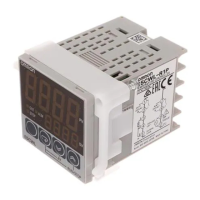

 To Next Page


 General