This document describes an Outdoor Wireless Bridge, providing details on its installation, configuration, and operation.
Function Description
The Outdoor Wireless Bridge is designed to provide wireless network connectivity over long distances, acting as either an Access Point (AP) or a Client (CPE). It supports various working modes, including Router, Universal Repeater, WISP, AP, and Repeater, making it versatile for different network setups. The device facilitates data transmission and can be powered via Power over Ethernet (PoE) or a DC 12V power supply. It features a digital display for pairing numbers and a reset button for switching numbers or restoring factory settings. The bridge is suitable for extending wired networks wirelessly, connecting to modems for Internet access, or establishing one-to-one wireless links between two CPEs.
Important Technical Specifications
Power Supply:
- PoE Power Module: The PoE port connects to the WAN port of the outdoor CPE via a network cable. The power supply needs to match the voltage and current supported by the CPE.
- CPE300 Model: Supports 24V 0.5A/1A.
- CPE300P Model: Supports 48V 0.45A/0.6A.
- DC-12V: 12V DC power interface.
Ports and Indicators:
- LED: Displays the pairing number and indicates wireless bridge status.
- PoE/WAN Port: Transmits data and connects to the wired external network. Also provides PoE power supply.
- RST (Reset) Button: Short press to switch digital display numbers. Long press for 20 seconds to restore factory settings.
- DC Port: Wireless bridge power supply, offering a choice between PoE or DC power supply.
- ON-OFF Switch: Switches working mode; ON is client mode, OFF is AP mode.
Wireless Specifications:
- Network Mode: 11b/g/n.
- Channel Bandwidth: 40MHz.
- Transmit Power: 23.
- Max. Number of Clients: 48 (Range: 1 to 128).
- Security Mode: None (configurable).
- SSID: Default is "123Smart-Cpe" (configurable).
- Country/Region: China (configurable).
Network Settings:
- IP Address Type: Static IP Address (default for AP mode: 192.168.6.1).
- Subnet Mask: 255.255.255.0.
- Default Gateway: 0.0.0.0.
- Primary DNS Server: 0.0.0.0.
- Secondary DNS: 0.0.0.0.
- Device Name: Smart-Cpe (configurable).
- LAN Port Rate: WAN port and LAN port support 10M/100M full-duplex and half-duplex rates, with auto-negotiation by default.
Advanced Wireless Settings:
- WMM (Wireless Multimedia): A QoS protocol ensuring high-priority packets have send rights for better service quality in wireless networks. Recommended to keep it on.
- APSD (Automatic Power Save Delivery): WMM power saving certification protocol. Enabling APSD with WMM reduces bridge power consumption. Disabled by default.
- Wireless Preamble: Group of bits at the beginning of a data packet for receiver synchronization. Default is long preamble for compatibility; short preamble can improve network synchronization.
- Signal Receiving Ability: Adjustable setting to control the bridge's signal reception. Higher levels increase signal scanning capability.
- Beacon Interval: Time interval for sending Beacon frames. Smaller intervals lead to faster client access; larger intervals improve data transmission efficiency.
- Fragment Threshold: Divides large frames into smaller fragments for re-transmission efficiency, especially in high bit error rate environments. Lowering it can improve throughput in such conditions; increasing it in non-interference environments can reduce frame confirmations.
Usage Features
Installation Flow:
- Hardware connection.
- Computer setup.
- Login to management interface.
- CPE setup.
- Wireless test.
- Setup installation.
Hardware Installation:
- Way 1 (PoE Adapter): Connect the PoE adapter's WAN port to a PC, router, or switch. Connect the PoE adapter to the CPE using a shielded network cable (Category 5 or above) with a ground wire.
- Way 2 (Direct Connection): Place the CPE in the desired wall position, adjusting its orientation. Connect the WAN of the PoE adapter to a PC, router, or switch.
Digital Display Bridge:
- Default digital display is 0.
- Short press the Reset button to switch the digital display.
- Default switch is AP mode (right). Slide the switch to the right to save the digital display number.
- For pairing, set one device to AP mode (right) and the other to client mode (left). Devices will pair automatically.
- After successful pairing, the AP mode device (right) will have IP 192.168.6.1, and the client mode device (left) will receive an IP from the AP.
Login to CPE System:
- Default IP address: 192.168.6.1.
- Account/password: admin/admin.
- Login interface supports switching between Chinese and English.
Working Modes:
- Router Mode: Connects the WAN port to a modem (ADSL or fiber optic) for dial-up Internet access, or uses dynamic/static IP for Internet access.
- Relay Mode (One-to-One): Wireless CPEs at both ends communicate only with each other. MAC addresses can be added by scanning available networks. Encryption methods must be consistent.
- Other modes include Universal Repeater, WISP, AP, and Repeater.
Equipment Operation Interface:
- Equipment Status: The home page displays current system status (IP address, working mode, connection status, channel, throughput, terminal information).
- Wireless Settings (Basic): Modify country code, channel, SSID, power, encryption method. Different channels should be used for adjacent devices to avoid interference.
- Network Settings:
- LAN Settings: Modify IP mode (automatic or static).
- VLAN Settings: Divide CPEs into different VLAN segments to separate bridge data.
- DHCP Server: Turn on to issue IP addresses to terminals.
- DHCP Client List: Shows connected CPEs, MAC addresses, IP addresses, and lease times.
- MAC Authentication: Black and white list function to allow or prohibit specific devices.
More Settings:
- LAN Port Rate: Configure WAN and LAN port rates (10M/100M full/half-duplex).
- Network Diagnosis:
- Signal Scanning: Scans surrounding Wi-Fi signals and checks signal strength.
- Ping: Tests transmission effect using IP address ping packets (configurable number of packets and bytes).
- Network Service: Device can be set to restart regularly to clear the cache.
System Tools:
- System Time: Set network time, manual time, and time zone.
- Equipment Management: Options for upgrade, reset, backup, and restart.
- User Management: Modify WEB interface access password.
- System Log: Check equipment stability and transmission effect.
Maintenance Features
- Reset Button: Long press for 20 seconds to restore factory settings, useful for troubleshooting or reconfiguring the device.
- Network Service (Regular Restart): The device can be configured to restart periodically to clear its cache, which can help maintain optimal performance.
- Firmware Upgrade: The "Equipment Management" section allows for firmware upgrades, ensuring the device runs with the latest features and bug fixes.
- Backup/Restore Configuration: Configuration settings can be backed up and restored, simplifying device replacement or recovery after a reset.
- System Log: Provides detailed logs to help diagnose issues and monitor device stability over time.
- Network Diagnosis Tools: Signal scanning and ping tests assist in identifying network connectivity and performance problems.

 Need help?
 General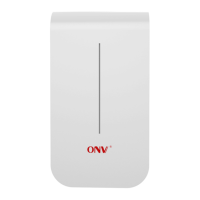

 To Next Page