5
Section 4 – Unpacking
4.1 Receiving / Inspection
Each unit is skid mounted and either boxed or crated prior to shipment depending on size
and/or shipping destination. Before accepting delivery, check the overall equipment
condition for any visible damage. If damage is evident the unit should be thoroughly
inspected in front of the delivery driver. Any and all damage should be properly
documented on the delivery receipt. Shipping damage is the responsibility of the carrier.
In order to expedite payment for damages it is important that proper procedures be
followed and records kept. Photographs provide an excellent means of documenting
damaged equipment. Once the unit is removed from the box or crate, it should be
inspected for hidden damage. Refrigerant lines can be susceptible to damage in transit.
Check for broken lines, oil leaks, damaged controls, or any other major component torn
loose from its mounting point.
NOTE: Any sign of damage should be recorded and a claim filed immediately with the
shipping company. OPTITEMP will provide assistance in preparation and filing of your
claims, including arranging for an estimate and quotation on repairs; however,
filing the claim is the responsibility of the receiving party.
NOTE: You may notice a small amount of fluid in your chiller system when it arrives.
During the winter months (between October 1
st
and April 30
th
) a small amount of non-
hazardous Propylene Glycol solution may be added to protect critical components from
freeze damage. This solution can be flushed from the system prior to connecting to your
process. Contact OPTI TEMP at 231-946-2931 or information@optitemp.com
with any
questions or disposal concerns.
4.2 Handling, Transporting and Storage
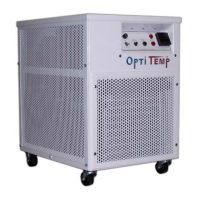
Smaller units are normally equipped with casters (two fixed and two swivel) to provide in-
plant mobility. Proper rigging methods must be followed to prevent damage to
components when removing units from pallets and/or placing into the desired service
location. Avoid impact loading caused by sudden jerking when lifting or lowering the
chiller. Use pads where abrasive surface contact is anticipated. The skid supporting the
chiller can be used for positioning the unit with a fork lift.
• Storage temperature: -10 to 55
o
C (14 to 131
o
F)
• Operating ambient humidity conditions: 0 to 90 % relative humidity up to 40
o
C (non-
condensing), 10 to 50% relative humidity from 40 to 55
o
C (non-condensing)
4.3 Package Contents
• OTC Series Water Chiller
• Operation and installation manual
• Rubber vibration pads (optional)
• Filters and spare cartridges (optional)
• Hose Kits and/or other accessories (optional)



 To Next Page