Need help?
Do you have a question about the OREC RM83G and is the answer not in the manual?
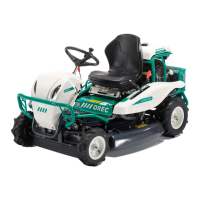
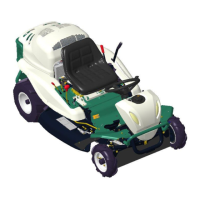
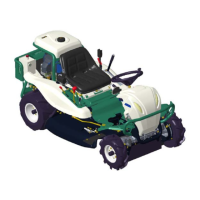
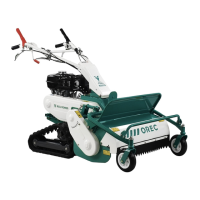
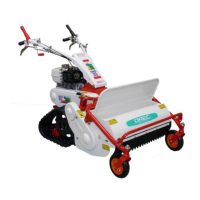
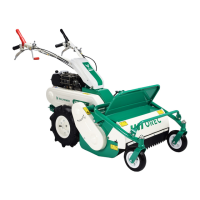
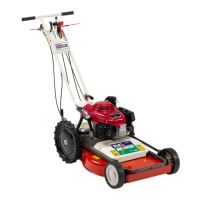
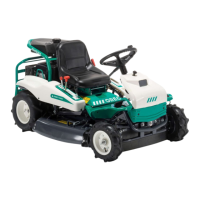
The OREC Grassland Mower Rabbit, available in models RM83G and RM830, is a ride-on brush cutter designed for efficient and safe mowing of grassland. This instruction manual provides comprehensive details on its operation, maintenance, and safety guidelines to ensure optimal performance and user safety.
The OREC Grassland Mower Rabbit is primarily designed for mowing grass in various terrains. It features a powerful engine, a cutting deck with rotary blades, and a robust transmission system. The machine is equipped with controls for speed, cutting height, blade engagement, and steering, allowing the operator to manage mowing tasks effectively. Safety switches are integrated to prevent accidental operation and ensure the machine stops when the operator leaves the seat or when certain safety conditions are not met. The RM83G model features a 4-speed gear transmission, while the RM830 model utilizes a Hydrostatic Transmission (HST) system for smoother speed control.
The RM83G and RM830 models share several core specifications, including an 820 mm cutting width and a cutting height range of 50-110 mm. Both models are powered by a Honda GXV390 engine, delivering 7.6 kW (RM83G) or 7.5 kW (RM830) of power. The RM83G has a mechanical transmission with forward speeds of 1.9/3.1/5.1/7.9 km/h and a reverse speed of 2.2 km/h. The RM830, with its hydrostatic transmission, offers a forward speed range of 0-10 km/h and a reverse speed of 0-4.5 km/h. Both models weigh 248 kg (RM83G) or 240 kg (RM830) and have an 11-liter fuel tank capacity. Steering is gear-based for both, and blade engagement is achieved via belt tension. The blade speed is 1300 rpm for the RM83G and 1353 rpm for the RM830. The overall width of both machines is 990 mm.
Acoustic power levels are measured at 98.7 dB(A) for the RM83G and 100.7 dB(A) for the RM830, with granted acoustic power levels of 99 dB(A) and 101 dB(A) respectively. Acoustic pressure levels at the operator's ears are 88.6 dB(A) for the RM83G and 89.8 dB(A) for the RM830. Vibration measurements at the steering wheel (right side 60° from axle) are 3.3 m/s² for RM83G and 3.75 m/s² for RM830, and at the left side 60° from axle, 2.45 m/s² for RM83G and 3.54 m/s² for RM830. On the operator's seat, vibrations are 3.05 m/s² for RM83G and 1.69 m/s² for RM830.
The mower is designed for ease of use and safety. The speed control lever (1, Fig 5a for RM83G; 2, Fig 5b for RM830) manages forward, reverse, and stop operations. The RM83G's 4-speed gear system allows for speed adjustment, with the 4th gear recommended only for moving, not mowing. The RM830's HST lever provides smooth, gradual speed changes. The throttle lever (3, Fig 5a,b) controls engine speed, and a choke function aids in starting a cold engine. A differential locking lever (4, Fig 5a,b) allows both rear wheels to be driven together in slippery conditions, but should only be used in a straight line to prevent transmission damage.
The brake pedal (1, Fig 6) serves as an emergency brake and for locking the parking brake (2, Fig 6). The ignition key (3, Fig 6) starts and stops the engine, with "stop," "operation," and "start" positions. The steering wheel (4, Fig 6) allows for directional control and its height can be adjusted (5, Fig 6). The height of cut control lever (1, Fig 7) with a push button (2, Fig 7) adjusts the cutting height, with the highest position for transport. The blade clutch lever (3, Fig 7) engages and disengages the cutting blades. Mowing deck side shields should be locked during operation to prevent thrown objects from causing injury or damage. The machine is also equipped with a fuel cock (1, Fig 9) to control fuel flow.
Safety instruction stickers are strategically placed on the machine, indicating warnings such as "Do not exceed 15° slope," "Read owner's manual," "Beware of thrown objects," "Remove spark plug wire before maintenance," "Beware of rotating parts under the shields," "Keep hands and feet away from rotating blades," "Stay away from the machine," "Always wear protective equipment against noise, dust," "Beware of hot surfaces near engine," "Beware of flammable fuel," and "Beware of toxic exhaust gases."
Regular maintenance is crucial for the longevity and safe operation of the OREC Grassland Mower Rabbit. The manual outlines daily, 20-hour, 100-hour, and 300-hour/annual maintenance tasks.
Daily maintenance includes checking transmission oil levels (A, Fig 12a,b), which should be in the middle of the window when cold. For RM830 models, HST oil level (Fig 13) should reach the "UP" mark. Fuel tank levels (Fig 16, 17) should be checked, ensuring the cap is fully closed and free of leaks. Tire pressure (Fig 18) should be 1.2 bar for front tires and 1.4 bar for rear tires. Safety stickers, lateral guards, and shields should be checked for damage or looseness. The electrolyte level in the battery (Fig 19) should be between the upper and lower levels, with distilled water added if needed. Blade and blade holder condition should be inspected, and worn or damaged parts replaced (Fig 20).
Lubrication points (Fig 22) should be greased with NLGI N°2 molybdenum bisulphide grease, ensuring no excess grease accumulates, especially in sandy environments. The air filter (Fig 23, 24) should be cleaned by blowing with low-pressure air from the inside out, and replaced if dusty. The foam element should be cleaned with water and soap, dried, and oiled with engine oil. Engine oil level (A, Fig 25) should be between the two marks on the stick, and drained via screw B. The fuel filter (C, Fig 26) should be checked for water and dust and cleaned or replaced if dirty.
Belt tension (Fig 27) for the blade brake should be adjusted if too loose or too tight. Brake efficiency should be checked, and adjusted by tightening the nut (B, Fig 28 for RM83G; C, Fig 12b for RM830). All bolts and nuts should be checked for proper tightening. Safety switches should be adjusted to ensure they are pushed 3-5 mm. The speed lever control link (A, Fig 29) should be adjusted so the machine remains still in neutral. The diff lock control wire (B, Fig 29) should have 1-3 mm of free play before activation.
The manual also provides a troubleshooting guide for common issues like the engine not starting, machine not traveling, machine not stopping, and the blade not rotating, along with corresponding solutions and tightening torques for screws. It emphasizes the use of OREC original parts for safety and to maintain warranty validity.
 General
| Brand | OREC |
|---|---|
| Model | RM83G |
| Category | Lawn Mower |
| Language | English |

 To Next Page