EasyManua.ls Logo

Orion Cobalt CB600.4 - User Manual

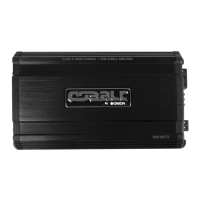
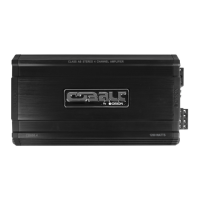
Orion Cobalt CB600.4
18 pages
Print Icon
To Next Page IconTo Next Page
Loading...
CB1200.1D
CB2400.1D
CB3200.1D
CB5000.1D
4 CHANNEL AMPLIFIERS
CB600.4
CB1000.4
CB1500.4
CB2000.4
CB3400.4
2 CHANNEL AMPLIFIERS
CB300.2
CB600.2
CB2700.2
MONOBLOCK CLASS AB 2 OHM AMPLIFIERS
CB1500.5
CB2700.5
5 CHANNEL AMPLIFIERS
CB700.1M2
CB1100.1M2
CB2400.1D2
MONOBLOCK CLASS D 1 OHM AMPLIFIERS
MONOBLOCK CLASS D 2 OHM AMPLIFIERS
Question and Answer IconNeed help?

Do you have a question about the Orion Cobalt CB600.4 and is the answer not in the manual?

Summary

Orion Owners Manual Overview

Orion Amplifier Product Lineup

Lists various Orion amplifier series including 4-channel, 2-channel, 5-channel, and mono models.

Amplifier Functions and Controls

Amplifier Control Panel Layouts

Diagrams illustrating the placement and function of controls on different amplifier models.

Key Amplifier Features

Lists essential features like Input Mode, Gain control, LPF/HPF, and protection indicators.

Operational Guidelines and Safety

Power and Ground Connection

Instructions for connecting the amplifier's power and ground terminals correctly.

Troubleshooting Common Issues

Solutions for problems like no function, no sound, and distorted audio.

Safety Precautions and Fuse

Important warnings and recommendations for safe installation and operation, including fuse replacement.

Stereo Mode Speaker Connections

4-Channel Amps Stereo Wiring

Diagrams showing stereo mode speaker connections for 4-channel amplifiers.

2-Channel Amps Stereo Wiring

Diagrams illustrating stereo mode speaker connections for 2-channel amplifiers.

Stereo Mode Details and Features

5-Channel & Mono Amps Stereo Wiring

Wiring diagrams for stereo mode on 5-channel and Class AB mono amplifiers.

Comprehensive Feature List

Lists amplifier features including input, controls, power supply, and protection indicators.

Speaker Connection Diagrams

4-Channel Speaker Wiring

Detailed diagrams for connecting speakers to 4-channel amplifiers.

2-Channel & 4-Channel Wiring

Speaker connection diagrams for 2-channel and 4-channel amplifiers.

Speaker Wiring Configurations

2-Channel Speaker Setup

Diagrams for connecting speakers to 2-channel amplifiers.

5-Channel Speaker Setup

Wiring diagrams for 5-channel amplifiers.

Mono Amplifier Speaker Connections

Class AB Mono Amplifier Wiring

Speaker connection diagrams for Class AB mono amplifiers.

Class D Mono Amplifier Wiring

Diagrams for connecting speakers to Class D mono amplifiers.

Mono Wiring and Bridged Mode

Class D Mono Speaker Wiring

Speaker connection diagrams for Class D mono amplifiers.

4-Channel Amps Bridged Mode

Wiring configurations for using 4-channel amplifiers in bridged mode.

Bridged Mode Speaker Connections

2-Channel Amps Bridged Wiring

Diagrams for connecting 2-channel amplifiers in bridged mode.

5-Channel Amps Bridged Wiring

Wiring configurations for 5-channel amplifiers in bridged mode.

Bridged Mono Amplifier Setup

Master;Slave Bridged Connections

Wiring diagrams for bridging multiple mono amplifiers using master/slave configuration.

Bridged Mono Amplifier Wiring

CB5000.1 D Bridged Configuration

Specific wiring instructions for bridging the CB5000.1D mono amplifier.

CB2400.1 D2 Bridged Wiring

CB2400.1 D2 Master;Slave Setup

Detailed diagrams for bridging the CB2400.1D2 amplifier in master/slave mode.

Power Connection and Wiring

Power Connection Diagram

Visual guide for connecting the amplifier's power leads to the battery and head unit.

Detailed Wiring Guidelines

Comprehensive instructions for power, ground, remote, and speaker wiring connections.

Amplifier Operation and Interference

Operating Amplifier Controls

How to use the amplifier's controls like gain, HPF/LPF, and understand indicators.

Minimizing Electrical Interference

Techniques and guidelines to prevent or reduce audio interference from vehicle electronics.

Amplifier Specifications - 4 & 2 Channel

4-Channel Amplifier Specifications

Detailed technical specifications for Orion 4-channel amplifiers.

2-Channel Amplifier Specifications

Detailed technical specifications for Orion 2-channel amplifiers.

Amplifier Specifications - 5 Channel & Mono AB

5-Channel Amplifier Specifications

Detailed technical specifications for Orion 5-channel amplifiers.

Class AB Mono Amplifier Specifications

Detailed technical specifications for Orion Class AB mono amplifiers.

Amplifier Specifications - Class D Mono

Class D Mono 1 Ohm Specifications

Detailed technical specifications for Orion Class D 1 Ohm mono amplifiers.

Class D Mono 2 Ohm Specifications

Detailed technical specifications for Orion Class D 2 Ohm mono amplifiers.

Summary

Orion Owners Manual Overview

Orion Amplifier Product Lineup

Lists various Orion amplifier series including 4-channel, 2-channel, 5-channel, and mono models.

Amplifier Functions and Controls

Amplifier Control Panel Layouts

Diagrams illustrating the placement and function of controls on different amplifier models.

Key Amplifier Features

Lists essential features like Input Mode, Gain control, LPF/HPF, and protection indicators.

Operational Guidelines and Safety

Power and Ground Connection

Instructions for connecting the amplifier's power and ground terminals correctly.

Troubleshooting Common Issues

Solutions for problems like no function, no sound, and distorted audio.

Safety Precautions and Fuse

Important warnings and recommendations for safe installation and operation, including fuse replacement.

Stereo Mode Speaker Connections

4-Channel Amps Stereo Wiring

Diagrams showing stereo mode speaker connections for 4-channel amplifiers.

2-Channel Amps Stereo Wiring

Diagrams illustrating stereo mode speaker connections for 2-channel amplifiers.

Stereo Mode Details and Features

5-Channel & Mono Amps Stereo Wiring

Wiring diagrams for stereo mode on 5-channel and Class AB mono amplifiers.

Comprehensive Feature List

Lists amplifier features including input, controls, power supply, and protection indicators.

Speaker Connection Diagrams

4-Channel Speaker Wiring

Detailed diagrams for connecting speakers to 4-channel amplifiers.

2-Channel & 4-Channel Wiring

Speaker connection diagrams for 2-channel and 4-channel amplifiers.

Speaker Wiring Configurations

2-Channel Speaker Setup

Diagrams for connecting speakers to 2-channel amplifiers.

5-Channel Speaker Setup

Wiring diagrams for 5-channel amplifiers.

Mono Amplifier Speaker Connections

Class AB Mono Amplifier Wiring

Speaker connection diagrams for Class AB mono amplifiers.

Class D Mono Amplifier Wiring

Diagrams for connecting speakers to Class D mono amplifiers.

Mono Wiring and Bridged Mode

Class D Mono Speaker Wiring

Speaker connection diagrams for Class D mono amplifiers.

4-Channel Amps Bridged Mode

Wiring configurations for using 4-channel amplifiers in bridged mode.

Bridged Mode Speaker Connections

2-Channel Amps Bridged Wiring

Diagrams for connecting 2-channel amplifiers in bridged mode.

5-Channel Amps Bridged Wiring

Wiring configurations for 5-channel amplifiers in bridged mode.

Bridged Mono Amplifier Setup

Master;Slave Bridged Connections

Wiring diagrams for bridging multiple mono amplifiers using master/slave configuration.

Bridged Mono Amplifier Wiring

CB5000.1 D Bridged Configuration

Specific wiring instructions for bridging the CB5000.1D mono amplifier.

CB2400.1 D2 Bridged Wiring

CB2400.1 D2 Master;Slave Setup

Detailed diagrams for bridging the CB2400.1D2 amplifier in master/slave mode.

Power Connection and Wiring

Power Connection Diagram

Visual guide for connecting the amplifier's power leads to the battery and head unit.

Detailed Wiring Guidelines

Comprehensive instructions for power, ground, remote, and speaker wiring connections.

Amplifier Operation and Interference

Operating Amplifier Controls

How to use the amplifier's controls like gain, HPF/LPF, and understand indicators.

Minimizing Electrical Interference

Techniques and guidelines to prevent or reduce audio interference from vehicle electronics.

Amplifier Specifications - 4 & 2 Channel

4-Channel Amplifier Specifications

Detailed technical specifications for Orion 4-channel amplifiers.

2-Channel Amplifier Specifications

Detailed technical specifications for Orion 2-channel amplifiers.

Amplifier Specifications - 5 Channel & Mono AB

5-Channel Amplifier Specifications

Detailed technical specifications for Orion 5-channel amplifiers.

Class AB Mono Amplifier Specifications

Detailed technical specifications for Orion Class AB mono amplifiers.

Amplifier Specifications - Class D Mono

Class D Mono 1 Ohm Specifications

Detailed technical specifications for Orion Class D 1 Ohm mono amplifiers.

Class D Mono 2 Ohm Specifications

Detailed technical specifications for Orion Class D 2 Ohm mono amplifiers.

Overview

This document serves as an owner's manual for Orion High Performance Car Audio amplifiers, specifically the Cobalt series. It covers various amplifier models, including 4-channel, 2-channel, 5-channel, monoblock Class AB 2 Ohm, monoblock Class D 1 Ohm, and monoblock Class D 2 Ohm amplifiers. The manual provides detailed information on the functions, operation, troubleshooting, fuse replacement, wiring instructions, and specifications of these devices.

Function Description

The Orion Cobalt series amplifiers are designed to enhance car audio systems by providing powerful and clear sound output. They come in different configurations to suit various audio setups:

  • 4-Channel Amplifiers (CB600.4, CB1000.4, CB1500.4, CB2000.4, CB3400.4): These amplifiers are versatile, allowing for the connection of multiple speakers (e.g., front and rear speakers) or a combination of speakers and a subwoofer in bridged mode. They feature input mode selection, gain control, LPF/HPF (Low Pass Filter/High Pass Filter) control, bass boost, and LED indicators for power and protection.
  • 2-Channel Amplifiers (CB300.2, CB600.2, CB2700.2): Ideal for powering a pair of speakers or a single subwoofer in bridged mode, these amplifiers offer input mode, gain control, LPF/HPF control, and bass boost.
  • 5-Channel Amplifiers (CB1500.5, CB2700.5): These are comprehensive solutions for complete car audio systems, typically powering four speakers and a dedicated subwoofer channel. They include input mode, gain control, LPF/HPF control, sub sonic control, bass boost, and LED indicators.
  • Monoblock Class AB 2 Ohm Amplifiers (CB700.1M2, CB1100.1M2): These amplifiers are optimized for driving subwoofers, offering robust power output. They feature input mode, gain control, LPF control, sub sonic control, phase control, bass boost, and LED indicators.
  • Monoblock Class D 1 Ohm Amplifiers (CB1200.1D, CB2400.1D, CB3200.1D, CB5000.1D): Designed for high-power subwoofer applications, these Class D amplifiers are highly efficient. They include input mode, gain control, LPF control, sub sonic control, phase control, bass boost, and LED indicators.
  • Monoblock Class D 2 Ohm Amplifiers (CB2400.1D2): Similar to the 1 Ohm Class D monoblocks but optimized for 2 Ohm loads, these also provide input mode, gain control, LPF control, sub sonic control, phase control, bass boost, and LED indicators.

Common features across most models include:

  • Input Mode: Allows selection between low input and high input, catering to different head unit output types.
  • Gain Control: Adjusts the input sensitivity to match the output level of the car stereo, preventing distortion.
  • LPF/HPF Control: Filters out unwanted frequencies, ensuring that speakers receive only the frequencies they are designed to reproduce (e.g., LPF for subwoofers, HPF for full-range speakers).
  • Sub Sonic Control: (Monoblock amplifiers) Filters out extremely low frequencies that are inaudible and can cause damage to subwoofers.
  • Bass Boost Control: Enhances low-frequency output for a more pronounced bass response.
  • Phase Control: (Monoblock amplifiers) Adjusts the phase of the subwoofer output to align with other speakers, improving bass integration.
  • Mosfet Power Supply: Provides efficient and stable power delivery to the amplifier.
  • Thermal Protection: A built-in safety feature that protects the amplifier from overheating.
  • LED Power and Protection Indicator: Visual cues for the amplifier's operational status (green for power, red for protection mode).

Usage Features

The manual emphasizes proper installation and setup for optimal performance and longevity of the amplifier.

  • Wiring Connections: Detailed diagrams are provided for various speaker configurations, including stereo and bridged modes, across different amplifier models. This ensures correct impedance matching and prevents damage to both the amplifier and speakers.
  • Ground Connection (GND): It is crucial to connect the GND terminal to the chassis ground of the car with the best possible electrical and mechanical contact. The ground cable should be short, and the connection point on the chassis should be free of paint or dirt.
  • Power Supply (+12V): The +12V terminal must be connected directly to the positive pole of the car battery using a sufficiently thick lead cable (minimum 4mm² for 3m, 6mm² for 6m). An inline fuse, placed within 30cm of the battery, is mandatory for protection.
  • Remote Control (REM): This terminal connects to the car radio's automatic antenna connector, allowing the amplifier to switch on and off automatically with the car radio. A thin cable (0.5mm²) is sufficient for this connection.
  • Input Mode Selection: Users can select between low-level (RCA) and high-level (speaker) inputs depending on their car stereo's outputs. For stereos without low-level outputs, an AUTOCRAFT line converter can be used with the high-level outputs.
  • Gain Adjustment: The manual provides a step-by-step guide for setting the gain control to achieve the best sound without distortion. This involves tuning the car radio volume to 2/3 maximum and then slowly increasing the amplifier's gain until distortion is heard, then backing off slightly.
  • Filter Controls (LPF/HPF/Sub Sonic): These controls allow users to fine-tune the frequency response, ensuring that each speaker or subwoofer reproduces its intended frequency range, leading to better sound quality and system protection.
  • Bass Boost and Phase Controls: These features enable users to customize the bass response and optimize subwoofer integration for a more impactful and cohesive audio experience.
  • Bridged Mode: Instructions are provided for bridging channels to combine power output, typically for driving a single subwoofer with higher power. This requires specific speaker impedance (e.g., 4-8 Ohm for 4-channel amplifiers).
  • Bridged Connections for Monoblock Amplifiers: For certain monoblock models (e.g., CB1200.1D, CB2400.1D, CB3200.1D, CB5000.1D, CB2400.1D2), the manual illustrates how to connect two identical amplifiers in a master-slave configuration to achieve even higher power output for a single subwoofer. This involves specific wiring for power, ground, remote, and signal connections between the two amplifiers and the car stereo.

Maintenance Features

The manual outlines several precautions and troubleshooting steps to ensure the safe and reliable operation of the amplifier.

  • Fuse Replacement: If a fuse blows, it indicates a fault. Users should check the power connection and replace the fuse with one of the specified amperage. Using a higher amperage fuse or bridging a blown fuse can cause serious damage. If the fuse blows again, it suggests an internal malfunction requiring professional service.
  • Protection Circuit: The amplifier is equipped with a protection circuit that safeguards transistors and speakers from damage due to overheating or short-circuited speaker terminals. If the red LED indicator illuminates, it means the protection circuit is active. The amplifier will automatically resume operation after cooling down or after the fault is resolved.
  • Troubleshooting Guide: The manual provides solutions for common issues:
    • No Function: Check power, ground, and remote connections, as well as the fuse.
    • No Sound/Red LED Protection Shines: Inspect speaker cable connections for shorts or incorrect impedance. If overloaded, reduce the gain control.
    • Poor Sound Quality (Distortions): Lower the volume level and check gain control positions, as speakers might be overloaded.
    • No Stereo Sound/Weak Bass: Check speaker cable polarity, as reversed polarity can cause phase issues.
  • Interference Reduction: The manual offers extensive advice on minimizing noise and interference in the car audio system:
    • Use screened audio cables and keep signal, speaker, and power cables separate.
    • Avoid ground loops by establishing a single central ground point for all components.
    • Twist core leads of speaker cables if external electrical sources cause pickups.
    • Add an interference suppression choke to the power wiring if car electronics cause noise.
    • Use thicker ground cables or additional ground cables to the chassis if humming noises persist.
    • Tin cable ends or use multi-core cable ends/spade terminals for better contact and lower resistance.
    • If all else fails, a ground loop isolator may be necessary.
  • Installation Environment: Avoid installing the unit in locations exposed to high temperatures (direct sunlight, heater vents), rain, moisture, dust, or dirt. If the car has been in direct sunlight, allow the unit to cool before operation. Ensure that heatsink fins are not covered to allow proper ventilation.
  • Battery Condition: Do not use the amplifier with a weak car battery, as optimal performance relies on a normal battery supply voltage.
  • Volume Control: For safety, maintain a moderate volume level to remain aware of external traffic sounds.


Orion Cobalt CB600.4 Specifications

General IconGeneral
Channels4
Power Output (RMS)600W
RMS Power @ 2 Ohms150W x 4
Bridged RMS Power @ 4 Ohms300W x 2
Minimum Impedance Unbridged2 Ohms
Minimum Impedance Bridged4 Ohms
THD @ Rated Power<0.05%
Signal to Noise Ratio>90dB
Frequency Response20Hz - 20kHz
Crossover TypeVariable
Low Pass Crossover Frequency50Hz - 250Hz
High Pass Crossover Frequency50Hz - 250Hz
Bass Boost0-12dB
Bass Boost Frequency45Hz
RMS Power @ 4 Ohms75 Watts x 4

Related product manuals