4
Dongguan Ortur Intelligent Technologies Co., Ltd.
https://ortur.tech/olm2pro
No.1 Building, Ruijin Science and Technology Industrial Park, Changping, Dongguan 523558, Guandong Province, China
Security & Safety Guidelines
Basic Information
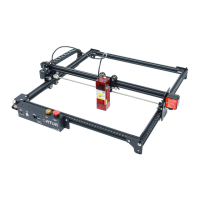
The Ortur Laser Master 2 Pro engraves and cuts materials by the means of a
high-energy diode laser beam.
The hazards associated with a high-energy diode laser beam include the
possibility of res, generation of hazardous and/or irritating toxic fumes, but more
importantly damage to eyes and skin.
International Classications
Laser engravers are divided into several internationally valid classes based
on their performance and the risk of injury. For the scope of this guide we will
focus on the American FDA classication, even though there are similar other
classication tables.
The Ortur Laser Master 2 Pro falls into the Class IV (Class 4 IEC standard)
as it’s an open, non-enclosed laser engraver, therefore Personal Protective
Equipment (PPE) should be worn at all times – by everyone in the proximity of
the machine, when operating the Ortur Laser Mater 2 Pro.
If you enclose your Ortur Laser Master 2 Pro, make sure the enclosure follows
the above classication guidelines and complies with the international standards.
Laser class Class Denition
Class I Class I laser radiation is not considered hazardous.
Class IIa Class IIa laser radiation is not considered hazardous if viewed for any period of
time less than or equal to 1x10³ seconds, but is considered a chronic viewing
hazard for any period of time greater than 1x10³ seconds.
Class IIa Class II laser radiation is considered a chronic viewing hazard.
Class II Class IIIa laser radiation is, depending upon the irradiance, either an acute in-
trabeam viewing hazard or chronic viewing hazard. If viewed directly with optical
instruments, Class IIIa laser radiation is classied as an acute viewing hazard.
Class IIIb Direct Class IIIb laser radiation is considered an acute hazard to the skin and
eyes.
Class IV Class IV laser radiation is considered an acute hazard to the skin and eyes from
both direct and scattered radiation.


 To Next Page