11
Discontinuous Cosmetics
Ref. No Description Notes
Shin ferrule
Protects unit from foam cover - maintains
space for movement within foam cover
Knee cap - small Use to prevent tearing at the knee
Knee cap - large Use for patients who kneel often
R
Foam cover -
regular
Accommodates shin ferrule
L
Foam cover
- large
Accommodates shin ferrule
MAINTENANCE
The Total Knee is designed for low-maintenance. It is warranted against
defective materials and workmanship for -months. We recommend:
• Total Knee be inspected every six months for signs of unusual
wear, by a prosthetist familiar with this product.
• Stance flexion bumper must be replaced if cracked or worn, depending
on patient´s activity level.
• If knee is subjected to excessive moisture or corrosive environment,
it’s recommended to clean and lubricate the knee frequently.
CLEANING
• Wipe knee with soft cloth moistened with small amount of kerosene.
DO NOT use solvent stronger than kerosene. If kerosene is not
available, use general purpose oil (in) or sewing machine oil.
• DO NOT dip knee or pour solvent over knee. Bearings and seals may
be damaged.
• DO NOT use compressed air to clean knee. Air forces pollutants into
bearings and may cause malfunctions and wear.
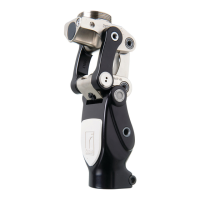
LUBRICATION Figure
Three sets of roller bearings are visible. Place a few drops of machine oil
on the roller bearings(general purpose oil (in) or sewing machine oil
can also be used). Move the knee several times and wipe off excessive oil
with a soft cloth. No other parts need external lubrication.
PRODUCTSPECIFIC TRAINING
Instructing new users is essential to achieve a successful rehabilitation.
For safety, initial adjustments and gait training should be done with
patient standing between parallel bars.
LEVEL GROUND WALKING
• Explain to the user the function of stance flexion/geometric lock.
Patients who previously wore a knee without stance flexion function
may fear collapse of knee during loading response. They must be
trained to allow the knee to move into stance flexion and not to
prevent it by strong hip extension
• Explain the stance release mechanism to the patient. Patient's centre
of mass must be anterior to the pivot axis of knee. In this position,
very little hip flexor effort is required to initiate knee flexion. Knee
flexion will be initiated through rotation of the hip as weight is
transferred onto the ball of the foot during terminal stance.


 To Next Page