
 Need help?
Do you have a question about the PACOM PDR16HR-RMT-RT and is the answer not in the manual?
Lists the primary features and capabilities of the digital video recorder.
Illustrates the DVR's system connectivity and component layout.
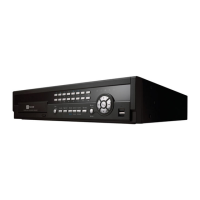
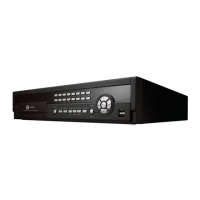
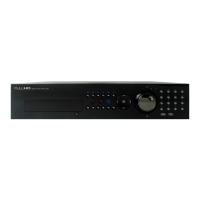
Describes the controls, indicators, and ports on the DVR's front panel.
Explains the various input/output ports located on the DVR's rear panel.
Step-by-step guide to powering on the digital video recorder.
Step-by-step guide for properly shutting down the digital video recorder.
Provides a general description of the SmartGuard surveillance software.
Lists the key features and capabilities of the SmartGuard software.
Details the monitoring screen, menu, utility, and control panels within the GUI.
How to change camera arrangement for different screen modes.
Functionality to play back recently recorded video on the camera screen.
Details on setting location, data usage, screen saver, display, printer, and sound.
Configuring network transmit method, IP, and FEN settings.
Setting up alerts for hard disk drive S.M.A.R.T. monitoring.
Setting up email notifications for system alerts.
Setting up callback messages and audible alerts for system events.
Configuring archive methods and storage settings.
Configuring local login, password expiration, and auto logout settings.
Configuring description, hide image, and PTZ settings for each camera.
Defining areas on the video feed to be masked for privacy.
Setting up activation periods, dwell time, and audible alerts for alarm outputs.
Configuring IP address, port, and activation periods for remote alarm outputs.
Setting up motion detection parameters, zones, sensitivity, and size.
Setting up object detection parameters, zones, sensitivity, and activation times.
Setting up email, callback, event monitoring, and PTZ moves for detected events.
Setting up parameters for detecting video obscuration and flare.
Configuring alarm input devices and their types (NC/NO).
Setting up remote alarm input devices via TCP networking.
Configuring text-in data detection, including case sensitivity and syntax.
Configuring recording parameters like IPS, quality, and resolution.
Visual timetable for setting recording modes (R, E, R/E) for different times and days.
Setting up detection zones using draw tools and configuring sensitivity.
Setting search criteria for motion detection, event, text-in, or alarm-in events.
Using the timetable to view recording status and navigate video segments.
Saving video as A-B clips or executable clip files.
Selecting cameras, save range, and path for creating clip files.
Steps to play back audio synced with recorded video.
Setting IP addresses, subnet masks, and DNS server settings.
Enabling and configuring the FEN function for remote access.
Specifies the minimum system requirements for running the WebGuard program.
Instructions for entering IP address and login credentials to access WebGuard.
Using controls for logout, search mode, screen format, and camera adjustments.
Using controls for time-lapse search, event search, and image settings in WebSearch.
Configuring case sensitivity, name, comparison, and value for text-in searches.
Details pin assignments for SPOT monitor, alarm inputs, and TTL/Relay alarm outputs.
Addresses issues like no image, Windows access problems, and system freezes.
Details video formats, inputs, outputs, and connector types.
Covers storage capacity, dimensions, weight, power, and operating environment.
Requirements for recording model, serial number, and proof of purchase for warranty.
 General
| Video Input | 16 channels |
|---|---|
| Video Output | HDMI, VGA |
| Recording Resolution | Up to 1080p |
| Compression | H.264 |
| Operating System | Embedded Linux |
| Network Interface | RJ45 10/100 Mbps |
| Power Supply | DC 12V |
| Operating Temperature | 55°C |


 To Next Page