High−level Instructions
3 − 211
Encoded example
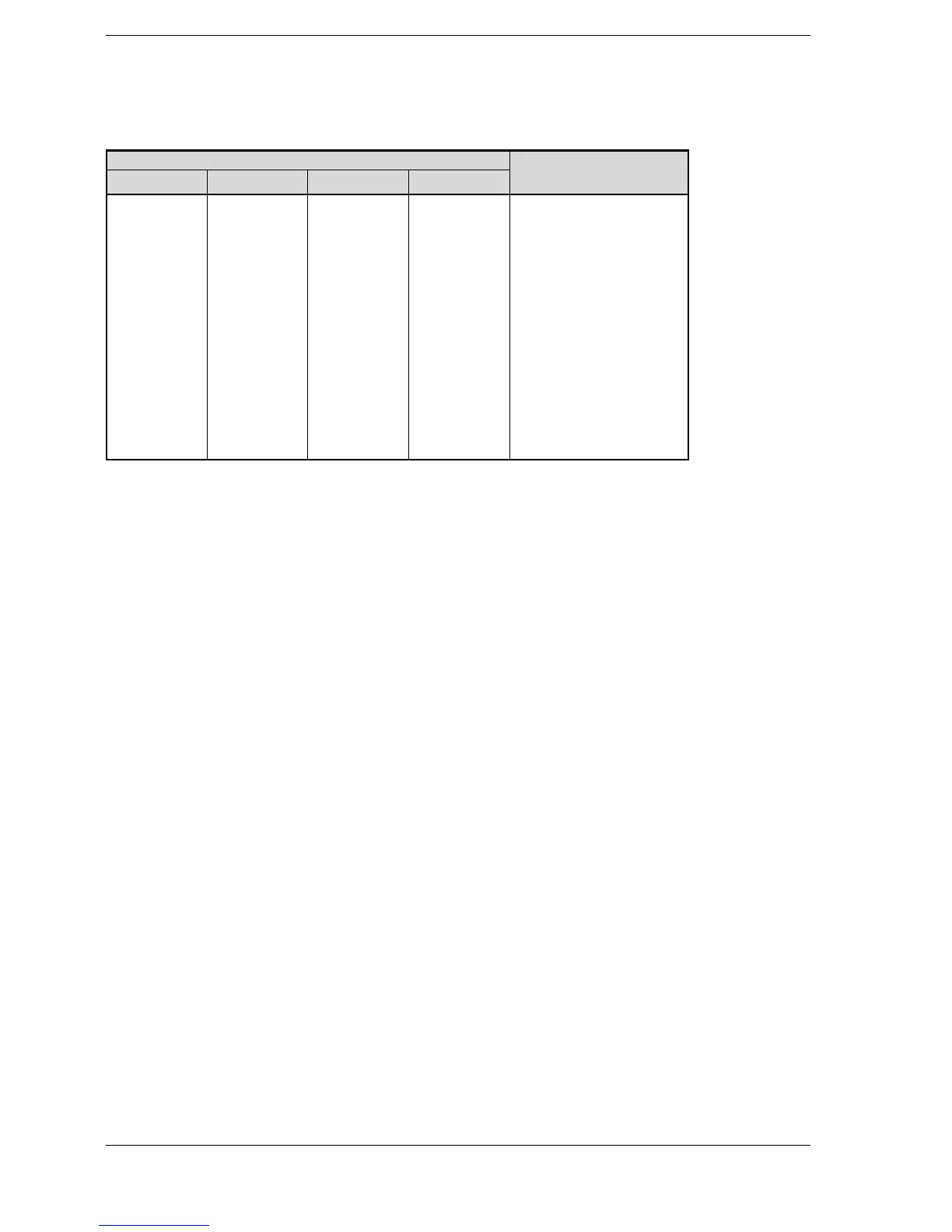
When encoding 16-bit data (nL=4), the encoded results are shown below.
Data to be encoded
Encoded result
15 ・ ・ 12 11 ・ ・ 8 7 ・・ 4 3 ・・ 0
[Binary (decimal)]
0000
0000
0000
0000
0000
0000
0000
0000
0000
0000
0000
0000
0001
001 0
0 1 00
1 000
0000
0000
0000
0000
0000
0000
0000
0000
0001
001 0
0 1 00
1 000
0000
0000
0000
0000
0000
0000
0000
0000
0001
001 0
0 1 00
1 000
0000
0000
0000
0000
0000
0000
0000
0000
0001
001 0
0 1 00
1 000
0000
0000
0000
0000
0000
0000
0000
0000
0000
0000
0000
0000
0 0 0 0 (K0)
0 0 0 1 (K1)
0 0 1 0 (K2)
0 0 1 1 (K3)
0 1 0 0 (K4)
0 1 0 1 (K5)
0 1 1 0 (K6)
0 1 1 1 (K7)
1 0 0 0 (K8)
1 0 0 1 (K9)
1 0 1 0 (K10)
1 0 1 1 (K11)
1 1 0 0 (K12)
1 1 0 1 (K13)
1 1 1 0 (K14)
1 1 1 1 (K15)
Flag conditions
・Error flag (R9007): Turns on and stays on when:
・Error flag (R9008): Turns on for an instant when:
− The area specified using the index modifier exceeds the limit.
− The number of bits to be encoded is outside the range of 1 to 8.
− The sum of the number of bits to be encoded and the starting bit position to
be encoded is outside the range of 1 to 16.
− The data to be encoded is 0.









 To Next Page