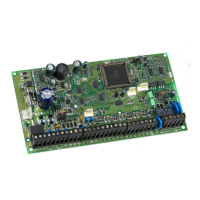
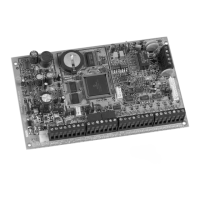
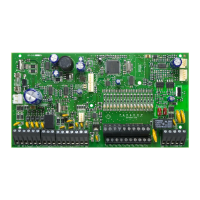
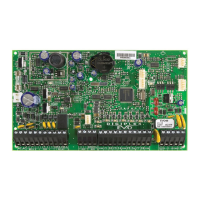
The Paradox DIGIPLEX EVO system is a high-security and access control solution designed for various applications, from small businesses to large luxury residential and commercial sites. It offers advanced security features, extensive expandability, and flexible programming options. The system is available in two main models: EVO48 and EVO192, differing primarily in their capacity for zones, partitions, users, and modules.
Function Description
The DIGIPLEX EVO system serves as a comprehensive security and access control hub. It integrates intrusion detection, access control, and automation functionalities into a single platform. The system supports a wide range of input devices, including hardwired zones, wireless zones (via expansion modules), and addressable modules. It can manage multiple partitions, allowing different areas of a property to be armed and disarmed independently.
Key functions include:
- Intrusion Detection: Monitors various types of zones (e.g., burglary, fire, gas, water) using a variety of detectors. It supports both normally closed (NC) and end-of-line (EOL) resistor configurations for hardwired zones, as well as double zone connections for increased security.
- Access Control: Integrates with access control modules (DGP-ACM11) to manage user access to specific areas. This includes features like card access, scheduled access, and event logging.
- Automation: Provides programmable outputs (PGMs) that can be triggered by system events, allowing for integration with other building automation systems (e.g., lighting, HVAC).
- Reporting: Communicates events to central monitoring stations via various methods, including telephone line, IP, and GPRS/GSM. It supports multiple reporting formats, including Contact ID and SIA.
- Remote Control: Allows users to arm/disarm the system and control PGMs using remote controls (keyfobs) or via a PC software (WinLoad).
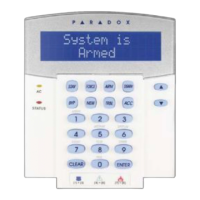
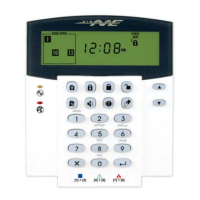
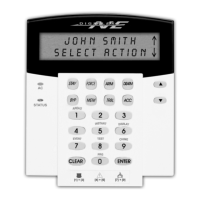
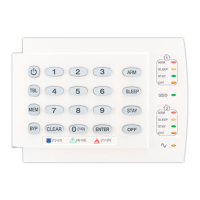
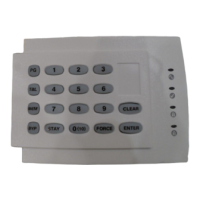
- Keypad Control: Supports a variety of keypads, including graphic LCD keypads (DNE-K07), LED keypads (EVO641), and touch keypads, for local system control and programming.
- User Management: Manages up to 999 users (EVO192) with different access levels and permissions, including master codes, installer codes, and user codes.
- Event Logging: Stores a detailed history of system events, which can be viewed locally or downloaded via PC software.
Important Technical Specifications
The EVO system offers robust technical specifications, with differences between the EVO48 and EVO192 models:
General Specifications (Control Panel)
- AC Power: 16.5VAC, 40VA-50/60Hz (EVO48); 16.5VAC, 70VA-50/60Hz (EVO192).
- Battery: 12VDC, 7Ah minimum (EVO48); 12VDC, 7Ah minimum (EVO192).
- Auxiliary Power: 12VDC, 600mA typical, 700mA maximum, fuse-less shutdown @ 1A (EVO48); 12VDC, 1A maximum, fuse-less shutdown @ 1.1A (EVO192).
- Bell Output: 1A, fuse-less shutdown @ 3A (both models).
- PGM Output: PGM1 to PGM4 are 50mA solid-state relays with +/- trigger. PGM5 to PGM8 are 50mA solid-state relays with +/- trigger (EVO192 only).
- Operating Temperature: 0°C to 50°C (32°F to 122°F).
- All control panel outputs are rated to operate between 10.8VDC and 12.1VDC (EVO48); 11.4VDC and 12.5VDC (EVO192).
Capacity (EVO48 vs. EVO192)
- Zones: 48 (EVO48); 192 (EVO192).
- Partitions: 4 (EVO48); 8 (EVO192).
- Users: 96 (EVO48); 999 (EVO192).
- On-board PGMs: 2 (EVO48); 5 (EVO192).
- Modules: 127 (EVO48); 254 (EVO192).
Communication
- Telephone Line: Supports standard telephone line connections for reporting to central stations.
- Combus: Proprietary communication bus for connecting modules. Supports up to 127 modules (EVO48) or 254 modules (EVO192). The total length of wire run for the Combus should not exceed 914m (3000ft).
- IP/GPRS/GSM: Compatible with IP150, PCS250, and PCS250G modules for internet and cellular communication.
Power Requirements
- The system requires a 16.5VAC transformer (40VA for EVO48, 70VA for EVO192).
- Maximum available milliamps on the auxiliary output is 700mA.
- Calculations for total current draw from modules and devices are crucial to ensure the system operates within limits. The manual provides detailed tables and diagrams for calculating power consumption.
Usage Features
- Expandability: The modular design allows for significant expansion using 4-wire Combus expansion modules. This includes zone expansion, PGM expansion, access control, and wireless modules.
- Flexible Zone Configuration: Zones can be configured as single zones, double zones, or addressable zones. Various zone types are available, including instant, delay, follow, 24-hour, and fire.
- Multiple Arming Modes: Supports different arming modes such as Stay, Sleep, and Force Arming.
- Daylight Savings Time: Automatic adjustment for daylight savings time.
- Programmable Outputs (PGMs): PGMs can be programmed to activate based on a wide range of system events, offering extensive automation possibilities.
- Virtual Zones: Supports virtual zones for advanced programming and automation.
- Multi-language Support: Keypads can display information in multiple languages.
- Remote Programming: The WinLoad software allows for remote programming and management of the system via PC.
- Built-in RTC: Real-Time Clock with battery backup ensures accurate timekeeping even during power outages.
- Keypad Numbering: Keypads are automatically assigned a serial number and can be manually numbered for specific partitions.
- Remote Control Programming: Up to 16 remote control templates can be programmed, allowing users to customize button functions for arming, disarming, and PGM control.
- Access Control System Features: Common access control terms, programming overview, entry access control, door numbering, access levels, access schedules, holiday programming, schedule maintenance window, door access mode, card and code access, skip delay when arming with access card, restrict arming on door, restrict disarming on door, and door access during clock loss.
Maintenance Features
- Trouble Reporting: The system continuously monitors for various troubles, including AC failure, battery failure, Combus troubles, tamper, and communication failures. These troubles are reported to the central station and displayed on keypads.
- Battery Test: The system performs a dynamic battery test under load every 60 seconds to ensure the backup battery is functional.
- Module Supervision: The control panel supervises all connected modules, reporting any communication failures.
- Firmware Upgrades: In-field firmware upgrades are possible for the control panel and modules, ensuring the system stays up-to-date with the latest features and security enhancements.
- System Reset: Options for hardware reset and module reset are available for troubleshooting.
- Diagnostic Tools: The system provides diagnostic information, such as Combus voltage and current, to assist with troubleshooting.
- Event Buffer: Stores a detailed log of system events, which can be downloaded and reviewed for maintenance and auditing purposes.
- Bell Cut-off Timer: Prevents continuous bell ringing in case of an alarm, conserving battery life.
- Tamper Recognition: Detects tampering with zones and modules, enhancing security.
- Reporting Formats: Supports various reporting formats, including Contact ID and SIA, for reliable communication with monitoring stations.
- Delinquency Timer: Monitors for overdue reports from the control panel to the central station.
- Telephone Line Monitoring: Detects telephone line cuts or failures.
- Bell on Communication Fail: Can be programmed to activate the bell if communication to the central station fails.
- VDMP3 Voice Module: Allows for voice-guided system interaction and reporting.
- WinLoad Software: Facilitates comprehensive system management, programming, and event log retrieval from a PC.
- Paradox Memory Key: A portable device used to copy and download system contents, simplifying programming and maintenance for multiple installations.

 Need help?
 General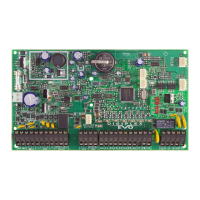



 To Next Page