EasyManua.ls Logo

Payne PG9YAA036060 - User Manual

Payne PG9YAA036060
42 pages
Print Icon
To Next Page IconTo Next Page
Loading...
1
PG9YAA
Installation Instructions
95% SINGLE STAGE DIRECT OR
NON---DIRECT VENT GAS FURNACE
UPFLOW / HORIZONTAL
Special Venting Requirements for Installations in Canada
Installation in Canada must conform to the requirements of CSA
B149 code. Vent systems must be composed of pipe, fittings,
cements, and primers listed to ULC S636. The special vent
fittings and accessory concentric vent termination kits and
accessory external drain trap have been certified to ULC S636 for
use with those IPEX PVC vent components which have been
certified to this standard. In Canada, the primer and cement must
be of the same manufacturer as the vent system -- IPEX System
636, PVC/CPVC Primer, Purple Violet for Flue Gas Venting and
IPEX System 636, PVC Cement for Flue Gas Venting, rated
Class IIA, 65 deg C. must be used with this venting system -- d o
not mix primers and cements from one manufacturer with a vent
system from a different manufacturer. Follow the manufacturers
instructions in the use of primer and cement and never use primer
or cement beyond its expiration d ate.
The safe operation, as defined by ULC S636, of the vent system
is based on following these installation instructions, the vent
system manufacturers installation instructions, and proper use of
primer and cement. All fire stop and roof flashing used with this
system must be UL listed material. Acceptability under Canadian
standard CSA B149 is dependent upon full compliance with all
installation instructions. Under this standard, it is recommended
that the vent system be checked once a year by qualified service
personnel.
The authority having jurisdiction (gas inspection authority,
municipal building department, fire department, etc) should be
consulted before installation to determine the need to obtain a
permit.
Consignes spéciales pour l’installation de ventillation au Canada
L’installation faite au Canada doit se conformer aux exigences du
code CSA B149. Ce systême de ventillation doit se composer de
tuyaux, raccords, ciments et apprêts conformes au ULC S636. La
tuyauterie de ventillation des gaz, ses accessoires, le terminal
concentrique mural ainsi que l’ensemble du drain de condensat
extérieur ont été certifiés ULCS 636 pour l’application d es
composantes IPEX PVC qui sont certifiées à ce standard. Au
Canada l’apprêt et le ciment doivent être du même manufacturier
que le systême de ventillation -- IPEX Système 636, Apprêt
PVC/CPVC. Mauve Violette pour conduit en évacuation des gaz
et IPEX Système 636, ciment pour PVC pour conduit en
évacuation des gaz, évalué CLASSEIIA,65deg.C.doitre
utilisé avec ce systèeme d’évacuation -- ne pas mélanger l’apprêt
et le ciment d’un manufacturier avec le systême de ventillation
d’un autre manufacturier. Bien suivre les indications du
manufacturier lors de l’utilisation de l’apprêt et du ciment et ne
pas utiliser ceux--ci si la date d’expiration est atteinte.
L’opération sécuritaire, tel que définit par ULC S636, du système
de ventilation est basé sur les instructions d’installation suivantes,
ainsi que l’usage approprié de l’apprêt et ciment. Tout arrët feu et
solin de toit utilisés avec ce système doivent être des matériaux
listés UL. L’acceptation du standard Canadien CSA B419 est
directement relié à l’installation conforme aux instructions ci--
haut mentionnées. Le standard Canadien recommande l’
inspection par un personel qualifié et ce, une fois par année.
Les autoritées ayant juridiction (inspecteurs de gas, inspecteurs
en bâtiments, département des incendies, etc) devraient être
consultées avant l’installation afin de déterminer si un permis est
requis.
Question and Answer IconNeed help?

Do you have a question about the Payne PG9YAA036060 and is the answer not in the manual?

Summary

Special Venting Requirements for Canada

Massachusetts Installation Requirements

Carbon Monoxide Detector Installation

Requirements for installing CO detectors in homes with vented gas equipment.

Approved Carbon Monoxide Detectors

Specifies standards and certifications for approved carbon monoxide detectors.

Signage Requirements

Mandatory signage for horizontal vent terminals to indicate gas vent location.

Inspection and Exemptions

Details inspection requirements and lists exemptions from specific installation rules.

Manufacturer Venting System Requirements

Outlines manufacturer's responsibilities for provided or not provided venting systems.

General Safety Considerations

Furnace Reliability Hazards

Risks associated with improper installation or misapplication of the furnace.

Fire, Explosion, and CO Hazards

Critical safety warnings covering fire, explosion, electrical shock, and CO poisoning.

Safe Installation Requirements

Fire, Explosion, and Asphyxiation Hazards

Hazards from improper installation, alteration, service, or maintenance.

Carbon Monoxide Poisoning Hazards

Risks of CO poisoning due to improper combustion or ventilation.

General Safety Rules

Rules for safe operation, maintenance, and hazard awareness.

Installation Procedures

Frozen Water Pipe Hazard Precautions

Measures to prevent property damage from frozen pipes during unattended periods.

Winter Shutdown Procedures

Steps to protect the furnace and condensate trap from freezing.

Location and Clearances

Guidelines for selecting installation location and maintaining clearances.

Installation Requirements and Warnings

Carbon Monoxide Poisoning Hazard

Warning against downflow installations due to CO risk.

Frozen Pipe Hazard Caution

Cautionary advice on protecting against freezing and burst pipes.

Knockout Procedures

Instructions for safely removing knockouts for pipe connections.

Installation Positions

Furnace Installation Considerations

Factors to consider regarding furnace placement, airflow, and connections.

Condensate Trap and Drain Lines

Proper installation of the condensate trap and drain line.

Leveling Requirements

Ensuring the furnace is level for proper condensate drainage.

Vent and Combustion Air Connections

Guidelines for connecting vent and combustion air piping.

Combustion & Ventilation Air

Outdoor Combustion Air Method

Method for supplying combustion air from outdoors.

Air Openings and Connecting Ducts

Specifications for air openings and ducts connecting to the outdoors.

Confined Space Installation Requirements

Rules for installing furnaces in confined spaces with limited air volume.

Indoor Combustion Air (Unconfined Space)

Carbon Monoxide Poisoning Hazard

Warning about CO hazards if air infiltration is inadequate.

Standard and Known-Air-Infiltration Rate Methods

Methods to determine if indoor air infiltration is sufficient.

Ventilation Air Requirements

Venting and Combustion Air Check

Procedure to verify proper venting and combustion air.

Vent and Combustion Air Piping

Two Pipe Direct Vent Installation

Specifics for installing two-pipe direct vent systems.

Dual Certified (PG9 YAA Models)

Installation details for dual certified furnace models.

Contaminated Combustion Air

Considerations for areas with potentially corrosive combustion air.

Piping Guidelines

General recommendations for vent and combustion air piping.

Combustion Air and Vent Piping Insulation

Sizing Combustion Air and Vent Pipe

Procedure for selecting correct pipe diameters based on furnace specs.

Vent Termination Clearances

Carbon Monoxide Hazard Warning

Warning about CO hazards related to vent termination placement.

Condensate Drain Trap

Frozen Pipe Hazard Caution

Caution regarding potential damage from frozen pipes related to condensate.

Condensate Drain Trap Freeze Protection

Methods to protect the condensate trap and line from freezing.

Upflow Installations Top Vent

Top Vent Installation Steps

Step-by-step guide for connecting the top vent for upflow installations.

Upflow Installations Vent through Left Side

Left Side Vent Installation Steps

Step-by-step guide for connecting the left side vent.

Vent Through Right Side (All Models)

Right Side Vent Installation Steps

Step-by-step guide for connecting the right side vent.

Horizontal Left Through Top Vent

Left Top Vent Installation Steps

Step-by-step guide for horizontal left top vent installation.

Horizontal Left-Side Vent

Left Side Vent Installation Steps

Step-by-step guide for horizontal left side vent installation.

Horizontal Right Through Top Vent

Right Top Vent Installation Steps

Step-by-step guide for horizontal right top vent installation.

Horizontal Right Side Vent

Right Side Vent Installation Steps

Step-by-step guide for horizontal right side vent installation.

Connecting Vent and Combustion Air Piping

Combustion Air Pipe Connection

How to connect the combustion air intake pipe.

Vent Pipe Connection

How to connect the exhaust vent pipe.

Joining Pipe and Fittings

Horizontal Termination Procedures

Steps for terminating vent and air pipes horizontally through a wall.

Vertical Termination

Multi Vent Termination Clearances

Spacing requirements when venting multiple furnaces.

Concentric Termination

Vent Termination Clearances

Required clearances for concentric vent terminals.

Concentric Vent Termination Kit Details

Information on specific concentric vent termination kits.

Vertical & Horizontal Termination Guidelines

Procedures for terminating concentric vent kits vertically or horizontally.

Gas Supply and Piping

Gas Supply Requirements

Rules for gas supply pressure and type.

Gas Piping Requirements

Guidelines for installing gas piping according to codes.

Propane Connection and Conversion

Additional Propane Connection Requirements

Extra requirements for connecting propane gas supply.

Propane Conversion

Instructions for converting the furnace for propane gas use.

High Altitude Operation

General Derating Rules

Rules for reducing furnace input rating at higher altitudes.

High Altitude Air Pressure Switch

Notes on air pressure switches for high altitude applications.

Changing Orifices for High Altitude

Natural Gas Input Rating Check

Method to check the furnace's natural gas input rate.

Final Gas Piping Check

Final checks to ensure safe gas piping installation.

Electrical Wiring

Power Supply Wiring

Requirements for connecting the main power supply to the furnace.

Junction Box (J-Box) Relocation

Steps for relocating the electrical junction box.

Thermostat Installation and Settings

Guidance on thermostat installation and setting adjustment.

Optional Equipment Connections

Humidifier;Electronic Air Cleaner

Wiring instructions for humidifiers and EACs.

Furnace Control and Fuse

Information on the furnace control board and its fuse.

Ductwork and Filter Installation

Ductwork and Filter Installation

Instructions for installing air distribution system components.

Ductwork Sizing, Insulation, and Filters

Sizing Ductwork

How to properly size ductwork for airflow.

Ductwork Insulation

Requirements for insulating ductwork in different environments.

Filter Usage and Types

Information on selecting and using furnace filters.

Filter Installation using Optional Filter Rack

Steps for installing filters with an optional rack.

Air Conditioning Addition

Unit Operational Hazard

Warning about improper operation with certain AC coils.

Checks and Adjustments

Startup Procedures

Initial steps for starting up the furnace after installation.

Electrical Operation Hazard

Safety warnings for electrical checks and troubleshooting.

Gas Supply Pressure and Manifold Adjustment

How to check and adjust gas supply and manifold pressures.

Burner and Blower Adjustments

Temperature Rise Check

How to measure and verify the furnace's temperature rise.

Changing Blower Speed

Instructions for selecting and changing blower motor speed taps.

Blower Speed Configuration

Separate Speed Selections

Configuring different speeds for heat, cool, and continuous fan.

Continuous-Fan Operation

Wiring for continuous fan operation using the 'G' terminal.

Hard Wired Continuous Fan Operation

Connecting the fan for continuous operation via a dedicated terminal.

Furnace Maintenance

Maintenance Safety Hazards

Warnings related to electrical, fire, explosion, and CO hazards during maintenance.

Sequence of Operation & Diagnostics

Cooling (Y) Request Sequence

The sequence of events when a cooling call is received.

Continuous Circulating Fan (G) Request Sequence

The sequence of events for continuous fan operation.

Operating Sequences and Modes

Continuous Circulating Fan (Hard-Wired)

Operation of the hard-wired continuous fan feature.

Heating (W) Request Sequence

Detailed sequence for a heating call.

Heating Request with Gas Shut Off Sequence

Sequence when heating is called but gas is shut off.

Control Board Diagnostic Codes

Diagnostic Code Explanations

Meaning of flash codes indicating furnace status or faults.
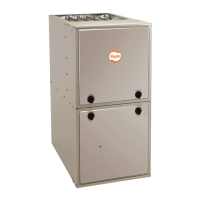
Payne PG9YAA036060 Specifications

General IconGeneral
BrandPayne
ModelPG9YAA036060
CategoryFurnace
LanguageEnglish

Related product manuals