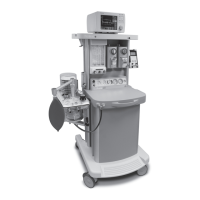
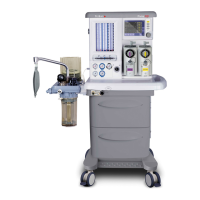
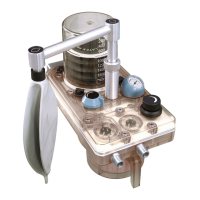
Prma 465 Anaesthetc Machne 2 User Manual
1. Warnings and Cautions
The following WARNINGS and CAUTIONS must be read and
understood before using this anaesthesia system.
Warnngs
1 Ths anaesthesa system s desgned for use only wth
non-flammable anaesthetc agents It must not be used
wth or n close proxmty to flammable anaesthetc
agents, due to a possble fre or exploson hazard
2 Exteror panels must not be removed by unauthorsed
personnel and the anaesthesa system must not be
operated wth such panels mssng Unauthorsed
personnel must not attempt to access fuses or other
electrcal components There s a possble electrc shock
hazard
3 To solate the machne from the mans power supply,
dsconnect the mans cable from the hosptal power
outlet
Always use a mans power outlet socket that can be
easly accessed
4 No ol, grease or other flammable lubrcant or sealant
must be used on any part of the machne n close
proxmty to medcal gas dstrbuton components
There s a rsk of fre or exploson
5 Attachng or removng a medcal gas cylnder
a) Follow approprate manual handlng gudelnes
when lftng
b) heck that the machne yoke and cylnder faces are
dust free and clean and that the sealng washer
provded s n poston between the cylnder valve
and the yoke
c) Tghten the yoke securely before openng the
cylnder valve Dust and drt presents a fre hazard n
the presence of hgh pressure gas Leakage of hgh
pressure gas can cause serous nury
6 The anaesthesa system must be connected to an
anaesthetc gas scavengng system (ASS) to dspose
of waste gas and prevent possble health hazards to
operatng room staff
Ths requrement must be observed durng test
procedures as well as durng use wth a patent
7 Ths machne must only be used wth Selectatec-
compatble vaporzers nstalled on the backbar
Free-standng vaporzers may be accdentally tpped,
resultng n excessve and uncalbrated volumes of
anaesthetc drug enterng the breathng system
8 Only vaporzers wth the Selectatec-compatble nterlock
functon wll nterlock f nstalled on the backbar
The nstallaton of non-nterlock vaporzers allows the
possble operaton of more than one vaporzer at the
same tme
9 The breathng system whch conveys gases from the
anaesthetc machne to the patent and dsposes of
expred gases s a vtal part of the anaesthetc delvery
system
Because breathng systems requre frequent cleanng
they are not a permanent part of the anaesthetc
machne and therefore cannot be drectly under the
control of the anaesthetc machne manufacturer When
mechancal ventlaton s employed the patent breathng
system must be connected drectly to an over-pressure
relef valve to prevent the possblty of barotrauma
10 Always perform a pre-use check of the machne,
ncludng vaporzers, ventlator, absorber and montors
before clncal use Follow the pre-use checklst (see
secton 52) as a mnmum requrement
Many clncal ncdents occur because of a falure to
check for correct functon
11 The system start-up test (secton 54) ncludes an
automatc system test Ths test ncludes system
calbraton tests If the screen dsplays a ‘Fal’ for the
Pressure sensor, Flow sensor, or Flowmeter zero
calbraton tests, follow the nstructons gven n
sectons 751, 752, and 76
DO NOT use any other procedures
If a ‘Fal’ error s stll dsplayed, contact a Penlon-traned
servce engneer
12 The machne must not be used f any of the alarm,
montorng, or protecton system devces are not
functonng correctly
13 Auxlary gas outlets Flow rates greater than 60 L/mn
could affect the fresh gas flow to the patent
14 When the auxlary gas outlets are n use on a machne
usng cylnder supply only (e f the ppelne supply s
not n use), check flow rate requrements, and check that
adequate back-up cylnders are avalable
15 Do not use the machne solely to provde large flows of
oxygen, va the anaesthetc machne auxlary outlets,
to external devces whch may not be equpped wth a
supply falure alarm
16 On machnes wth ppelne connectons only, note that a
malfuncton of the central gas supply wthn your faclty
may cause mmedate cessaton of gas delvery and total
anaesthesa system falure
17 To avod the rsk of electrc shock, ths system must only
be connected to a mans supply wth a protectve earth
Before any electrcally powered machne s used
clncally for the frst tme, check that the hosptal
engneerng department has carred out an earth
contnuty test
18 Before usng any addtonal electrcal equpment
powered by the auxlary sockets on the machne, check
that the addtonal equpment s correctly wred and s
earthed through ts plug
19 A mssng or defectve protectve earth conductor may
ncrease earth leakage currents to the patent to values
exceedng the allowable lmts, resultng n ventrcular
fbrllaton, or nterference wth the pumpng acton of
the heart


 To Next Page