PART 8: MAINTENANCE AND SERVICE
PB1319 (CAT. NO. 5296 ) —154— 22-01691 (R02/02)
Belt Tension
Alternator drive belts (all widths), new or used, should be adjusted to
105-125 pounds (467-566 N.) of tension.
The best method of testing belt tension is to apply a good quality
commercial gauge. If a tension gauge is not available, use this
method of testing:
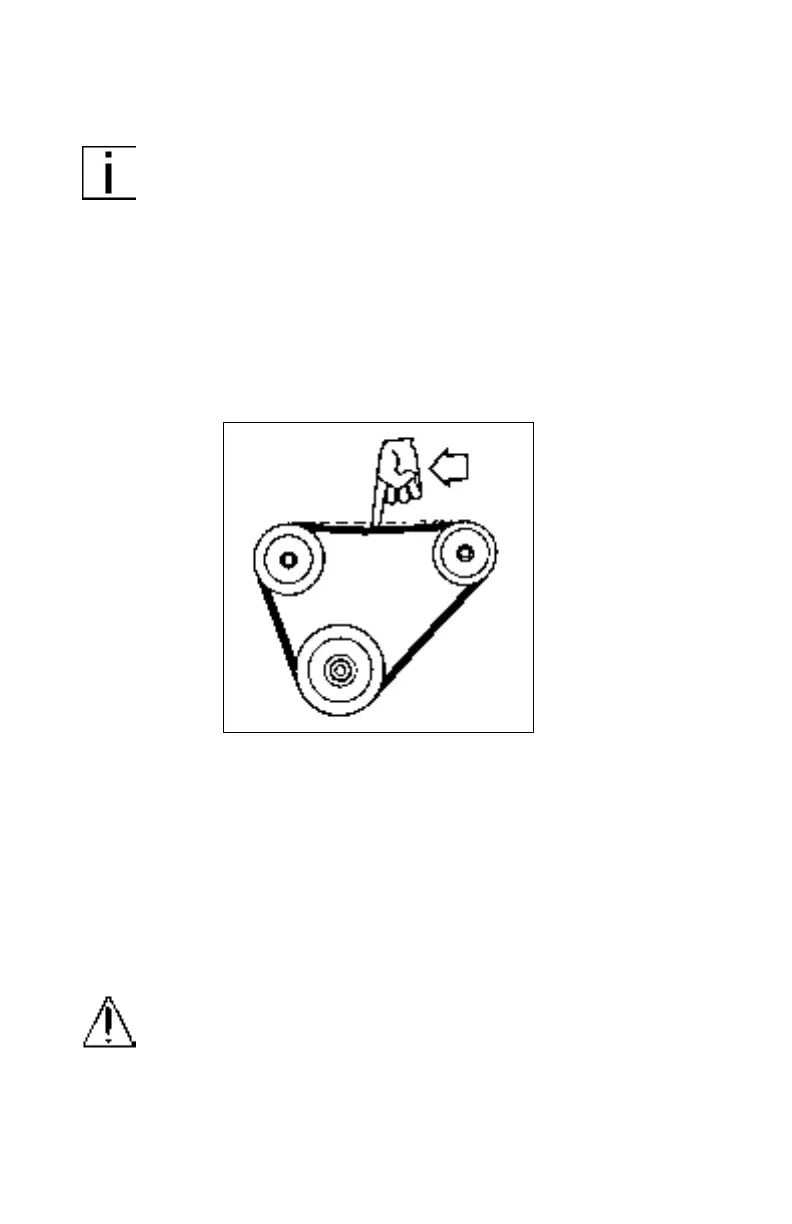
• Apply 25 pounds (111 N.) of force midway between the pulleys.
• Deflection should be one belt thickness for each foot of distance
between the pulley centers.
Tension Test
Retensioning New Belts
A belt is considered “used” after 30 minutes of operation. New belts
will loosen after running for an hour or more. Check for proper ten-
sion after the first period of operation. If the belt can be deflected 1/8
in. (3 mm) more than specified above, tighten according to the section
above on belt tension. Do not tighten belts beyond specified limits.
Damage to bearings and the belts may occur.
Fan Clutch / Fan
To Check Your Fan:
1. Check the fan assembly mounting bolts for tightness. Inspect the
blades for damage.
NOTE: Engines equipped with poly-vee belts are equipped
with tensioners and therefore require no belt adjustments.
WARNING! Thermatic fans engage suddenly without
warning and can hurt you badly. Stay away from the fan
when the engine is running.
02953



 To Next Page