PART 4: CONTROLS AND DISPLAYS
PB1319 (CAT. NO. 5296 ) —43— 22-01691 (R02/02)
such as climbing a long hill on a hot day or stopping after high-speed
driving.
If the “Engine Coolant Temperature” warning light comes on, or you
have any other reason to suspect the engine may be overheating:
• Stop the vehicle, but DON’T TURN OFF THE ENGINE unless a
low water warning device indicates a loss of coolant.
• With the transmission in neutral, check to be certain the oil pres-
sure gauge reads normal. Increase the engine speed to about
1100 - 1200 RPM, maximum. Return the idle speed to normal after
2 or 3 minutes. If the warning light doesn’t go off or the tempera-
ture gauge doesn’t begin to drop, then turn the engine off.
• If the overheating came from severe operating conditions, the tem-
perature should have cooled by this time. If it has not, stop the
engine and let it cool before checking to see if the coolant is low.
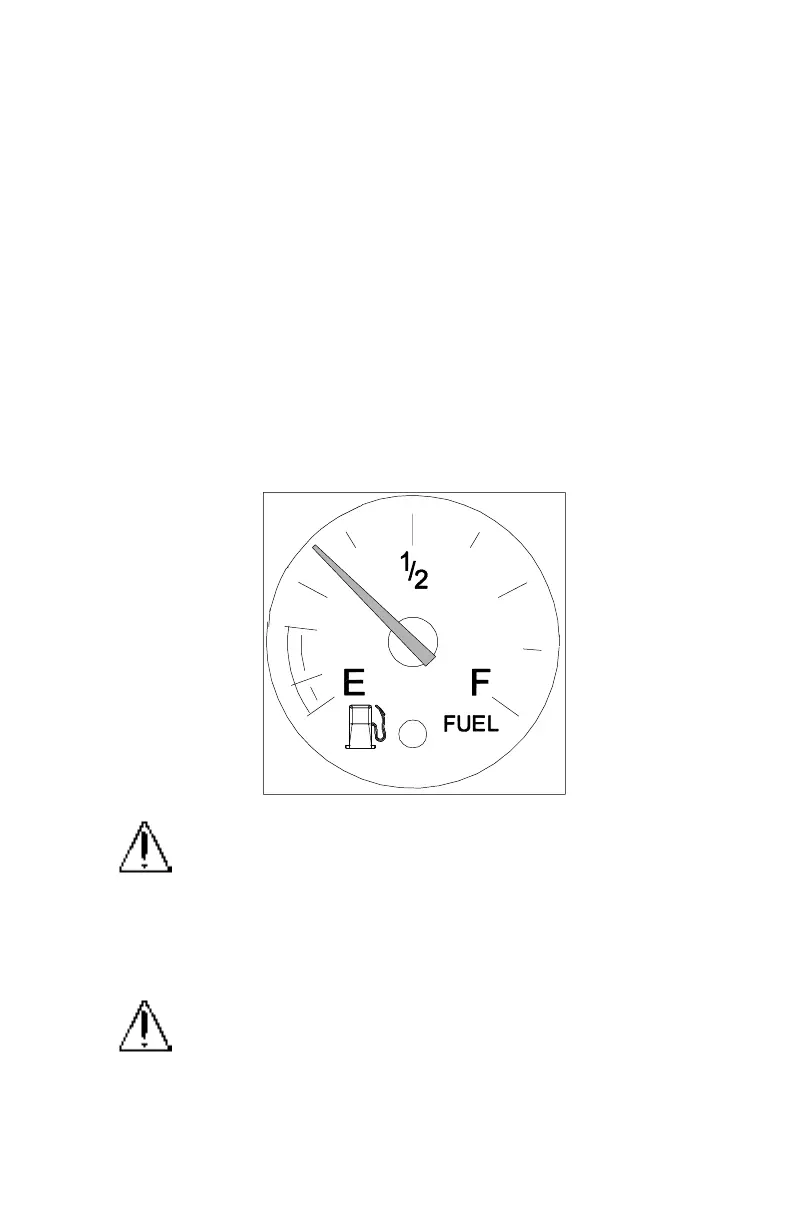
Fuel Gauge
The fuel gauge shows the approximate amount of fuel in the fuel
tanks. You will want to keep your fuel tanks at least half full to reduce
condensation of moisture in the tanks. This moisture can damage
your engine.
WARNING! Do not remove a fuel tank cap near an open
flame. Hot fuel vapors are combustible and can cause an
explosion or fire resulting in injury or death.
WARNING! Carrying additional fuel containers in your
vehicle is dangerous. Full or empty, they may leak,
explode, and cause or feed a fire. Don’t carry extra fuel
containers - even empty ones.
11435


 To Next Page