PART 5: SEAT AND RESTRAINT SYSTEMS
PB1319 (CAT. NO. 5296 ) —55— 22-01691 (R02/02)
the cab structure, and the potential exposure of this system to severe
environmental conditions make it crucial to inspect the three-point seat
belt systems regularly. It is recommended that the seat belt system in a
vehicle be inspected every 20,000 miles (32,000 km) or more often if
the vehicle is exposed to severe environmental conditions. Any seat
belt system that shows cuts, fraying, extreme or unusual wear, signifi-
cant discoloration due to UV exposure, abrasion to the seat belt web-
bing, or damage to the buckle, latch plate, retractor hardware or any
other obvious problem should be replaced immediately, regardless of
mileage.
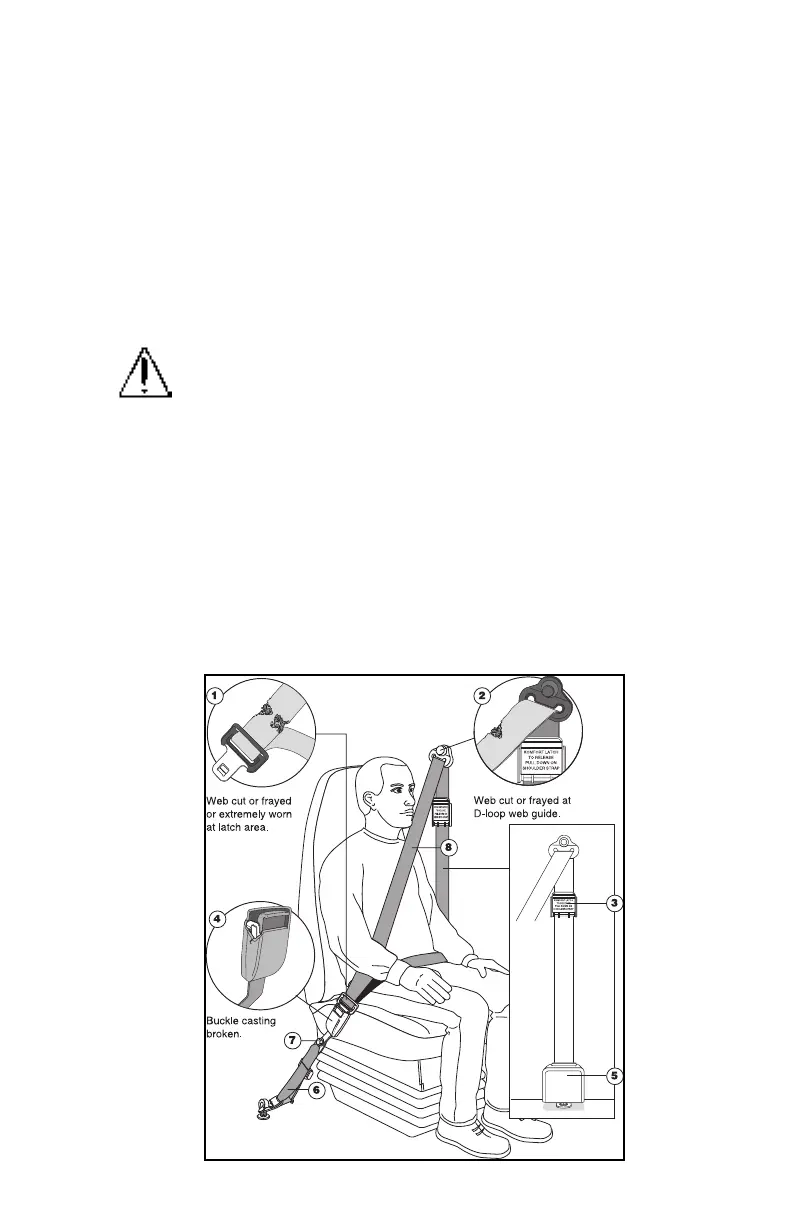
One of the most critical areas to be inspected is the seat belt webbing.
Constant movement of the belt actually means the webbing is experi-
encing wear as it travels in and out of the retractor, through the pillar
loop web guide and through the various pieces of hardware associated
with the belt. The following guidelines detail how to inspect for cuts,
fraying, extreme or unusual wear of the webbing, etc. and damage to
the buckle, retractor, hardware, or other factors which indicate that belt
replacement is necessary.
WARNING! It is important to remember that any time a
vehicle is involved in an accident, the entire seat belt
system must be replaced. Unexposed damage caused
by the stress of an accident could prevent the system
from functioning properly the next time it is needed,
which could result in severe injury or even death.
03004


 To Next Page