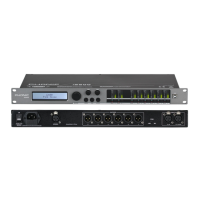
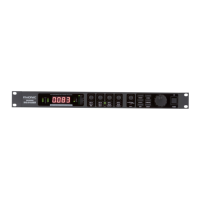
The Phonic MM1705a is a compact mixer designed for various audio applications, including live sound reinforcement, sub-mixing, and music clubs. It is built with rugged construction and can be mounted on a standard 19-inch rack, making it suitable for both touring and fixed PA installations.
Function Description:
The MM1705a serves as a central hub for mixing multiple audio sources, allowing users to control and process signals before sending them to output devices. It features a comprehensive set of input channels, equalization controls, auxiliary sends, and master section controls to achieve a balanced and clear audio mix. The mixer is equipped with phantom power for condenser microphones and offers flexible routing options for various setups.
Important Technical Specifications:
- Balanced Mono Mic/Line channels: 5
- Balanced Stereo Line Channels: 3
- 2T input: 1
- Aux returns: 2 stereo
Outputs:
- Main L/R stereo: TRS, Balanced
- Aux sends: 2, TRS, Balanced
- Submaster: 2, TRS, Balanced
- Phones: 1
- Control RM: TRS, Unbalanced
Channel Strips:
- Aux controls: 8
- Pan/Balance control: 2
- Channel Mute: Yes
- Channel solo with metering: Yes/by assign switch
- LED indicators: -20/solo, Peak
- Bus Assign Switches: Group + ST
- Volume Controls: 60mm
- Inserts: 2 (on channels 1 & 2)
Master Section:
- Aux send masters: 2
- Stereo Aux Returns: 2
- Global Aux Return solo: Yes
- Phones/Control RM Level Control: Yes
- Faders: Main, Group, Mono
Metering:
- Number of channels: 2 (ST)
- Segments: 13
+48VDC Phantom Power Supply: Master switch
Noise (20Hz to 20KHz bandwidth, line inputs to main L/R outputs, all channels assigned, panned L/R):
- Master @ unity, channel fader down: -89dBu
- Master @ unity, channel fader @ unity: -86dBu
S/N ratio, ref to +4: >90dB
THD (Any output, 1KHz @ +14dBu, 20Hz to 20KHz, channel): <0.005%
CMRR (1 KHz @ -60dBu, Gain at maximum): 80dB
Crosstalk (1KHz @ 0dBu, 20Hz to 20KHz bandwidth, channel in to main L/R outputs):
- Channel fader down, other channels at unity: <-86dB
- Channel muted, other channels at unity: <-85dB
- 20Hz~60KHz: +0/-1dB
- 20Hz~100KHz: +0/-3dB
Maximum Levels:
- Mic preamp input: +10dBu
- All other inputs: +22dBu
- Balanced outputs: +28dBu
- Un-balanced outputs: +22dBu
Impedances:
- Mic preamp input: 2 KΩ
- All other inputs (except inserts): 10 KΩ
- RCA 2T outputs: 1.1K ohm
- All other outputs: 100 ohm
Equalization:
- Low EQ: 3-band, +/-15dB, 80Hz
- Mid EQ: 2.5KHz
- Hi EQ: 12KHz
- Low cut filter: 75Hz (-18dB/oct)
Microphone Preamp E.I.N. (150 ohm terminated, max gain): <129.5dBm
Power Consumption: <25 watts
Weight: 4.5 kg
Dimensions (WxHxD): 320x59x333mm (12.6"x2.32"x13.11")
Usage Features:
- Input Channels: The mixer includes 5 balanced microphone/line input channels, with channels 1 and 2 featuring insert points for external processing. There are also 3 stereo line input channels and 2 stereo line returns.
- Gain Control: Each mono input channel has a rotary gain knob with indications for both microphone (0~+60 dB) and line (-20~+40dB) input signals, allowing for precise level adjustment to prevent distortion or excessive noise.
- Equalizers: Each input channel is equipped with a three-band EQ (HIGH, MID, LOW) to shape the sound, control feedback, and improve live PA sound. The HIGH and LOW controls have a shelving response, while the MID control is a bandpass response.
- Low Cut Filter: Channels 1-5 feature an 18dB per octave 75Hz low cut filter, useful for reducing stage rumble or popping from microphones.
- AUX / EFX Section: Dedicated rotary faders send input channel signals to AUX or EFX buses. The AUX send can be set to PRE-fader (for foldback/monitor) or POST-fader (for processor units) via a push button. The EFX send is always POST-fader and both AUX and EFX sends are POST-EQ.
- PAN Control: This control allows smooth positioning of the channel signal across the stereo image, feeding the left and right mix buses.
- PEAK/-20/PFL Indicators: LED indicators for each input channel light up to show excessively high signal levels (PEAK), signals higher than -20 dBu (-20), and when Pre-Fader-Listening (PFL) is active. PFL allows monitoring individual channels through headphones without affecting the main mix.
- Routing Switches (L/R OR GP): Input channel signals can be routed to the main stereo output (L/R) or to Group busses (1-2). The PAN control also influences this routing.
- Channel Faders: Long-throw 60mm linear faders provide precise control over channel levels and clear visual indication.
- Stereo Channels (6-11): Designed for stereo line-level signals from sources like keyboards, drum machines, and synths. They function similarly to mono channels but include balance adjustment instead of gain settings.
- AUX RTN, EFX RTN, 2T RTN: Dedicated control sections for auxiliary, effects, and 2-track returns, each with a level knob and a PFL button for monitoring.
- Master Section Controls: Includes AUX OUT and EFX OUT controls for creating additional mixes, a PHONES knob for headphone level, and GROUP TO L/R & AFL buttons for routing group signals to the main mix and monitoring.
- Master Display: A 13-segment LED meter shows the level of the master mix L and R in stereo mode. A blue PWR LED indicates power status, and a green PFL LED lights up when PFL is active.
- MONO LEVEL CONTROL: Adjusts the level of the mono mix output, which can be used for a center cluster or other areas.
- MAIN L/R OUTPUT FADER: 60mm long faders control the overall output level of the main L/R mix.
- Phantom Power Switch: A global +48V phantom power switch on the rear panel activates power for condenser microphones. It is recommended to have all faders down when switching this on and to plug in mics after activation to prevent noise.
- Power Switch: Located on the rear panel. All faders should be pulled down before turning on the power to prevent high-level transients.
Maintenance Features:
- Cleaning: The unit should be cleaned with a soft dry brush and occasionally a damp cloth. Solvents should not be used as they can damage paint or plastic parts. Regular care ensures long life and reliability.
- Cable Management: Run audio cables separately from dimmer wiring, using balanced lines where possible. Cross audio and lighting cables at right angles to minimize interference. Keep unbalanced cabling as short as possible.
- Cable Inspection: Regularly check and label cables for easy identification.
- Damage Reporting: If the unit is damaged during transportation, the dealer and shipping company should be notified immediately to ensure claims for damage or replacement are granted.
- Grounding: Proper grounding is crucial to prevent electrical shock and minimize interference. The main power should always be connected with 3-prong plugs, and ground insulator plug adapters should not be used without proper grounding.
- Troubleshooting Hum: If hum occurs, check the ground connection for the system. If the fault cannot be found, try connecting the ground pin of the input connectors. Ensure there is only one proper ground point for the audio system.

 Need help?
 General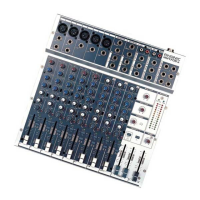

 To Next Page