33
12,000 manual entries. There is no averaging of data in Tag mode. Tags are set via
the PC using the 2020PRO
Plus Comm software.
Recorded data can be reviewed on the display or downloaded to a computer. Data
are recorded by date and time.
The 2020PRO
Plus has 5 keys for instrument operation. The keys are used to set up
and calibrate the 2020PRO
Plus. All information entered with the keys and stored in
the 2020PRO
Plus’s memory is retained when the instrument is switched off. The
clock and calendar continue to operate and do not need to be reset when the
2020PRO
Plus is turned on.
General Operation
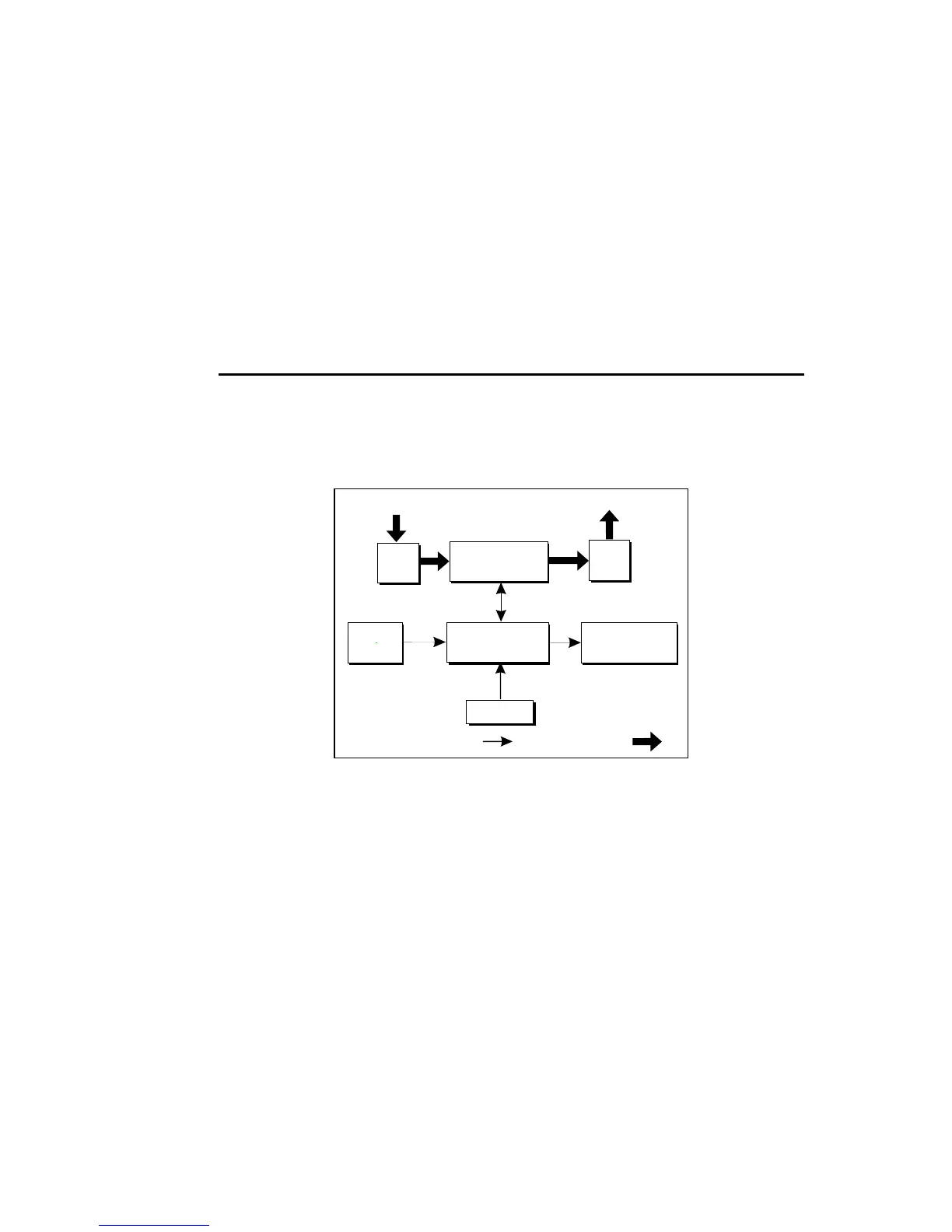
The 2020PROPlus is a microprocessor-controlled air monitor for measuring the
presence of photoionizable compounds in air at parts-per-million levels. The block
diagram in Figure 2 shows the main components of the 2020PRO
Plus.
Inlet
Filter
Photoionization
Detector
Sample In
Sample Out
Display and
I/O Connector
Keypad
Microprocessor
Power
Supply
Electrical Connections
Gas Connections
Pump
Figure 2. The 2020PRO
Plus Block Diagram
The microprocessor controls the components of the instrument and interprets and
records the signal generated by the photoionization detector (PID). Recorded data
and setup information entered into the microprocessor’s memory are retained when
the 2020PRO
Plus is turned off.
A pump continuously pulls the air under test through the 2020PRO
Plus’s PID. The
PID converts the concentration of photoionizable compounds in the sample into an
electrical signal. The microprocessor subtracts any background from the signal and
divides this signal by a sensitivity obtained by calibrating with a standard gas of
known concentration. This concentration appears on the 2020PRO
Plus’s display
and, depending on the values entered through the 2020PRO
Plus’s keypad, an alarm
status may be displayed and an audio signal may be heard.


 To Next Page