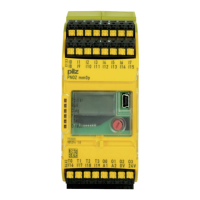
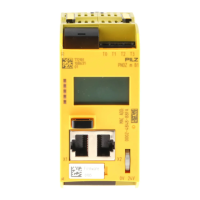
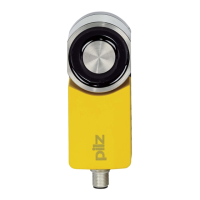
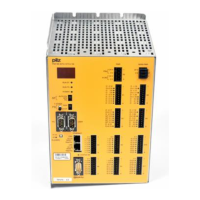
The PNOZ mm0.2p is a configurable, safe, compact controller from Pilz, designed for safety-related applications in industrial environments. This device serves as a base unit within the PNOZmulti Mini safety system, offering integrated protection mechanisms and a range of functions for monitoring and controlling safety circuits.
Function Description
The PNOZ mm0.2p is a base unit that forms the core of a PNOZmulti Mini safety system. It is designed to be configured using the PNOZmulti Configurator software, allowing users to define safety functions and outputs according to specific application requirements. The device features built-in self-monitoring, ensuring the integrity of the safety circuit.
Key functions include:
- Integrated Protection Mechanisms: The relay meets the following safety requirements: the circuit is redundant with built-in self-monitoring, the safety device remains effective in the case of a component failure, and the safety outputs are tested periodically using a disconnection test.
- Safety Outputs: The device provides 4 safety outputs, which can be configured for various applications. These outputs are designed to comply with EN ISO 13849-1 and up to SIL CL 3 of EN IEC 62061.
- Configurable Inputs/Outputs: The PNOZ mm0.2p supports 8 configurable inputs/outputs (I0 to I7) and 4 configurable outputs (O0 to O3). These can be configured for standard applications or specific safety functions.
- Test Pulse Outputs: The device includes test pulse outputs for monitoring external devices, such as E-STOP pushbuttons, two-hand buttons, safety gate limit switches, start buttons, light beam devices, scanners, enabling switches, PSEN, operating mode selector switches, and safety mats.
- Diagnostics: The device offers comprehensive diagnostic capabilities. Status and error messages are displayed via LEDs on the unit and can be read from the PNOZmulti Configurator via the USB port. An error stack saves error messages for later analysis.
- System Reaction Time: The calculation of the maximum reaction time between an input switching off and a linked output in the system switching off is described in the "PNOZmulti System Expansion" document.
- Connection of Base Units: The PNOZ mm0.2p can be connected to other base units and expansion modules via an integrated interface (RJ45 socket) for safe connection of two configurable control systems. Data exchange between units is cyclical, and up to a maximum of 4 link modules can be connected to any one base unit.
- Chip Card: A chip card is used to download the safety circuit created using the PNOZmulti Configurator. This card stores the project data and allows for easy transfer and backup of configurations.
Important Technical Specifications
- Supply Voltage: 24 VDC.
- Voltage Tolerance: -15 %/+20 %.
- Output of External Power Supply (DC): 35 W (at no load), 8 W (at load).
- Residual Ripple DC: 5 %.
- Supply for SC Outputs: 192 W.
- Configurable Inputs/Outputs (Auxiliary Outputs):
- Number: 8
- Galvanic Isolation: No
- Input Voltage: 24 VDC
- Input Current at Rated Voltage: 5 mA
- Min. Pulse Duration: 16 ms
- Pulse Suppression: 0.6 ms
- Signal Level at "1": 15 ... 30 VDC
- Signal Level at "0": -3 ... +5 VDC
- Maximum Input Delay: 4 ms
- Configurable Auxiliary Outputs:
- Voltage: 24 VDC
- Output Current: 75 mA
- Power: 1.8 W
- Short Circuit-Proof: Yes
- Residual Current at "0": 0.5 mA
- Voltage at "1": UB - 2 V at 0.1 A
- Virtual Inputs/Outputs: 32 virtual inputs and 32 virtual outputs for data transfer.
- Semiconductor Outputs:
- Number: 4
- Switching Capability: 24 VDC, 2 A
- Power: 48 W
- Signal Level at "1": UB - 0.5 VDC at 2 A
- Residual Current at "0": 0.5 mA
- Max. Capacitive Load: 1 µF
- Max. Duration of Off Time During Self Test: 330 µs
- Switched Delay: 30 ms
- Potential Isolation: Yes
- Short Circuit-Proof: Yes
- Test Pulse Outputs:
- Number: 4
- Voltage: 24 VDC
- Current: 0.1 A
- Max. Duration of Off Time During Self Test: 5 ms
- Short Circuit-Proof: Yes
- Potential Isolation: No
- Times:
- Switch-on Delay: 5 s
- Supply Interruption Before De-energisation: 20 ms
- Simultaneity, Channel 1 and 2 Max.: 3 s
- Simultaneity in the Two-Hand Circuit: 0.5 s
- Max. Data Transmission Time: 35 ms
- Environmental Data:
- Ambient Temperature (Standard): EN 60068-2-14 (0 - 60 °C)
- Forced Convection in Control Cabinet Off: 55 °C
- Storage Temperature: EN 60068-2-1/-2 (-25 - 70 °C)
- Humidity: 93 % r.h. at 40 °C
- Max. Operating Height Above Sea Level: 2000 m
- Vibration: EN 60068-2-6 (10 - 150 Hz, 1g acceleration)
- Shock Stress: EN 60068-2-27 (15g, 11 ms duration)
- Overvoltage Category: II
- Pollution Degree: 2
- Rated Insulation Voltage: 30 V
- Rated Impulse Withstand Voltage: 2.5 kV
- Protection Type: EN 60529 (IP20 housing, IP54 terminals, IP54 mounting area)
- Mechanical Data:
- Mounting Position: Horizontally on mounting rail.
- DIN Rail: 35 x 7.5 EN 50022.
- Recess Width: 27 mm.
- Cable Length (Max.): 1 km (per input), 2 km (sum of individual cable lengths at test pulse output), 1 km (max. cable length between two link modules).
- Material: PC (bottom, front, top).
- Connection Type: Spring-loaded terminal, screw terminal.
- Weight: 235 g.
- Safety Characteristic Data (Logic):
- CPU (2-channel PL e, Cat. 4, SIL CL 3, PFHd 1,54E-09, SIL 3, TM 20)
- Expansion Right/Left (PL e, Cat. 4, SIL CL 3, PFHd 2,13E-10 / 2,38E-10, SIL 3, TM 20)
- Link Interface (PL e, Cat. 4, SIL CL 3, PFHd 6,53E-10, SIL 3, TM 20)
- Safety Characteristic Data (Input):
- 1-channel PL d (Cat. 2, SIL CL 2, PFHd 3,95E-09, SIL 2, TM 20)
- 2-channel PL d (Cat. 4, SIL CL 3, PFHd 4,61E-10, SIL 3, TM 20)
- Short Circuit-Forming Safety Mats (PL d, Cat. 3, SIL CL 2, PFHd 1,86E-09, SIL 2, TM 20)
- 1-channel, Pulsed Light Barrier (PL e, Cat. 4, SIL CL 3, PFHd 3,95E-10, SIL 3, TM 20)
- Safety Characteristic Data (Output):
- SC Outputs 1-channel with Advanced Fault Detection (PL e, Cat. 4, SIL CL 3, PFHd 7,63E-10, SIL 3, TM 20)
- SC Outputs 1-channel (PL d, Cat. 2, SIL CL 2, PFHd 9,90E-10, SIL 2, TM 20)
- SC Outputs 2-channel (PL e, Cat. 4, SIL CL 3, PFHd 7,86E-10, SIL 3, TM 20)
Usage Features
- Installation: The unit is designed for installation in a control cabinet with a protection type of at least IP54. It should be mounted on a horizontal mounting rail, ensuring adequate ventilation and clearance from heat-producing units (at least 20 mm on the sides and 30 mm on top/bottom). Electrostatic discharge precautions must be observed during installation.
- Commissioning: Before commissioning, the wiring must be checked against the circuit diagram. The safety system and input circuits must always be supplied by a single power supply. Test pulse outputs must be exclusively used to test the inputs. The maximum cable length between two base units in a connection is 100 m.
- Chip Card Usage: The chip card is essential for commissioning. It stores the project data and allows for easy transfer and backup. When replacing a chip card, ensure the contact surface is clean and undamaged. The project can be loaded from the chip card or via a USB port.
- Operation: The device features LED indicators for "POWER" and "RUN" status, as well as diagnostic LEDs for various states (Run, Diag, Fault, IFault, OFault). A rotary knob on the unit's display allows navigation through menu levels and confirmation of settings. The display provides information on the device status, error messages, project info, IP address, interface, and allows for actions like stopping the device, resetting the project, or exiting menus.
- Error Handling: The device provides detailed error messages on the LC display and an error stack for historical data. Errors can include chip card issues, faulty test pulses, partially operated functions, feedback loop errors, operating mode switch selector errors, faulty outputs, supply issues, and relay device/termination plug errors. The rotary knob can be used to exit the error stack or reset the unit.
Maintenance Features
- Diagnostics: The integrated diagnostic functions, including LED indicators and the LC display, provide real-time status and error information, aiding in quick troubleshooting. The error stack stores detailed error messages, which can be accessed via the display or the PNOZmulti Configurator.
- Chip Card Management: The chip card simplifies maintenance by allowing easy backup and restoration of project configurations. In case of a device replacement, the project can be quickly loaded onto the new unit using the chip card.
- Software Support: The PNOZmulti Configurator software provides online help and detailed documentation for troubleshooting and configuration.
- Qualified Personnel: Maintenance and repair operations, including assembly, installation, programming, commissioning, and operation, must be performed by qualified and knowledgeable personnel who are familiar with the relevant international laws, directives, and standards.
- Warranty and Liability: All claims to warranty and liability will be rendered invalid if the product is used contrary to its purpose, damaged, or if operating personnel are not suitably qualified. Any type of modification made to the PCB boards or soldering work will also invalidate the warranty.
- Disposal: In safety-related applications, the device must be disposed of in compliance with the mission time TM and safety-related characteristic data. When decommissioning, local regulations regarding the disposal of electronic devices must be observed.
- For Your Safety: The unit meets all necessary conditions for safe operation. However, users should always ensure that the following safety requirements are met:
- This operating manual describes only the basic functions of the unit. Advanced functions are described in the online help for the PNOZmulti Configurator, in the "PNOZmulti Communication Interfaces" document, and in "PNOZmulti Special Applications".
- Note the "PNOZmulti Installation Manual" and "PNOZmulti Safety Manual".
- Adequate protection must be provided for all inductive consumers.
- Do not open the housing or make any unauthorised modifications.
- Ensure you shut down the supply voltage when performing maintenance work (e.g., exchanging contactors).

 Need help?
 General

 To Next Page