Need help?
Do you have a question about the Pit Boss PB336GS and is the answer not in the manual?
Critical hazards and precautions for safe operation.
Procedure to test for gas leaks before operating the griddle.
Step-by-step instructions for igniting the griddle burners.
Alternative method for lighting the griddle burners if igniter fails.
Instructions for safely turning off and securing the griddle after use.
Solutions for igniter issues, no spark, or no gas supply.
Addresses flare-ups from fatty meats or improper cooking temperatures.
Solutions for issues like no gas flow or gusting winds.
Solutions for blocked ports or an empty gas tank.
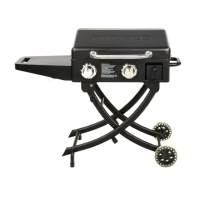
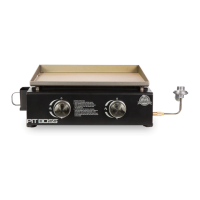
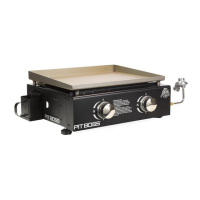
The Pit Boss 336GS Tabletop Gas Griddle is a portable outdoor cooking appliance designed for household use, offering a versatile cooking experience. It is not intended for commercial use or for installation in recreational vehicles or boats. This griddle operates on liquid propane gas and is built for safe and efficient outdoor cooking.
The primary function of the Pit Boss 336GS is to provide a flat, heated cooking surface for various outdoor culinary tasks. It uses propane gas to fuel its burners, which heat a hot plate to a range of temperatures suitable for grilling, searing, frying, and other griddle-style cooking methods. The appliance is designed to be user-friendly, with controls for adjusting heat and a straightforward lighting procedure. Its tabletop design makes it convenient for use on various outdoor surfaces, provided they are stable and level. The griddle includes a grease cup system to manage cooking byproducts, ensuring a cleaner cooking environment and reducing fire hazards.
Before its first use, the griddle requires a burn-off period to heat clean internal components and dissipate any manufacturing odors or foreign matter. This ensures the appliance is ready for food preparation. The lighting procedure involves connecting an LP gas cylinder, turning the control knob to the OFF position, then pushing and turning it counter-clockwise to HIGH. A "click" sound indicates a spark from the igniter, and users should visually confirm the flame. If ignition doesn't occur within five seconds, the control knob should be turned to OFF, and after a five-minute wait, the lighting procedure can be repeated. In case of igniter failure, a manual lighting procedure is provided, which involves using a lit match secured with a lighting rod to ignite the burners. It's crucial not to use spirits, lighter fluid, or kerosene for lighting.
For optimal performance, the LP gas cylinder should be connected securely and allowed to hang vertically off the edge of a table or sit stably on a clean, level surface. The griddle should never be transported with the gas cylinder attached to prevent gas leaks. When cooking, it's recommended to use different platters and utensils for raw and cooked meats to prevent cross-contamination. Hot foods should be kept hot (above 60°C / 140°F) and cold foods cold (below 3°C / 37°F), and cooked foods should not be left out for extended periods. Marinades should not be reused unless boiled. Defrosting meats should always be done by refrigeration.
The griddle's design emphasizes safety, requiring a minimum clearance of 610 mm (24 inches) from combustible constructions on the sides and back. It must always be used outdoors in a well-ventilated area, away from windy conditions, and never under overhead, unprotected combustible surfaces. The flow of combustion and ventilation air around the griddle must not be obstructed. In the event of a grease fire, the griddle should be turned OFF until the fire is out, and water should not be used. An all-class (ABC) fire extinguisher is a valuable safety item to keep nearby.
Regular cleaning and maintenance are essential for prolonging the lifespan and ensuring the safe operation of the Pit Boss 336GS. A leak test is a critical pre-use procedure, especially before the first use, after changing the gas cylinder, after travel, or after prolonged storage. This involves mixing a soapy water solution and applying it to the seal between the regulator and the gas cylinder. Streams of bubbles indicate a leak, which must be corrected before using the griddle. If a leak cannot be corrected, customer service or local fire officials should be contacted.
Burner components should be cleaned whenever heavy build-up is found, ensuring no blockages from debris or insects in the burner tube or portholes. Spiders and small insects can build nests, webs, and lay eggs in the burner tube, obstructing gas flow. If storing the griddle or before an extended period of non-use, the burner should be removed and wrapped with aluminum foil to prevent insect entry. The burner is preset for optimal flame performance, typically a blue flame with a small yellow tip. Excessively yellow, orange, or irregular flames indicate a need to clean oil and food deposits from the burner surface and portholes to improve airflow.
The griddle surface, which comes pre-seasoned, requires cleaning and re-seasoning after each use to prevent rust, extend its life, and maintain a non-stick cooking surface. This involves using a spatula or scraper to remove food and debris, then applying an even coat of cooking oil (vegetable, olive, peanut, coconut, or sesame oils are suitable) to the cooking surface. After seasoning, the griddle should be turned off and allowed to cool in a cool, dry location. The grease cup should be checked and cleaned frequently, depending on the type of foods cooked. For complete protection against weather and pollutants, a grill cover is recommended, and for long-term storage, the unit should be kept under a cover in a garage or shed, with the gas cylinder removed and stored outdoors.
Checking the gas level in the LP gas cylinder is done while the griddle is in operation by placing a hand at the top of the tank and slowly moving down the side until a cool spot is felt, indicating the approximate amount of gas remaining. If three-quarters empty, the tank should be replaced. It is strictly prohibited to use charcoal briquettes or any flammable material with the griddle, as this voids the warranty and poses significant fire and explosion risks.
 General
| Cooking Surface Area | 336 sq in |
|---|---|
| Burners | 2 |
| Burner Material | Stainless Steel |
| Material | Steel |
| Fuel Type | Propane |
| Weight | 60 lb |
| Temperature Range | 200-450°F |
| Grease Management System | Rear grease tray |

 To Next Page