14
CLEANING AND DISPOSAL
1. All surfaces in the work area should be vacuumed and thoroughly cleaned daily for
the duration of the sanding project. Vacuum filter bags should be changed frequently.
2. Plastic drop cloths should be gathered up and disposed of along with any dust chips
or other removal debris. They should be placed in sealed refuse receptacles and
disposed of through regular trash pick-up procedures.
During clean up, children and pregnant women should be kept away from the
immediate work area.
3. All toys, washable furniture and utensils used by children should be washed
thoroughly before being used again.
MOUNTING AND USING WIRE BRUSHES AND WIRE WHEELS
Wire cup brushes or wire wheels screw directly on the grinder spindle without the use of
flanges. Use only wire brushes or wheels provided with a 5/8 inch-11 threaded hub. A
Type 27 guard is required when using wire brushes and wheels.
CAUTION: Wear work gloves when handling wire brushes and wheels. They
can become sharp.
CAUTION: Wheel or brush must not touch guard when mounted or while in use.
Undetectable damage could occur to the accessory, causing wires to fragment from
accessory wheel or cup.
MOUNTING WIRE CUP BRUSHES AND WIRE WHEELS
WARNING: To prevent accidental operation, turn off and unplug tool before
performing the following operations. Failure to do this could result in serious
personal injury.
1. Thread the wheel on the spindle by hand.
2. Depress spindle lock button and use a wrench on the hub of the wire wheel or brush
to tighten the wheel.
3. To remove the wheel, reverse the above procedure.
CAUTION: Failure to properly seat the wheel hub before turning the tool on may
result in damage to tool or wheel.
USING WIRE CUP BRUSHES AND WIRE WHEELS
Wire wheels and brushes can be used for removing rust, scale and paint, and for
smoothing irregular surfaces.
NOTE: The same precautions should be taken when wire brushing paint as when sanding
paint (see pages 12 and 13).
1. Allow the tool to reach full speed before touching the tool to the work surface.
2. Apply minimum pressure to work surface, allowing the tool to
operate at high speed. Material removal rate is greatest when the
tool operates at high speed.
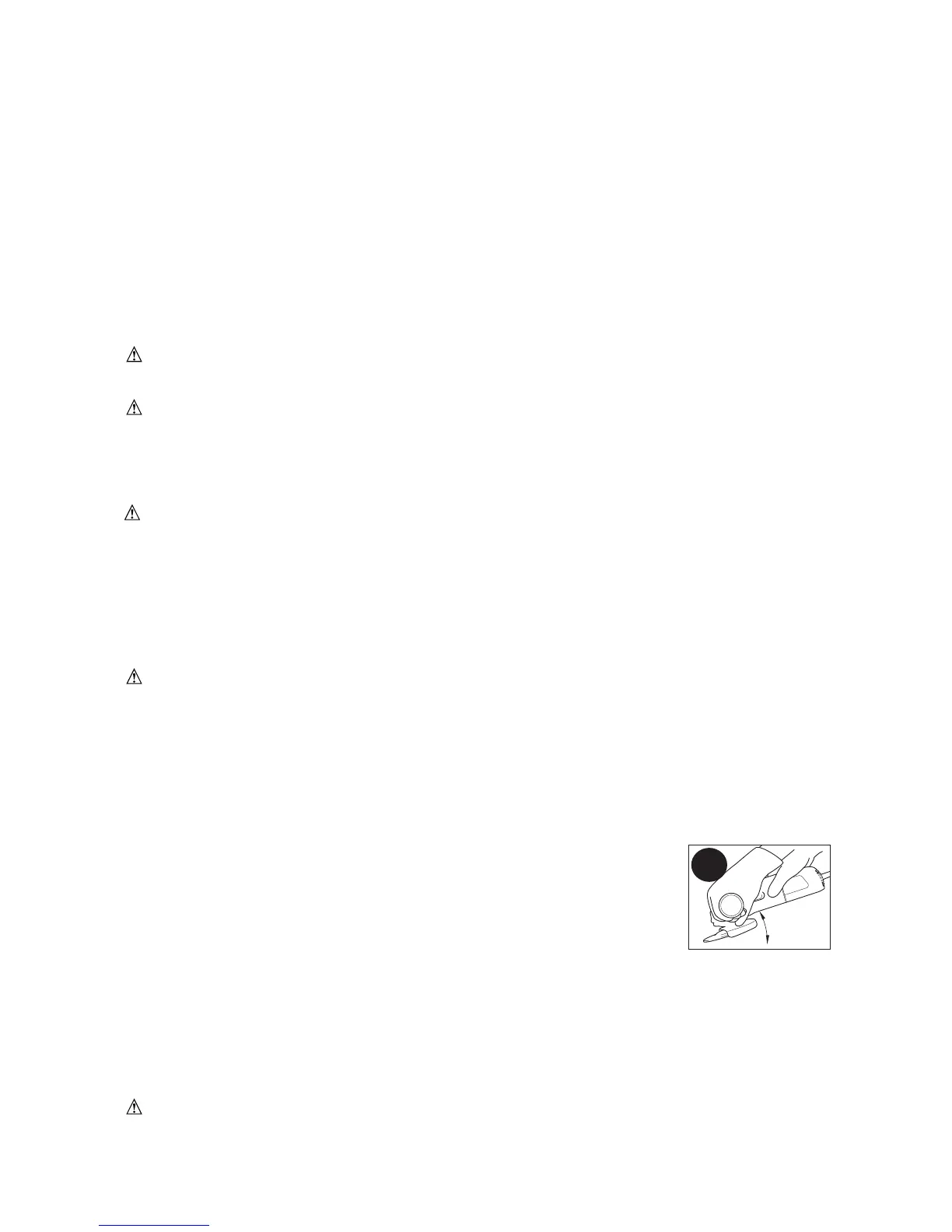
3. Figure N - Maintain a 5˚ to 10˚ angle between the tool and work
surface for wire cup brushes.
4. Maintain contact between the edge of the wheel and the work
surface with wire wheels.
5. Continuously move the tool in a forward and back motion to avoid creating gouges
in the work surface. Allowing the tool to rest on the work surface without moving, or
moving the tool in a circular motion causes burning and swirling marks on the work
surface.
6. Remove the tool from the work surface before turning the tool off. Allow the tool to
stop rotating before setting it down.
CAUTION: Use extra care when working over an edge, as a sudden sharp
movement of grinder may be experienced.
MOUNTING AND USING CUTTING (TYPE 1) WHEELS
Cutting wheels include diamond wheels and abrasive discs. Abrasive cutting wheels for metal
N
5˚-10˚


 To Next Page