snisrvs-
page
1
Lottie <Bat<py
•
OTHER
INGREDIENTS
cont.
Things like
cheese, milk and fresh
fruit contain
quite a lot of
water which will determine the look
of the
finished
loaf. At
first
you
can
stick to dry substitutes like
parmesan
cheese,
dried milk or
dried
fruit.
As
you become more
proficient
with
the machine
you
will instinctively know
whether
the
dough
looks
too
wet
or too dry and can add flour or
water
during
the
process.
Remember
to consider the salt
content
of
the
ingredients
you add.
Salt
can
slow
down the yeast.
Finally,
as a
rule
of
thumb,
if
the
added ingredients are
wet like
yoghurt or finely powdered like dried
herbs they
can go
into
the
mixture
at the start of the process. For things
like
nuts or dried
fruit there is a time during
the process where the
machine
will
beep
to
let
you know it's time
to
add
these
to the
dough
mixture.
Refer
to the CYCLE TIME table
so you
know
when to
expect the beep.
ENVIRONMENT
Last but not
least of
the ingredients is
the environment
in
which the
bread
is made. The
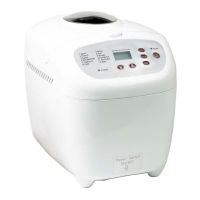
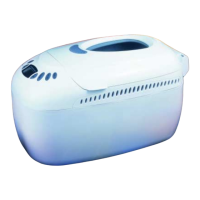
Prima
Home Bakery will
work
well in a
wide range
of
temperatures
but there
could be a
difference of
15%
in loaf
size between
a very
warm
room and
a
very
cold room.
Do not site your breadmaker
in a
draughty
part of the house. The machine will
offer some
protection
to
the dough against
draughts but it does have limits.
If the
humidity in the room
is
high
this
too could effect the loaf.
As
a
general rule, if the room
is comfortable
for you it will be
comfortable for
your bread maker.
•
STORING
YOUR
BREAD
14
Home made bread
contains
no
artificial
preservatives.
However, if you
store
the bread in a clean, air-tight
container
in
the refrigerator it should
keep
for
5-7
days. The bread is
also
good to freeze but allow finished
loaves
to go cold before
placing into
a
polythene
bag and storing in the freezer.



 To Next Page