17
The connection has to be done with fitting adapters and gaskets appropriate for the used gas type (see technical data).
A fast acting shutoff valve must be installed on the gas inlet line to the oven. The valve must be type test approved according to the current
regulations. The connections of the gas main can be permanent or detachable; if flexible metal tube is used, this should be made of stainless and
corrosion resistant material (do not use rubber hose!). Every type of chosen sealing material used for connections have to be tested and
approved for this purpose. All connections between the mains and the appliance must be tested for leakage. The recommended method is to use
a proprietary leak detection spray or a non-corrosive foamy liquid of any general description can simply be brushed onto the fittings: the
important thing is that NO BUBBLES SHOULD APPEAR. WARNING: NEVER ANY CIRCUMSTANCES TEST FOR GAS LEAKS WITH A NAKED FLAME.
3.4.4. DRAINING WATER AND STEAM EMISSION
Water
The water is drained through a pipe made of a heat resistance material ( temperature of the draining water is about 90°C). Between the drain of
the oven and the outlet of the water system it must be positioned a siphon: this to avoid the return of the hot steam emissions/discharges of the
cooking chamber. The diameter of the pipe will be 50 mm and positioned 20 cm under the draining connection.
Vents
Vents are positioned on the top of the oven: don’t block, shut or duct into other pipes.
Kept a distance between the vents and materials or furniture which could be damaged.
The oven can be positioned under a suction hood or under a ducted ceiling.
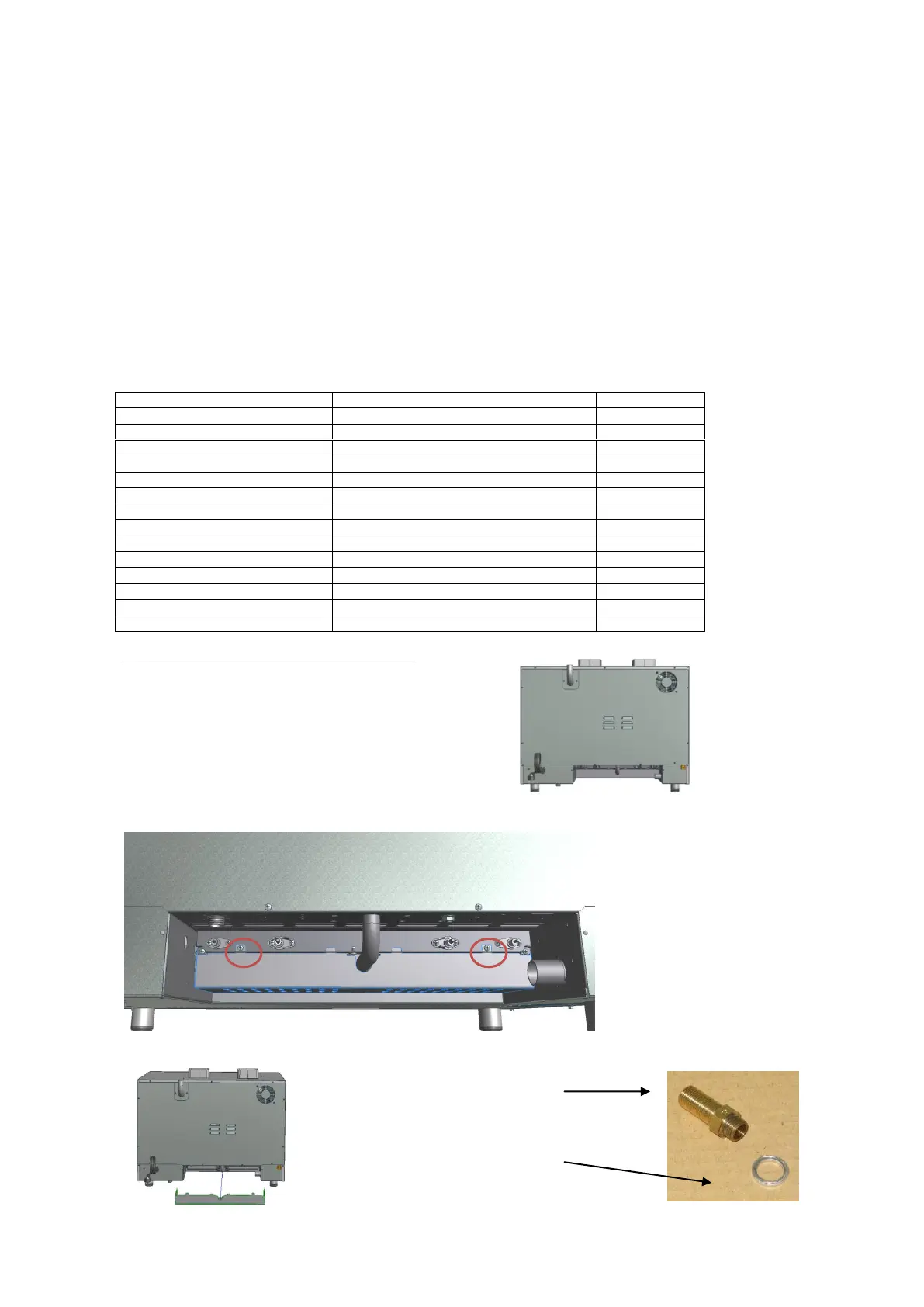
3.5. GAS OVENS: SOSTITUTION OF NOZZLES.
TABLE FOR NOZZLE SUBSTITUTION
G30 28..30 mbar G31 30…37 mbar
G30 28..30 mbar G31 30…37 mbar
You have to close the gas tap before make any operation.
Back side of the oven
A- unscrew the screws of the cover panel of the burner
B- remove the lower panel of the burner



 To Next Page