6
heat from the hot gas is transferred to the cool swimming pool water circulating through
the heat exchanger.
The pool water becomes warmer and the hot gas returns to its liquid form as it flows
through the CONDENSER coil. The gas then passes through the CAPILLARY TUBE
and the whole process begins again.
Developments in heat pump technology mean that today heat pumps can efficiently
collect heat from the outside air even when the temperature is as low as 7-10°C. This
means that for tropical and subtropical climates the pool can be maintained between
26°C and 32°C.
1.3 Where to install the heat pump
The unit will perform well in any location as long as the following are available:
Fresh air
Electricity
Pool filtration piping
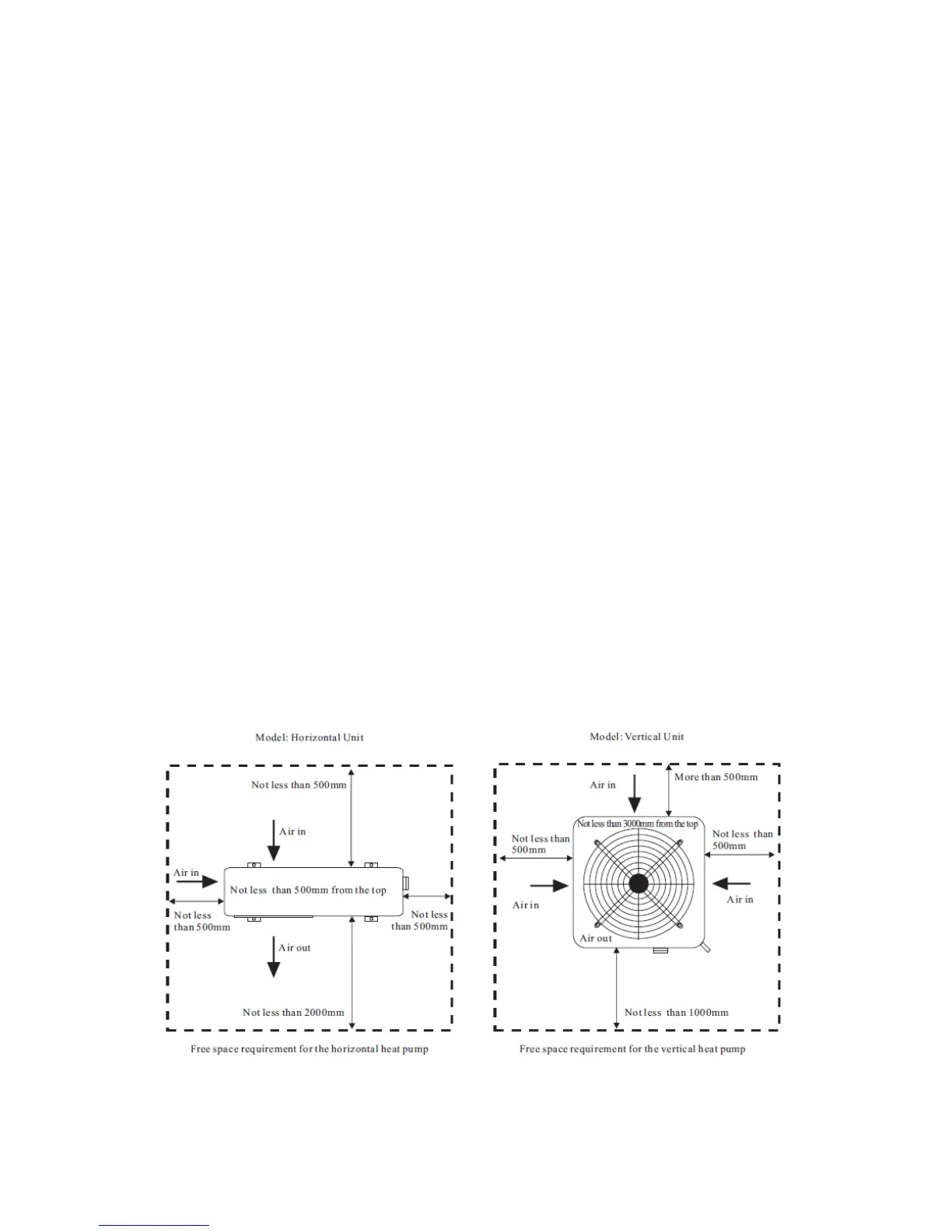
The unit can be installed almost anywhere outside provided the minimum distance
requirements with respect to other objects are met (see diagram below). For indoor pools,
please seek advice from your installer. If the unit is placed in a windy area, there are no
problems with the pilot light as is often the case with gas heaters.
Warning: Do not place the unit in an enclosed area with a limited air volume where the air
discharged by the unit will be re-circulated or near shrubs that could block the air inlet.
Installation in such locations will deny the unit a continuous supply of fresh air, which will
reduce its efficiency and may prevent adequate heat yield.
See diagram below for minimum distance requirements:
Warning:
- Do not place your hand or any other objects into the air outlet and fan. It could damage
the heat pump and cause injuries;


 To Next Page