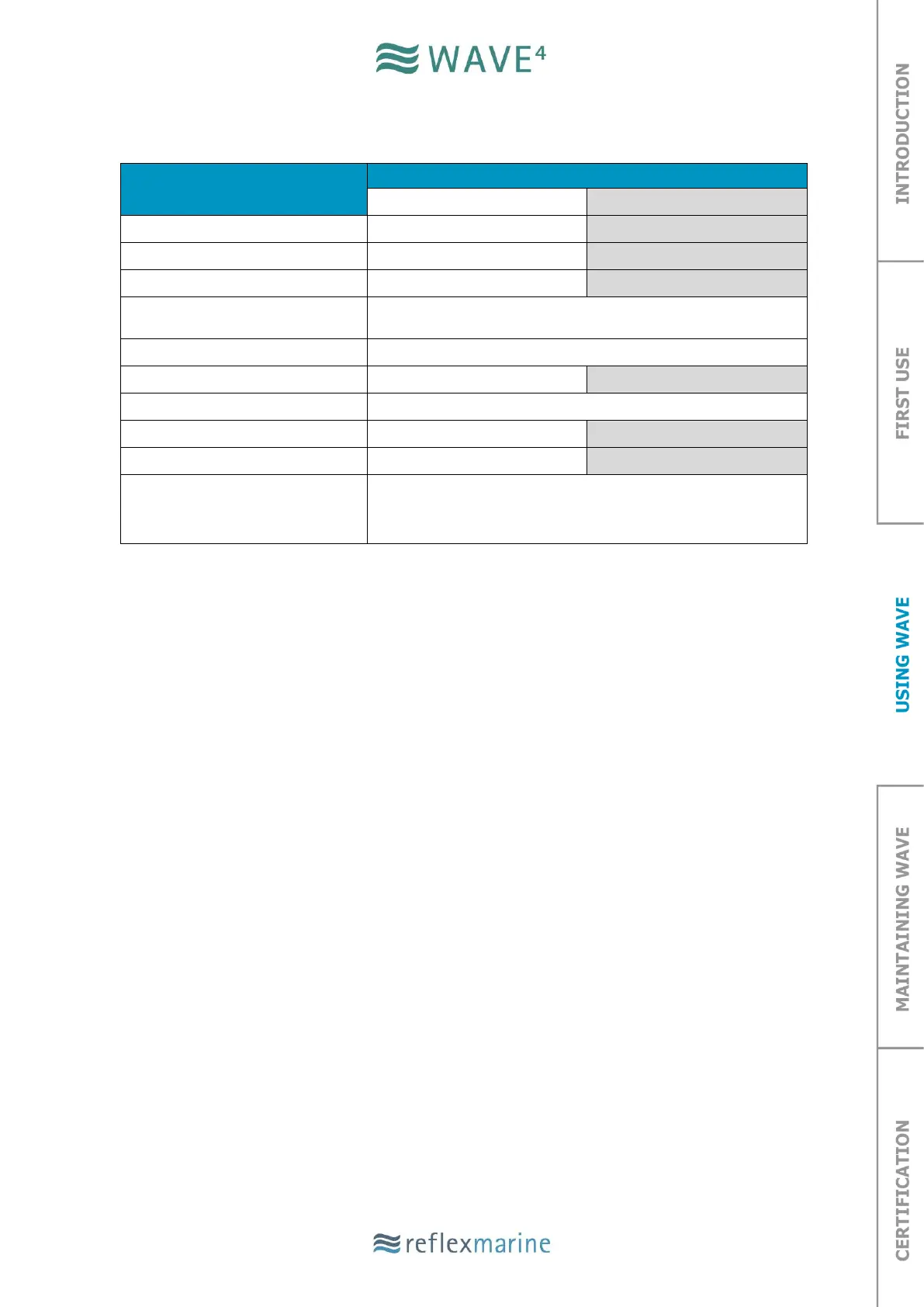
Crane must be suitable for lifting personnel
Suitable minimum hoisting speed
Appropriate slewing and luffing speeds
Table 4 WAVE Recommended Operational Parameters
3.4 Crane Transfer Planning Tool
RML has developed a planning tool that can be used to determine whether the conditions
are suitable for transfers to take place.
The Crane Transfer Planning Tool can be found on the USB stick in your user pack, or
alternatively you can download a copy from our website.
Using the Crane Transfer Planning Tool
There are three main sections that need to be completed
A. Risk Assessment
B. Pre-Transfer Checklist
C. Passenger Log
D. Post Transfer Review
It is important that the conditions are assessed prior to every transfer operation as
conditions are never the same.
It is recommended that a trial run is conducted as this provides real time feedback on the
conditions.
The crane operator should always refer to general guidelines on crane transfers operations
to assess overall risks.
If there is ever any concern about the conditions, transfers should be stopped.


 To Next Page