1
4
3
2
A
NU747_1_G5-FRA.qxd 12/01/05 14:50 Page 5.07
BC85 - NU747-1
C:\Documentum\Checkout\NU747_1_T5-ENG.win 3/3/2005 11:57
- page 7
5.07
CHANGING A WHEEL
Park the car on firm, level
ground which is not
slippery (e.g. avoid tiled
floors), placing a plank
under the jack if necessary. Switch
on the hazard warning lights.
Apply the hand brake and engage a
gear (first or reverse, or P for
automatic gearboxes).
Ask all the passengers to leave the
vehicle and keep them away from
the traffic.
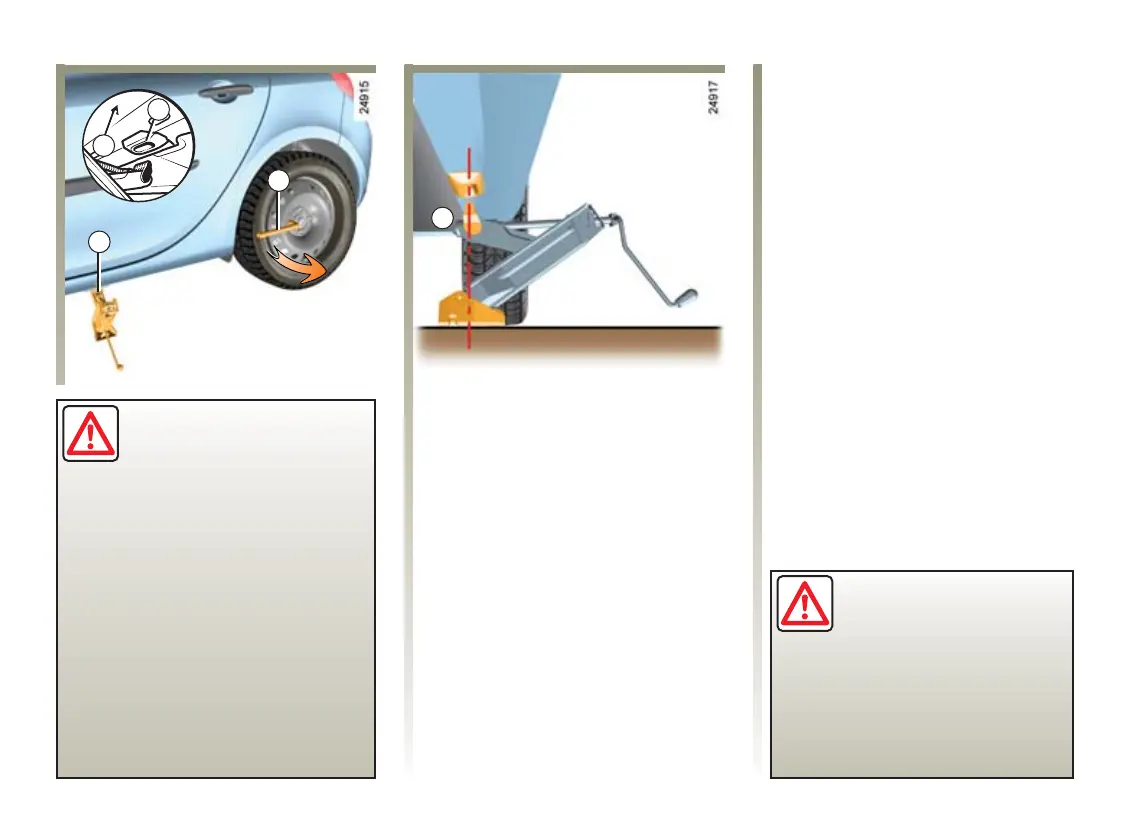
If necessary, remove the wheel trim.
Undo the wheel bolts with
wheelbrace 4. Position it so that you
can push it from above.
Crank up jack 1 by hand to position
the jack head against jacking point 2
closest to the wheel concerned and,
depending on the vehicle, marked
by an arrow 3.
Continue to crank the jack so that
the baseplate is correctly positioned
(it should be underneath the vehicle
andalignedwithjackheadA).
Turn a few times to lift the wheel off
the ground.
Undo the bolts and take the wheel
off.
Fit the spare wheel on the central
hub and turn it to locate the
mounting holes in the wheel and
the hub.
If bolts are supplied with the
emergency spare wheel, only use
these bolts for the emergency spare
wheel. Tighten the bolts and lower
the jack.
With the wheel on the ground, fully
tighten the bolts and check they are
correctly tightened as quickly as
possible (tightening torque 110
Nm).
If you have a puncture,
replace the wheel as soon
as possible.
A tyre which has been
punctured should always be
inspected (and repaired, where
possible) by a specialist.












 To Next Page