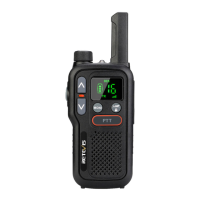
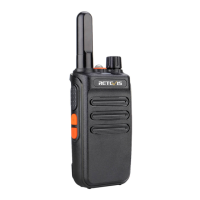
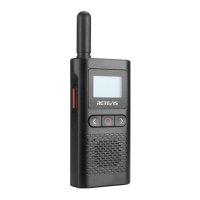
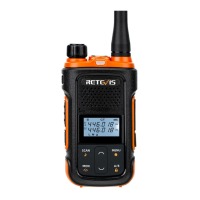
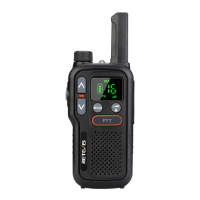
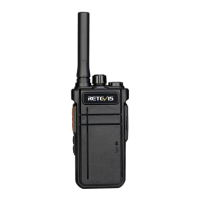
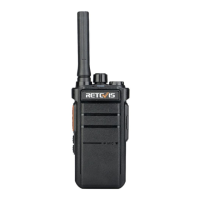
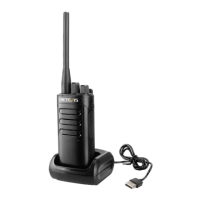
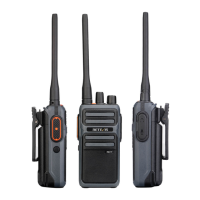
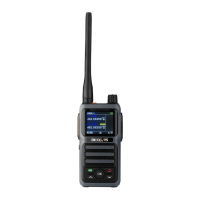
Small Parts. Not for children under 3 years.
WARNING
Turn off your radio power in the following conditions:
•Turn off your radio when you are in a potentially hazardous environments: Near electrical blasting caps, in a blasting area, in
explosive atmospheres (inflammable gas, dust particles, metallic powders, grain powders, etc.).
•Turn off your radio while taking on fuel or while parked at gasoline service stations.
To avoid electromagnetic interference and/or compatibility conflicts
•Turn off your radio in any facility where posted notices instruct you to do so, hospitals or health care facilities (Pacemakers,
Hearing Aids and Other Medical Devices) may be using equipment that is sensitive to external RF energy.
•Turn off your radio when on board an aircraft. Any use of a radio must be in accordance with applicable regulations per airline
crew instructions.
• Use the lowest volume necessary to do your job.
• Turn up the volume only if you are in noisy surroundings.
• Turn down the volume before adding headset or earpiece.
• Limit the amount of time you use headsets or earpieces at high volume.
• When using the radio without a headset or earpiece, do not place the radio's speaker directly against your ear
• Use careful with the earphone maybe possible excessive sound pressure from earphones and headphones can cause hearing
loss
Note: Exposure to loud noises from any source for extended periods of time may temporarily or permanently affect
your hearing. The louder the radio's volume, the less time is required before your hearing could be affected. Hearing
damage from loud noise is sometimes undetectable at first and can have a cumulative effect.
WARNING
WARNING
Protect your hearing:
Avoid Burns
Antennas
•Do not use any portable radio that has a damaged antenna. If a damaged antenna comes into contact with the skin when the
radio is in use, a minor burn can result.
Batteries (If appropriate)
•When the conductive material such as jewelry, keys or chains touch exposed terminals of the batteries, may complete an
electrical circuit (short circuit the battery) and become hot to cause bodily injury such as burns. Exercise care in handling any
battery, particularly when placing it inside a pocket, purse or other container with metal objects
•BATTERY WARNING: KEEP OUT OF REACH OF CHILDREN
•Store spare batteries securely
•If the battery compartment (if applicable) does not close securely, stop using the product and keep it away from children
(1) l’appareil ne doit pas produire de brouillage;
(2) l’utilisateur de l’appareil doit accepter tout brouillage radioélectrique subi, même si le brouillage est susceptible d’en compromettre le
fonctionnement.
RF Exposure Compliance and Control Guidelines and Operating Instructions
Transmit no more than the rated duty factor of 50% of the time. To Transmit (Talk), push the Push to Talk (PTT) button. To receive calls
(listen), release the PTT button. Transmitting necessary information or less, is important because the radio generates measurable RF
energy exposure only when transmitting in terms of measuring for standards compliance.
•DO NOT operate the radio without a proper antenna attached, as this may damage the radio and may also cause you to exceed RF
exposure limits. A proper antenna is the antenna supplied with this radio by the manufacturer or an antenna specifically authorized by the
manufacturer for use with this radio, and the antenna gain shall not exceed the specified gain by the manufacturer declared.
•DO NOT transmit for more than 50% of total radio use time, more than 50% of the time can cause RF exposure compliance requirements
to be exceeded.
•During transmissions, your radio generates RF energy that can possibly cause interference with other devices or systems. To avoid such
interference, turn off the radio in areas where signs are posted to do so.
•DO NOT operate the transmitter in areas that are sensitive to electromagnetic radiation such as hospitals, aircraft, and blasting sites.
•Portable Device, this transmitter may operate with the antenna(s) documented in this filing in Push-to-Talk and body-worn configurations.
RF exposure compliance is limited to the specific belt-clip and accessory configurations as documented in this filing and the separation
distance between head and the device or its antenna shall be at least 2.5 cm.
When worn on the body, always place the radio in approved clip, holder, holster, case, or body harness for this product. Use of non-approved
accessories may result in exposure levels, which exceed the RF exposure limits.
Hand-held Mode(if applicable)
• Hold the radio in a vertical position with the microphone (and other parts of the radio including the antenna) at least
2.5 cm (one inch) away from the nose or lips. The antenna should be kept away from the eyes. Keeping the radio at
a proper distance is important as RF exposure decreases with increasing distance from the antenna.
Electromagnetic Interference/Compatibility
NOTE: Nearly every electronic device is susceptible to electromagnetic interference (EMI) if inadequately shielded, designed, or otherwise
configured for electromagnetic compatibility.
Avoid Choking Hazard
6


 To Next Page
 Loading...