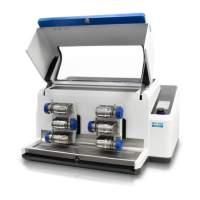
This function enables the total energy input into the grinding bowl (comminution energy + loss energy) to be
determined.
This total energy input into the grinding bowl is defined as the difference between the energy drawn from the
machine's drive unit when the grinding bowl is empty and when it is filled with material to be ground and
grinding balls.
Thus it is first necessary to determine the idling energy drawn by the machine when the grinding bowl is empty.
The idling energy level is established over a relatively short period and is taken as the zero point by the
electronics, in a similar way to taring scales.
During subsequent grinding with material, the only energy input taken into account is that which exceeds the
level of idling energy. This difference can be regarded as equal to the energy input into the grinding bowl(s) by
the grinding media and the material being ground.
For the purpose of comparing different combinations of parameters, the energy input can be specified instead
of the grinding time (only the volume of the material being ground and the feed grains need to be the same to
allow a proper comparison to be made). In this case, the grinding process is not ended after a specified time,
but rather after the input of the pre-set energy.
The energy menu is divided into three sub-menus:
DETERMINE IDLING ENERGY
MEASURE
SET
In order to determine the energy input into the grinding bowl during the grinding process, please proceed as
follows:
Specify all the parameters - speed, grinding time, interval - required for the intended grinding process.
Determine the weight of the grinding bowl intended for the subsequent grinding process but still
without the material to be ground and the grinding media.
Set the balancing weight accordingly.
Then change to the sub-menu:
DETERMINE IDLING ENERGY
Clamp the grinding bowl securely into the machine, but still without the material to be ground and the
grinding media.


 To Next Page