but will save the noise generated by the microphone preamp in the mixer. It may also result in a
better overall sound quality.
Speaker System
Your Sedona’s speaker system has been specially designed to handle a wide variety of instruments
with the best possible tone. It is a two-way system, with a 12" JBL M121 driver and a special
Electro-Voice high-power dome tweeter. It has a crossover consisting of a 12dB/octave air-core
inductor divider network, with a crossover point at 4 kHz. To protect the driver and dome tweeter,
keep the grille on your amp at all times, do not expose the amp to moisture (direct or indirect), and
don’t use the back of your amp for storing any sharp objects.
1
C O N N E C T I N G T H E SEDONA WI T H OT H E R GE A R
Make sure the amp and all other gear are turned off whenever you make or change any connections.
Using a heavy-gauge speaker cord, connect the output jack labeled Speaker 1 with a Y cable and
reconnect the internal Jack and a the Speaker cord to the speaker input on an extension cabinet with
an 8-ohm impedance and power-handling capacity of at least 55 watts.
Don’t use a 16-ohm extension speaker.
Driving a full-range Sedona extension speaker cabinet
Using a Y cord, connect the Speaker 1 with the internal jack and speaker cable into the Full range
input of the Sedona extension cabinet. Then using a Y cord, connect the Tweeter output of the amp
with the internal Jack and speaker cable to the Tweeter input of the Sedona cxtension cabinet. This
will allow you to turn the tweeter on or off in both in the combo and the extension cabinet.
Note: Use only speaker cables.
Slaving a second Sedona
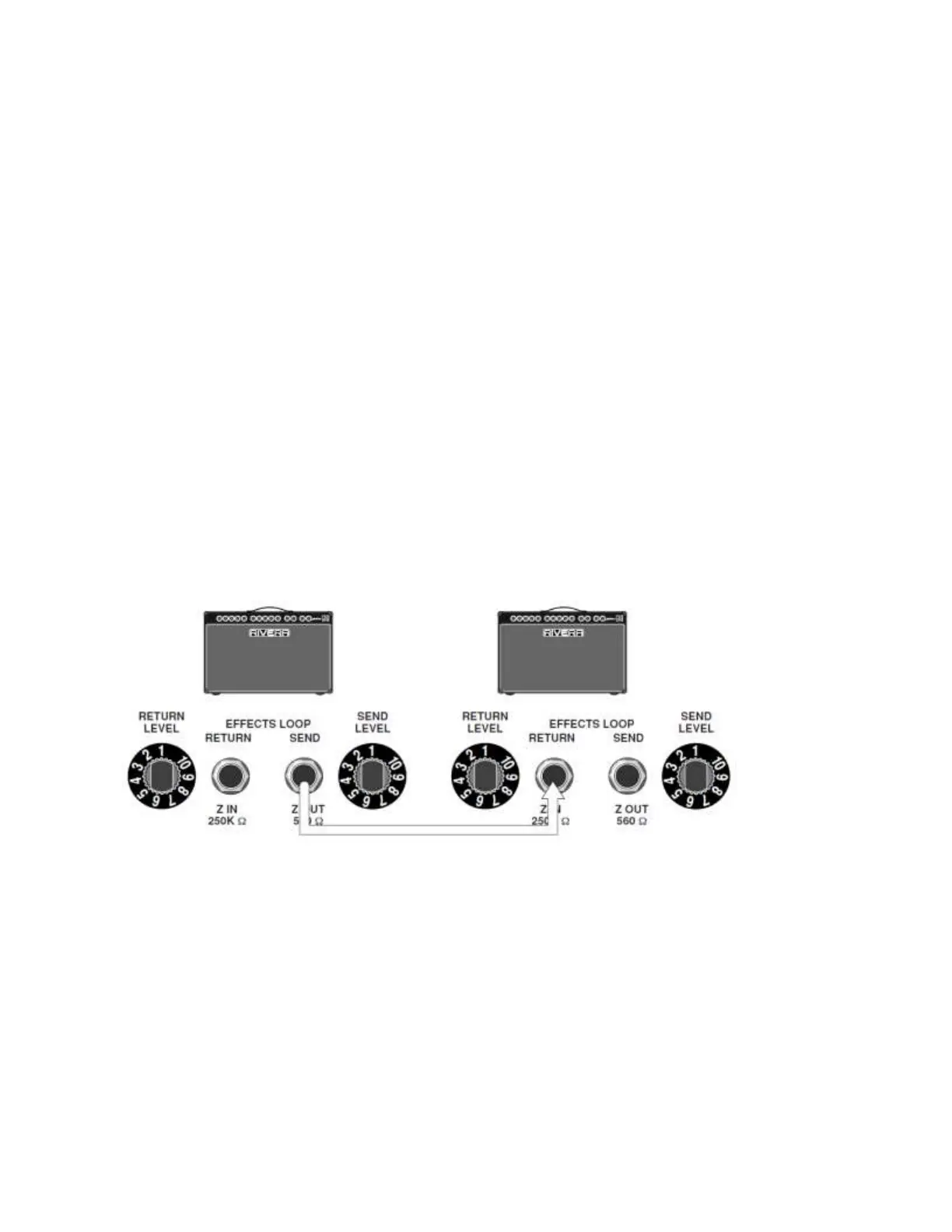
Using a shielded cord, connect the first Sedona’s Effects Loop Send to the Effects Loop Return jack
on a second Sedona. Adjusting the Return Level sets the relative volume of the second amp. All
tone and distortion adjustments are made by the first amp. The first amp’s Send Level control sets
the signal level being sent to the second amp.


 To Next Page