EasyManua.ls Logo

Roland Chorus Echo RE-501 - User Manual

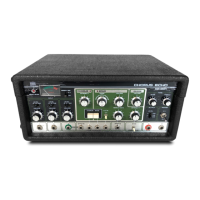
Roland Chorus Echo RE-501
8 pages
Print Icon
To Next Page IconTo Next Page
Loading...
[Hi
Roland
CHORUS
ECHO
RE-501
OWNER'S
MANUAL
FEATURES
•ECHO,
CHORUS,
REVERBERATION,
and
SOUND-ON-SOUND
can
be
freely
combined
for
numerous
effects.
•Free
running
tape
system
minimizes
wow
and
flutter
and
extends
tape
life
to
more
than
300
hours
without
deterioration
of
sound
quality.
•Dual
outputs
for
"three
dimensional”
sound
effects.
•Low
noise;
ciean
well-balanced
echo
sound.
•Indicators
show
instantly
whether
echo,
chorus,
or
sound-on-sound
are
ON
or
OFF.
•A
foot
switch
can
be
used
for
switching
ON/OFF
the
echo,
chorus,
and
sound-on-sound.
•Both
balanced
and
unbalanced
input
and
output.
Question and Answer IconNeed help?

Do you have a question about the Roland Chorus Echo RE-501 and is the answer not in the manual?

Summary

Standard Connections

PA and Vocal Mixers

Connection diagram for PA and vocal mixers, detailing signal flow and interface points.

Microphones and Instruments

Connection diagram for microphones and instruments, illustrating typical audio signal routing.

Operation

Using the Chorus Effect

Instructions for activating and adjusting the chorus effect, including control settings.

Using the Echo Effect

Steps to activate and configure the echo effect, covering mode selection and repeat rate.

Using the Sound-on-Sound Effect

Guide on enabling and utilizing the sound-on-sound feature for layered recordings.

Using the Single Delay

Explanation of the single delay function for producing one echo repetition.

Using Reverberation

How to set and adjust the reverberation effect for desired ambiance.

Controls and Their Functions

Input Controls

Details on input level indicators, volume, and input level selector switches.

Effect Activation and Adjustment

Explanation of effect on/off buttons, mode selectors, volume, intensity, and repeat rate controls.

Output and Tone Controls

Information on output level selectors, and bass/treble tone controls for effects.

Using the RE-501

Examples of Use

Illustrative examples demonstrating spatial effects, long delays, and phrase chaining.

To Replace Tape

Step-by-step guide for safely replacing the tape cartridge and ensuring proper contact.

Cleaning

Instructions for cleaning tape heads and relevant parts to maintain sound quality.

Specifications

Input and Output Specifications

Detailed impedance and level specifications for balanced and unbalanced inputs/outputs.

Jacks, Controls, and Switches

List of all jacks, controls, and switches with their functions and settings.

Optional Accessories

Information on available optional accessories such as footswitches.

Summary

Standard Connections

PA and Vocal Mixers

Connection diagram for PA and vocal mixers, detailing signal flow and interface points.

Microphones and Instruments

Connection diagram for microphones and instruments, illustrating typical audio signal routing.

Operation

Using the Chorus Effect

Instructions for activating and adjusting the chorus effect, including control settings.

Using the Echo Effect

Steps to activate and configure the echo effect, covering mode selection and repeat rate.

Using the Sound-on-Sound Effect

Guide on enabling and utilizing the sound-on-sound feature for layered recordings.

Using the Single Delay

Explanation of the single delay function for producing one echo repetition.

Using Reverberation

How to set and adjust the reverberation effect for desired ambiance.

Controls and Their Functions

Input Controls

Details on input level indicators, volume, and input level selector switches.

Effect Activation and Adjustment

Explanation of effect on/off buttons, mode selectors, volume, intensity, and repeat rate controls.

Output and Tone Controls

Information on output level selectors, and bass/treble tone controls for effects.

Using the RE-501

Examples of Use

Illustrative examples demonstrating spatial effects, long delays, and phrase chaining.

To Replace Tape

Step-by-step guide for safely replacing the tape cartridge and ensuring proper contact.

Cleaning

Instructions for cleaning tape heads and relevant parts to maintain sound quality.

Specifications

Input and Output Specifications

Detailed impedance and level specifications for balanced and unbalanced inputs/outputs.

Jacks, Controls, and Switches

List of all jacks, controls, and switches with their functions and settings.

Optional Accessories

Information on available optional accessories such as footswitches.

Overview

The Roland RE-501 Chorus Echo is a versatile audio effects unit designed to enhance sound with a variety of spatial and time-based effects. It combines Echo, Chorus, Reverberation, and Sound-on-Sound capabilities, allowing users to create a wide range of sonic textures, from subtle enhancements to dramatic, otherworldly soundscapes.

Function Description

The core of the RE-501's functionality lies in its tape-based echo system, which provides a warm, organic delay characteristic. Unlike digital delays, the tape system introduces subtle variations that contribute to a unique sonic signature. The unit features multiple playback heads, enabling different echo patterns and complex rhythmic delays.

  • Echo Effect: This is the primary delay function, offering adjustable delay time, feedback (repetitions), and volume. Users can select from six echo modes, which dictate the arrangement of the playback heads to create single slap echoes or more intricate multiple slap echoes. The "SINGLE DELAY" switch allows for a single, distinct repetition, while the "REPEAT" setting enables continuous feedback.
  • Chorus Effect: The chorus effect adds richness and depth to the sound by subtly detuning and delaying the input signal, then mixing it with the original. This creates a shimmering, thickening effect often used to make instruments sound fuller or to simulate multiple voices. The intensity of the chorus can be adjusted to achieve varying degrees of this effect.
  • Reverberation Effect: The RE-501 includes a spring reverb unit, which simulates the natural reflections of sound in an acoustic space. This adds a sense of spaciousness and ambiance to the signal. The reverb volume can be controlled independently, allowing it to be blended with other effects.
  • Sound-on-Sound Effect: This feature allows users to layer multiple recordings on top of each other, creating dense, evolving soundscapes or looping phrases. It utilizes the tape echo system to record and continuously play back a signal, with new inputs being added to the loop. The number of repetitions can be controlled, making it suitable for both short, repetitive loops and longer, more ambient textures.

The RE-501 is designed for flexible integration into various audio setups. It offers both balanced XLR and unbalanced 1/4" phone jack inputs and outputs, accommodating a wide range of microphones, instruments, and mixing consoles. The internal mixing of balanced and unbalanced inputs allows for simultaneous use, and the outputs provide sufficient power for direct connection to amplifiers or other devices. Tone controls (Bass and Treble) are available to shape the character of the effects, while a "DIRECT SIGNAL" switch allows users to choose between outputting only the effect signals (useful for mixer effect loops) or mixing the direct signal with the effects.

Usage Features

The RE-501 provides intuitive controls for shaping its various effects:

  • Input Level Management: An "INPUT LEVEL INDICATOR" (LED display) helps users set optimal input levels, ensuring clean signal processing and preventing clipping. Input level selector switches allow for matching different signal sources, from microphones to line-level instruments.
  • Effect Activation: Dedicated ON/OFF buttons for Chorus, Echo, and Sound-on-Sound, along with corresponding indicator lights, provide clear visual feedback on which effects are active.
  • Parameter Control: Individual controls for Chorus Intensity, Echo/Sound-on-Sound Volume, Echo/Sound-on-Sound Intensity (repetitions), Echo/Sound-on-Sound Repeat Rate (delay time), and Reverb Volume allow for precise adjustment of each effect.
  • Echo Mode Selector: A rotary switch enables selection of six distinct echo patterns, offering a range of rhythmic and spatial delay options.
  • Foot Switch Control: The unit supports optional footswitches (FS-1, FS-2, FS-3) for remote control of various functions. These can be used to switch individual effects (Chorus, Echo, Sound-on-Sound) ON/OFF, or to toggle between "SINGLE" and "REPEAT" delay modes, offering hands-free operation during performance.
  • Dual Outputs: The RE-501 features dual unbalanced outputs (A and B), which can be used for stereo effects or for routing the signal to two separate amplifiers, creating a "three-dimensional" sound experience. When only output A is used, all effects are routed through it.

The RE-501's design allows for creative combination of its effects. Chorus, echo, sound-on-sound, and reverberation can be used independently or blended together to achieve complex and unique sonic results. The "ECHO/S ON S REPEAT RATE" control, which adjusts tape speed, can be manipulated in real-time to create interesting pitch-shifting and textural effects during sound processing.

Maintenance Features

To ensure optimal performance and longevity, the RE-501 requires regular maintenance, particularly for its tape-based system:

  • Tape Replacement: The unit uses a "free running tape system" designed to minimize wow and flutter and extend tape life. However, the tape will eventually wear out and needs replacement. The process involves removing five nuts and the acrylic cover, carefully removing the old tape, and installing a new tape pack (Roland RT-1L). It is recommended to avoid direct skin contact with the tape during this process, using clean cotton gloves instead. After tape replacement, the unit should be run for approximately five minutes to ensure good tape-to-head contact. The replacement tape is rated for over 300 hours of use.
  • Cleaning: Regular cleaning of the tape path components is crucial for maintaining sound quality and extending tape life. This includes cleaning the tape heads, bearings, guides, and motor shaft. Cotton-tipped swabs and rubbing alcohol or a commercial tape head cleaner should be used for this purpose. The manual specifically highlights the importance of cleaning the parts indicated by arrows in the diagram.
  • General Care: The manual advises cleaning the control panel with a neutral detergent and using a soft, dry cloth for wooden parts, avoiding paint thinner or other solvents. It also recommends avoiding extreme temperatures (high or low) and keeping the unit away from heaters and air-conditioners to maintain circuit stability.
  • Noise Reduction: To minimize noise induction from neon or fluorescent lights, the unit should be kept as far away from such light sources as possible. Adjusting the angle of the unit relative to the lights can also help reduce noise.

Roland Chorus Echo RE-501 Specifications

General IconGeneral
TypeChorus Echo
ModelRE-501
EffectsChorus, Echo
Maximum Delay3 seconds
ControlsIntensity, Echo Volume, Tone
Inputs1 x 1/4\"
Power Supply100V, 117V, 220V, 240V

Related product manuals