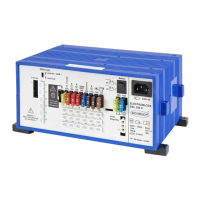
Instruction Manual for Electroblock EBL 241-2
7
Date: 16.07.2019
8110514 BA / EN
F
Excess temperature
F Overload
F Short circuit
230V AC 10%, 47 to 63 Hz sinusoidal, protection class I
12V outputs may be loaded with max. 90% of the rated current of the re-
spective fuse (also see front panel).
4.1 Battery functions
6-cell lead-acid or lead-gel batteries, 55 Ah and above
Simultaneous charging of the starter battery and the living area battery via
the alternator , parallel connection of the batteries via a cut-off relay
This prevents the living area battery from slowly discharging due to closed
circuit current while the vehicle is not in use.
Leisure battery
Battery selector
switch setting
lead- gel Lead- acid
Charging curve IUoU IUoU
Final charge voltage 14,3V 14,3V
Charge current 18 A 18 A
Voltage for float charge 13,8 V with automatic
switchover
13,8 V with automatic
switchover
Charge current Within the entire mains voltage range,
electronically limited, minus the
charge current into the vehicle battery
New charge cycle, with battery voltage below 13.8 V
Switchover to main charging with approx. 5 seconds delay
Main c harge
I
Full charge
Uo
Trickle charge
U
16 h for lead-gel
4 h for lead-acid:
Time
Lead-gel: 14.3V
Lead-acid: 14.3V
U
charge
V
Lead-gel: 13.8V
Lead-acid: 13.8V
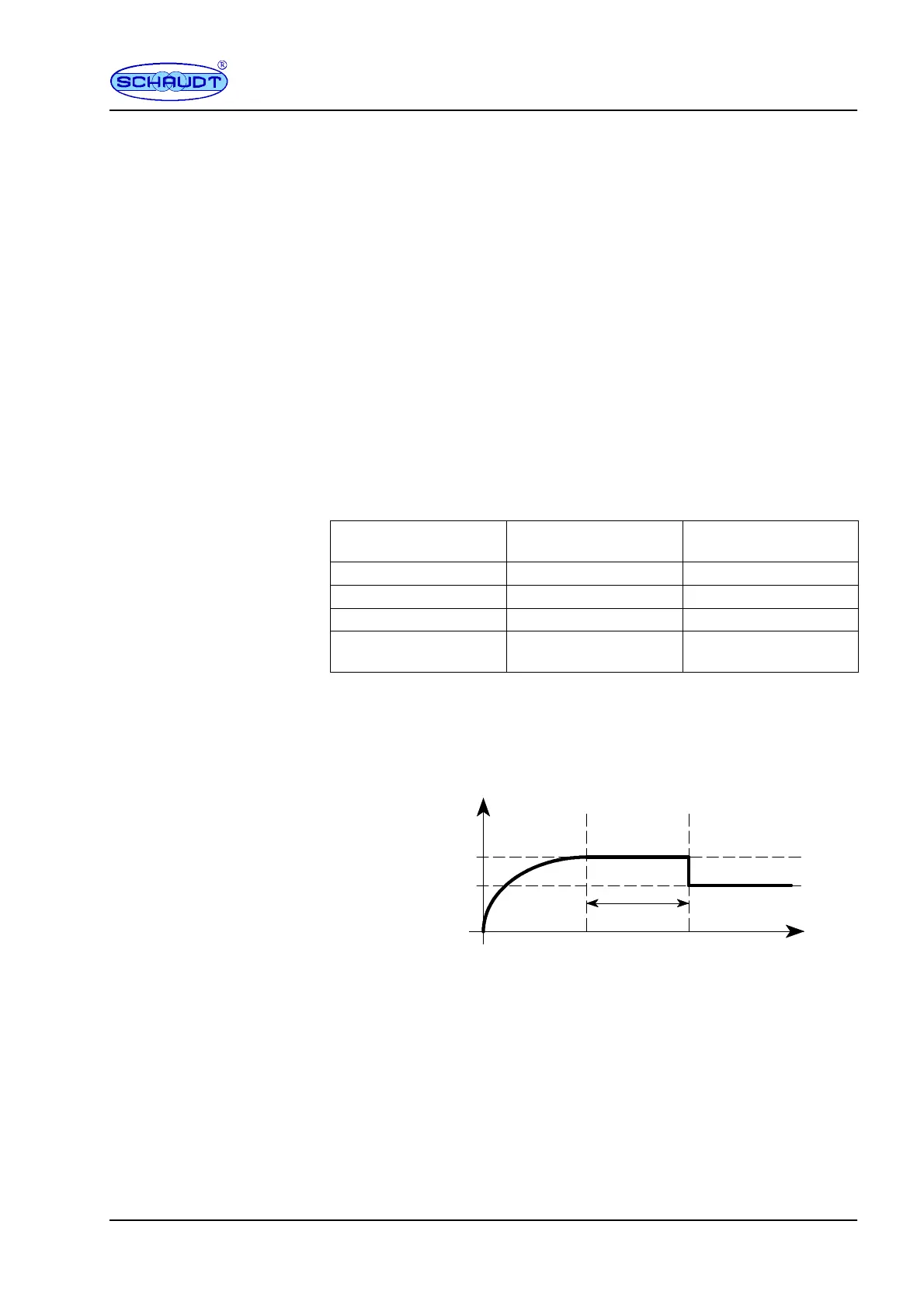
Fig. 3 Example of the charging voltage curve with electroblock EBL 242
I Main charge with maximum 18 A charging current, electronically limi-
ted, up to final charging voltage. Start of charge also for completely
discharged batteries.
Uo Automatic changeover to full charge with constant 14.3 V. The duration
of the fully charge phase depends on the type of battery and is set on
the device.
U Automatic changeover to compensation charge with constant 13.8V. In
the compensation charge phase, the voltage at the output of the char-
ging module is constant.
Protective circuits of the
charging module
Mains connection
Current-carrying
capacity
Suitable batteries
Battery charging
whilst moving
Battery charging via
mains connector



 To Next Page