EasyManua.ls Logo

Schaudt EBL 263-5 - User Manual

Schaudt EBL 263-5
14 pages
Print Icon
To Next Page IconTo Next Page
Loading...
Operating Instruction Manual
Elektroblock EBL 263-5 Art no 911.056 page 1 / 10
Note: this operating instruction manual is intended for the customer and has to be supplied with the device
Schaudt GmbH, Elektrotechnik & Apparatebau, Daimlerstraße 5, D-88677 Markdorf, Tel +49 7544 9577-0, Fax +49 7544 9577-29, www.schaudt-gmbh.de 18.05.2004
Contents
1. Description
2. Safety Information
3. Operating Instructions
4. Transport, Storage, Installation
5. Electrical Installation
6. Power-Up, Shut-Down, Maintenance
7. Malfunction
8. Enclosure
1. Description
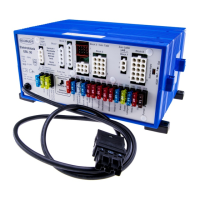
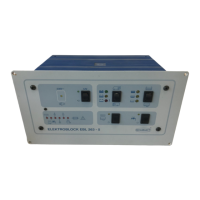
The Elektroblock EBL 263-5 is an energy management system for motor homes. It is a combination of
a battery charger, a 12V distribution box and a control and switch panel.
It contains the charging module LA 204, a battery monitor, the complete 12V distribution, fuse-protected
12V circuits and additional control and monitoring devices.
The controls and switches on the front panel, control the living-area functions of the motor home and
indicate certain values like voltages or filling levels.
Tank sensors are necessary to measure the filling levels of the water tanks. Please do order separately.
Note: The EBL 263-5 is not
suitable for filling level measurement of metal water tanks.
1.1 Suitable Accessories
rod tank sensors 2 rod tank sensors, 2 sensor cables 4 x 0.5
2 seal rings art no 126.007, 2 check nuts art no 102.106
or tank sensors 8 tank sensors, art no 933.662, 2 sensor cables 4 x 0.5
1.2 Technical Data
1.2.1 General Data
sizes front panel: 290 x 155
cabinet: 275 x 130 x 173 (W x H x D in mm)
weight 4.4 kg
cabinet PA (Polyamide), Gentian blue RAL 5010
front panel aluminium, powder painted, white aluminium RAL 9006
1.2.2 Electrical Data
mains supply * 230V (+ 6 / - 10%), 50Hz, safety class 1
current draw * 230VA
suitable batteries * 6 cell lead-acid or lead-gel batteries, from 35Ah
quiescent current * max 0.6mA
off living-area battery
load current of alternator's * approx 0.3A
D+ output by EBL
permissible load on * maximum current draw up to the fuse rating of each output;
12V outputs see enclosed block diagram.
Question and Answer IconNeed help?

Do you have a question about the Schaudt EBL 263-5 and is the answer not in the manual?

Summary

Product Description and Technical Specifications

Suitable Accessories

Lists recommended accessories for tank level measurement, including rod tank sensors.

General and Electrical Data

Details physical dimensions, weight, mains supply, battery requirements, and current draw.

Safety Information and Operating Instructions

Safety Information

Covers essential safety regulations, prohibitions on alterations, and required qualifications for installation.

Operating Instructions: Controls and Indicators

Explains how to operate the 12V supply, check battery voltage, and provides important cautions.

Functionality and Indicators

LED Battery Indicator Evaluation

Describes how LED indicators reflect battery status under different conditions and loads.

Water Pump Power Control

Instructions for switching the water pump on/off and notes on its power consumption.

Additional Features and System Components

Waste Water Heater and Tank Level Inquiry

Details control for waste water heater and inquiry of fresh/waste water tank levels.

Battery-Type Selector Switch

Explains the function and importance of setting the battery-type selector switch correctly.

Fuses, Relays, and Battery Monitoring

12 V Fuses and Circuit Protection

Describes the PolySwitch fuses, their function, and troubleshooting for blown fuses.

Relay Functions

Explains the operation of main-switch, battery cut-off, and water pump relays.

System Monitoring and Installation Guidelines

Battery Monitor and System Operation

Details the battery monitor's voltage comparison and automatic shut-down functions.

Transport, Storage, and Installation

Provides guidelines for transporting, storing, and installing the Elektroblock unit.

Electrical Installation and Connections

Electrical Installation Requirements

Emphasizes qualified personnel, battery connection, and safety precautions for electrical installation.

230 V Mains and Battery Connections

Details connection procedures for 230V mains supply and battery terminals, including fuse ratings.

System Operation, Maintenance, and Troubleshooting

12 V Consumers and Water Tank Connections

Explains connection of 12V consumers and water tanks, and their protection requirements.

Operation, Shut-Down, Maintenance, and Malfunctions

Covers initial operation, shutdown procedures, maintenance, and troubleshooting common malfunctions.

Enclosure and Declarations

Enclosure Contents and Delivery

Lists enclosures belonging to the manual and delivery requirements.

EC Declaration of Conformity

Certifies compliance with relevant EC low-voltage and EMC directives and applied standards.

Summary

Product Description and Technical Specifications

Suitable Accessories

Lists recommended accessories for tank level measurement, including rod tank sensors.

General and Electrical Data

Details physical dimensions, weight, mains supply, battery requirements, and current draw.

Safety Information and Operating Instructions

Safety Information

Covers essential safety regulations, prohibitions on alterations, and required qualifications for installation.

Operating Instructions: Controls and Indicators

Explains how to operate the 12V supply, check battery voltage, and provides important cautions.

Functionality and Indicators

LED Battery Indicator Evaluation

Describes how LED indicators reflect battery status under different conditions and loads.

Water Pump Power Control

Instructions for switching the water pump on/off and notes on its power consumption.

Additional Features and System Components

Waste Water Heater and Tank Level Inquiry

Details control for waste water heater and inquiry of fresh/waste water tank levels.

Battery-Type Selector Switch

Explains the function and importance of setting the battery-type selector switch correctly.

Fuses, Relays, and Battery Monitoring

12 V Fuses and Circuit Protection

Describes the PolySwitch fuses, their function, and troubleshooting for blown fuses.

Relay Functions

Explains the operation of main-switch, battery cut-off, and water pump relays.

System Monitoring and Installation Guidelines

Battery Monitor and System Operation

Details the battery monitor's voltage comparison and automatic shut-down functions.

Transport, Storage, and Installation

Provides guidelines for transporting, storing, and installing the Elektroblock unit.

Electrical Installation and Connections

Electrical Installation Requirements

Emphasizes qualified personnel, battery connection, and safety precautions for electrical installation.

230 V Mains and Battery Connections

Details connection procedures for 230V mains supply and battery terminals, including fuse ratings.

System Operation, Maintenance, and Troubleshooting

12 V Consumers and Water Tank Connections

Explains connection of 12V consumers and water tanks, and their protection requirements.

Operation, Shut-Down, Maintenance, and Malfunctions

Covers initial operation, shutdown procedures, maintenance, and troubleshooting common malfunctions.

Enclosure and Declarations

Enclosure Contents and Delivery

Lists enclosures belonging to the manual and delivery requirements.

EC Declaration of Conformity

Certifies compliance with relevant EC low-voltage and EMC directives and applied standards.

Overview

The Schaudt Elektroblock EBL 263-5 is an integrated energy management system designed for motor homes, combining a battery charger, a 12V distribution box, and a control and switch panel into a single unit. Its primary function is to manage the electrical power within the vehicle, ensuring reliable operation of various living-area functions.

Function Description

At its core, the EBL 263-5 acts as a central hub for power distribution and charging. It incorporates a charging module (LA 204) that handles battery charging, a battery monitor for tracking battery status, and a comprehensive 12V distribution system with fuse-protected circuits. The unit is designed to work with 6-cell lead-acid or lead-gel batteries with a capacity of 35Ah or more.

The charging system operates with a "IWUoU" characteristic, which includes boost-charge, equalize-charge, and float-charge phases. When connected to a 230V mains supply, it provides a charging current of 10A arithmetic mean or 15A effective at 12.0V charging voltage, with a maximum charging voltage of 14.4V and a float voltage of 13.8V. The system automatically switches between charging phases based on battery voltage. For instance, it enters boost-charge when the battery voltage is below 13.8V. The equalize-charge phase, set at a constant 14.4V, lasts for 20 minutes for lead-acid batteries and 6 hours for lead-gel batteries. If the float voltage cannot be maintained due to high loads, the charger temporarily reverts to boost-charge.

Safety is a key aspect of the EBL 263-5's design. The charging circuits are short-circuit and reverse-polarity protected, requiring a connected battery with a voltage greater than 2.5V to operate. It also includes a 1.6A slow safety fuse in the mains circuit and an over-temperature switch in the transformer to prevent overheating.

When the vehicle is driving, the EBL 263-5 facilitates simultaneous charging of both the starter and living-area batteries via the alternator. A cut-off relay connects the batteries in parallel for this purpose, ensuring the charging current to the living-area battery does not exceed 30A. Additionally, a trickle-charge function provides up to 2A to the starter battery when the EBL is connected to the mains supply.

The integrated battery monitor module plays a crucial role in protecting the living-area battery. It automatically switches off all 12V loads (except the "automatic step" circuit) if the battery voltage drops below approximately 10.5V. This prevents deep discharge, which can damage the battery. Short voltage drops (less than 2 seconds) due to high inrush currents do not trigger this cut-off. If the automatic shut-down is activated due to overload or an insufficiently charged battery, non-essential loads should be switched off. The 12V system can be temporarily reactivated by pressing the 12V push-button switch on the front panel, though it will not switch on if the battery voltage remains below 11.0V.

The EBL 263-5 also manages the power supply to the absorption-type refrigerator, powering it from the starter battery only when the engine is running and a voltage is present on terminal 'D+'.

Usage Features

The front panel of the EBL 263-5 serves as the primary interface for controlling and monitoring various living-area functions.

  • 12V Supply Control: A dedicated switch with a 12V symbol allows users to turn the 12V supply to the living area on or off. A green indicator lamp illuminates when the supply is active. It's important to note that the "automatic step" circuit is not affected by this main switch.
  • Battery Voltage Inquiry: LED indicators provide a three-level display of both the living-area and starter battery voltages. Users can actuate a switch to check the condition of either battery. A red warning light blinks if the living-area battery voltage drops below 10.8V, signaling the need to immediately switch off loads and recharge the battery.
  • Water Pump Control: A switch with a water pump symbol controls the power supply to the water pump. A yellow indicator lamp shows whether the pump is switched on. It is recommended to turn off the water pump's power supply during long periods of disuse to prevent battery drain from the pump relay (approx. 160mA, leading to about 4Ah per day).
  • Waste Water Heater Control (Optional): For vehicles equipped with a waste water heater, a dedicated switch allows users to turn it on or off. A yellow indicator lamp indicates its status. Due to the significant power consumption of the waste water heater, it is advised to use it primarily when the motor home is connected to mains supply.
  • Water Tank Filling Level Inquiry: LED indicators provide a three-level display of both fresh water and waste water tank filling levels. Users can actuate a switch to view the filling level of either tank. This inquiry is intended for temporary use only, as continuous operation or long inquiries can damage the rod or tank sensors.
  • Mains Supply Indicator: A yellow LED illuminates when the EBL is connected to a 230V mains supply.
  • Battery-Type Selector Switch: Located on the back of the EBL, this switch allows users to select between lead-acid and lead-gel battery types. This setting is crucial for ensuring optimal charging and must be configured before the EBL is put into operation, with the mains supply disconnected. An incorrectly set switch can damage batteries and pose an explosion hazard.

The EBL 263-5 is equipped with PolySwitch fuses for its 12V circuits. These fuses automatically reset after a fault (e.g., overload) is removed, and corresponding LEDs indicate a faulty circuit. In some cases of short circuit, the main fuse of the starter or living-area battery might blow instead of the PolySwitch fuse. Troubleshooting steps involve disconnecting power, identifying the faulty circuit by reconnecting consumer circuits one by one, and then repairing the fault.

Maintenance Features

The Schaudt Elektroblock EBL 263-5 is designed to be maintenance-free. For cleaning, a soft, moisturized cloth with a mild detergent can be used. It is important to avoid methylated spirit, paint thinner, or similar substances, and to prevent liquids from entering the cabinet.

In case of a malfunction where the charging module needs to charge flat batteries while on mains supply, it is recommended to start the motor home engine for a short period until the battery voltage rises. All connected devices should remain switched off during this process to prevent damage to sensitive devices.

Before and after periods of shut-down (e.g., winter storage), the battery should be fully recharged. This involves connecting the motor home to mains supply and charging the battery for a minimum of 16 hours (for an 80Ah battery) or 24 hours (for a 160Ah battery). For long periods of disuse, the motor home battery should be disconnected from the 12V system by removing the terminals at the battery poles. This prevents battery damage and ensures it remains fully charged.

The device is designed for installation in a dry and sufficiently ventilated environment, within a temperature range of -10°C to +40°C. A minimum distance of 5 cm to surrounding equipment must be maintained on all sides to prevent overheating. The EBL must be fitted on a solid and level surface using the provided fixing holes, ensuring ventilation is not blocked.

Schaudt EBL 263-5 Specifications

General IconGeneral
Output Voltage12V DC
Max Output Current25 A
Charging Current18A
Power300 W
Battery TypeLead-acid
ProtectionOverload, short circuit

Related product manuals