10
System Chimney
DISTANCE TO COMBUSTIBLES
In accordance with building regulations, it is essential that the correct distance to combustible
material is maintained. On solid fuel applications, where there is a risk of soot fire, a distance
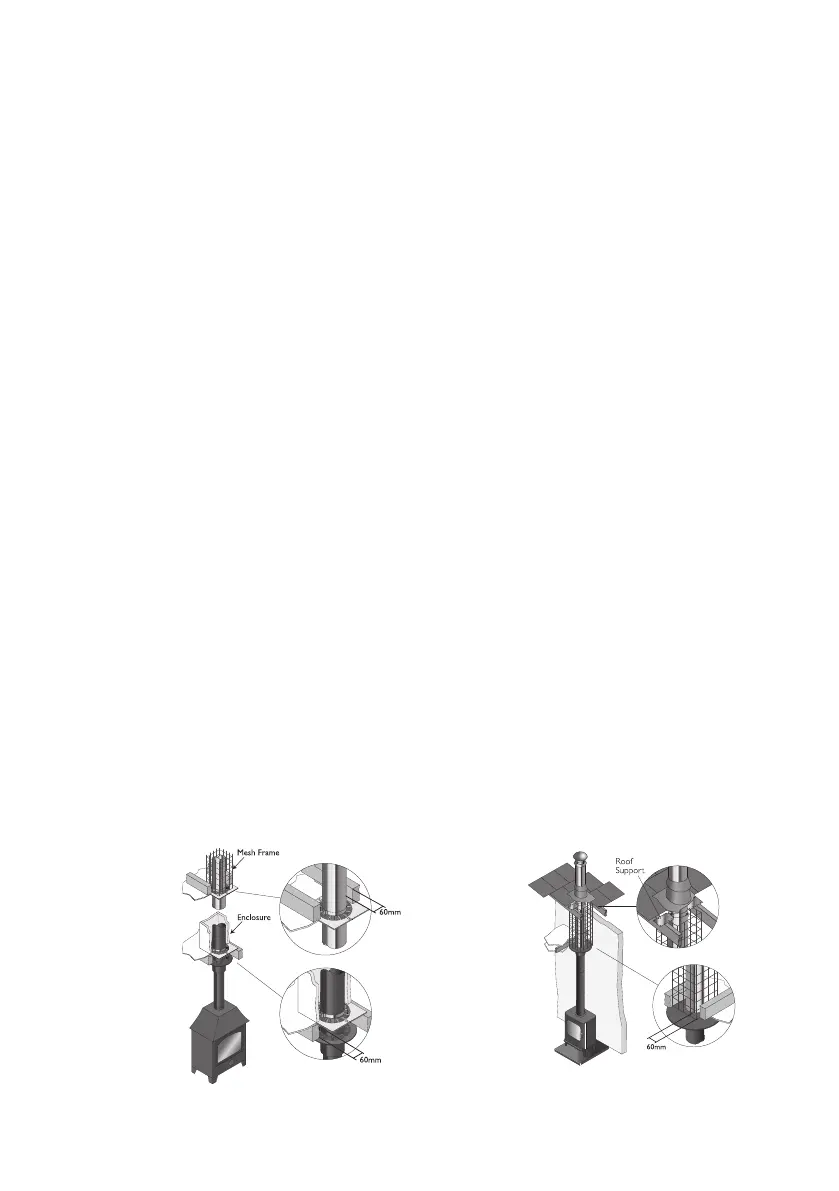
of 60mm to combustibles must be maintained within a combustible oor and within a
combustible shaft (see Fig.1 below).There is no need to line the area within the floor cavity with
plasterboard; however the ventilated re stop plate and ventilated support plate must be used.
On gas and oil applications, a distance of 50mm to combustibles must be maintained within a
combustible oor and within a combustible shaft. The ventilated re stop plate and ventilated
support plate must be used.
Where the chimney penetrates a non combustible floor and where a non combustible shaft is
used, a distance of 50mm to the shaft is sufficient. In this case, non ventilated re stop plates
and support plates may be used with a ventilated re stop being used where the chimney
penetrates into the roof space.
On bungalow applications where the chimney runs through either a combustible or non-
combustible ceiling, an unventilated bungalow fire stop plate kit can be used. Please note that
an unventilated support plate can not be used above the ceiling in this case. The weight of the
chimney should be supported using the roof support (see p.33). Distance to combustibles must
be respected within the ceiling space (see Fig. 2 below) and mesh frame should be used within
the loft space, which must be ventilated (see Fig. 2 below).
ENCLOSURE/SHAFTS
With the exception of the room containing the appliance, where the chimney passes through
any part of the building, where there is a risk of accidental human contact, i.e a bedroom etc., or
where there is a risk of contact with combustible materials stored in a cupboard or in the roof-
space, the chimney must be enclosed in an appropriate way to meet Building Regulations. This
can be achieved by boxing in the chimney in habitable rooms, or by the use of a protective wire
mesh frame in roof spaces etc. In all cases the minimum distance to any combustible material,
including loft insulation, must be respected according to the table on p.10, and any enclosure
should be ventilated using the appropriate ventilated fire stops (see p.22).
Fig. 1 Fig. 2
Internal House
Combustible Floors
Internal Bungalow (Ventilated Loft Space)
Combustible and Non-Combustible Floors



 To Next Page