Need help?
Do you have a question about the SCHUBERTH E1 and is the answer not in the manual?
Explains symbols used in the manual for safety instructions, advice, and tips.
Details the E1's compliance with the ECE-R 22.05 standard for safety.
Shows the ECE test standard, certification number, certifying authority, and serial number.
Illustrates and labels all parts of the helmet for identification.
Describes the aerodynamic shape and material of the outer shell for protection.
Explains the multi-segment foam padding for optimized impact absorption.
Details the helmet's aerodynamic design for touring and stability.
Explains how features reduce noise and improve hearing capability while riding.
Describes the wind deflector for fresh air and noise reduction.
Explains the pivoting chin bar, its operation, and lock system.
Details the easy-to-use ratchet fastener for secure chinstrap adjustment.
Covers shield protection, adjusting its position, and disassembly/assembly.
Explains the double-lens design, coating, and operation for fog prevention.
Provides step-by-step instructions for removing and installing the face shield.
Details how to fit the anti-fog lens into the face shield.
Provides instructions for removing the anti-fog lens from the face shield.
Describes the tinted sun visor, its features, and operation.
Explains how to remove and install the sun visor without tools.
Details the washable, replaceable inner lining and its materials.
Step-by-step guide to remove the helmet's inner lining.
Instructions for attaching the crown liner using mounting assists.
Provides steps for taking apart the helmet's cheek pads.
Details the process of reassembling the helmet's cheek pads.
Explains various ventilation devices for face shield, chin, and head.
Describes face shield positions for ventilation and mist prevention.
Explains the chin ventilation system and its dust filter.
Details the chin area inlet for face shield ventilation.
Describes the adjustable head ventilation system for cooling.
Explains how to adjust ventilation for different seasons.
Explains the system for extracting air from the helmet interior.
Details the minimum fresh air supply for defogging and CO2 reduction.
Covers the Anti-Roll-Off System (A.R.O.S.) and reflective panels.
Explains the A.R.O.S. system's benefits for helmet retention.
Highlights reflective panels for rider visibility in poor conditions.
Step-by-step guide on how to correctly put on the helmet.
Provides instructions for safely removing the helmet.
Instructs on regularly checking the helmet for damage.
Explains how to check the chinstrap for a snug and secure fit.
Details checks for face shield and sun visor functionality and condition.
Provides general safety warnings and advice for helmet usage.
Offers safety advice related to the face shield and sun visor.
Warns against unauthorized modifications and recommends original parts.
Instructions on cleaning the helmet's outer shell and shield.
Advises on checking and maintaining the chin section and strap buckle.
Details cleaning procedures for the face shield and sun visor.
Specifies cleaning methods for the anti-fog lens.
Provides cleaning instructions for the sun visor.
Explains how to remove and wash the helmet's inner lining.
Details how to disassemble and clean the head ventilation system.
Instructions for cleaning and re-inserting the dust filter.
Notes that the metal components of the retention system require no maintenance.
Advises on storing the helmet safely in its bag.
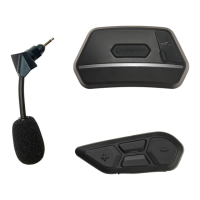
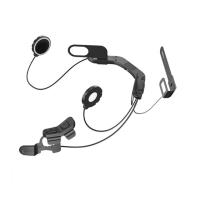
Discusses the helmet's readiness for SRC-System communication installation.
Recommends using only original SCHUBERTH accessories and spare parts.
Guides users on how to order original SCHUBERTH parts.
Advises consulting a dealer for necessary helmet repairs.
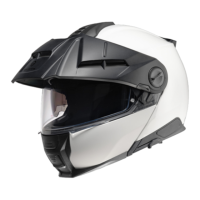
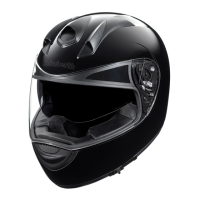
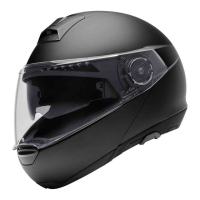
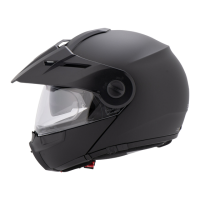
The SCHUBERTH E1 is a versatile flip-up helmet designed for adventure riding, combining the functionality of a modular helmet with the aesthetics of a modern adventure helmet. It is engineered with advanced manufacturing methods, excellent aerodynamics, and an efficient ventilation system suitable for both on-road and off-road conditions. The helmet integrates proven safety and comfort features to meet high demands in various riding environments.
The E1 helmet conforms to the ECE-R 22.05 standard, ensuring compliance with defined safety standards for impact absorption, visor, retention system, and field of vision across European Union countries and those recognizing the ECE standard. It also meets relevant insurance requirements. The helmet's outer shell is crafted from a special glass-fibre reinforced duroplastic matrix, developed by SCHUBERTH, to provide optimal protection and an aerodynamically efficient shape. The inner shell, designed for optimized impact absorption, features a multi-segment foam padding that enhances safety by better absorbing and dissipating impact forces. Large side panels contribute to an optimal and comfortable fit.
The helmet incorporates an Anti-Roll-Off System (A.R.O.S.), a safety feature that, when the chinstrap is correctly fastened and adjusted, prevents the helmet from pivoting off the head from behind. It also minimizes the risk of contact between the chin section and the rider's chin or neck due to a low tilt angle and reduces the consequences of the helmet hitting the rib cage in an accident. Reflective panels, including silver strips at the back of the neck collar and integrated panels under the face shield, enhance rider visibility, especially in poor conditions.
The E1 features a chin bar that pivots up and can be easily opened and closed using a central operating element. The chin bar's movement is optimized for smooth operation, and it can be opened regardless of the visor or sun visor position. A stiff, positive engagement ensures the chin bar remains securely in its raised position. The chin bar's lock system, similar to car door locks, allows for single-button operation despite having locks on both sides, with a Bowden cable mechanism simultaneously operating the opposite lock. A safety feature prevents the chin bar from opening accidentally during a fall.
The chinstrap utilizes a micro-lock ratchet fastener, allowing for easy and precise adjustment to ensure a firm yet comfortable fit. The chinstrap length is adjusted by pulling the strap through metal buckles, and the end is secured with a retaining loop and comfort pad. To close, the ratchet tongue slides step-by-step into the locking buckle. To open, a red ribbon on the fastener is pulled upwards to release the buckle.
The helmet includes a shield that can be fixed in one of three positions. It is designed to protect against sun rays and rocks. The shield can be disassembled by turning bayonet fastenings on both sides. For assembly, snap-in pins on the shield are guided into the visor mechanism slots, and the bayonet fastening is closed. The helmet can also be used without the shield, with fastening pins inserted into the visible shield mechanism.
The face shield is a fog-free double-lens visor with an integrated anti-fog lens, pre-tensioned by eccentric pins to create an insulating air cushion that prevents fogging. The main plate has a HighClear® anti-scratch coating. The face shield can be opened by pushing it up with a thumb using finger tabs on either side and can be locked into one of seven positions, including an "urban position" for increased resistance. The face shield mechanism does not require additional lubrication.
The sun visor is tinted grey, 3D-shaped, and 1.5mm thick, offering protection against small stone chips and insects, as well as effective UV protection through its polycarbonate structure. It is operated by a slide on the left chin area, easily accessible even with gloves. Moving the slide backward lowers the sun visor, while moving it forward retracts and locks it into the inner helmet shell. The sun visor can be operated independently of the face shield position.
The E1's ventilation systems include:
The inner lining of the E1 is completely removable and washable. The head and cheek pads can be hand-washed with a mild soap solution (e.g., diluted standard mild detergent) at a maximum temperature of 30 °C. The lining should be allowed to dry at room temperature with good ventilation. The headband can be hung over a mirror to dry during breaks.
For cleaning the helmet shell and shield, water and soap or commonly available motorcycle shampoos, cleaners, polishes, or plastic cleaners can be used. Care should be taken to prevent other cleaning materials from contacting the face shield. The inner surface of the anti-fog lens should only be cleaned with a soft, slightly dampened microfibre cloth, without cleaning agents. The sun visor should also be cleaned with a soft, slightly damp microfibre cloth, avoiding cleaning agents. Tepid water (<20 °C) is recommended for all cleaning. The face shield should not be soaked in water, as this reduces surface hardness and coating durability. When not in use, the face shield should not be completely closed to allow moisture to escape and preserve the anti-fog/anti-scratch coating.
The dust filter behind the chin ventilation can be removed, rinsed with cold water and mild soapy solution if needed, and re-inserted after drying. The metal components of the retention system do not require maintenance.
The head ventilation system's air inlet cowl can be removed for cleaning the ventilation mechanism. This involves moving vent caps to the back, grasping under the bottom edge of the cap to remove it, cleaning the cap and mechanism, and then reassembling by aligning the pin with the connector system until an audible "click" is heard.
The helmet should be stored in its supplied helmet bag in a dry, well-ventilated, and stable place, ensuring it cannot fall to the floor.
 General
| Shell Material | Fiberglass composite |
|---|---|
| Ventilation | Multi-channel ventilation system |
| Safety Standards | ECE 22.05 |
| Pinlock | Included |
| Intercom | Prepared for SCHUBERTH SRC-System |
| Visor | Anti-scratch |
| Interior | Removable, washable |
| Closure System | Micro-lock ratchet |
| Bluetooth Compatibility | Yes |
| Chin Vent | Adjustable |

 To Next Page