■ Resistance Adjustment
You have full control over the levels of resistance integrated into
your workout. Typically, lower resistance levels enable you to move
at a faster pace, placing increased demand on your cardiovascular
system. Higher resistance levels will typically deliver more of a
muscle/endurance workout at lower RPMs. But everyone is differ-
ent! So experiment and find the beginning level of resistance that
is comfortable for you.
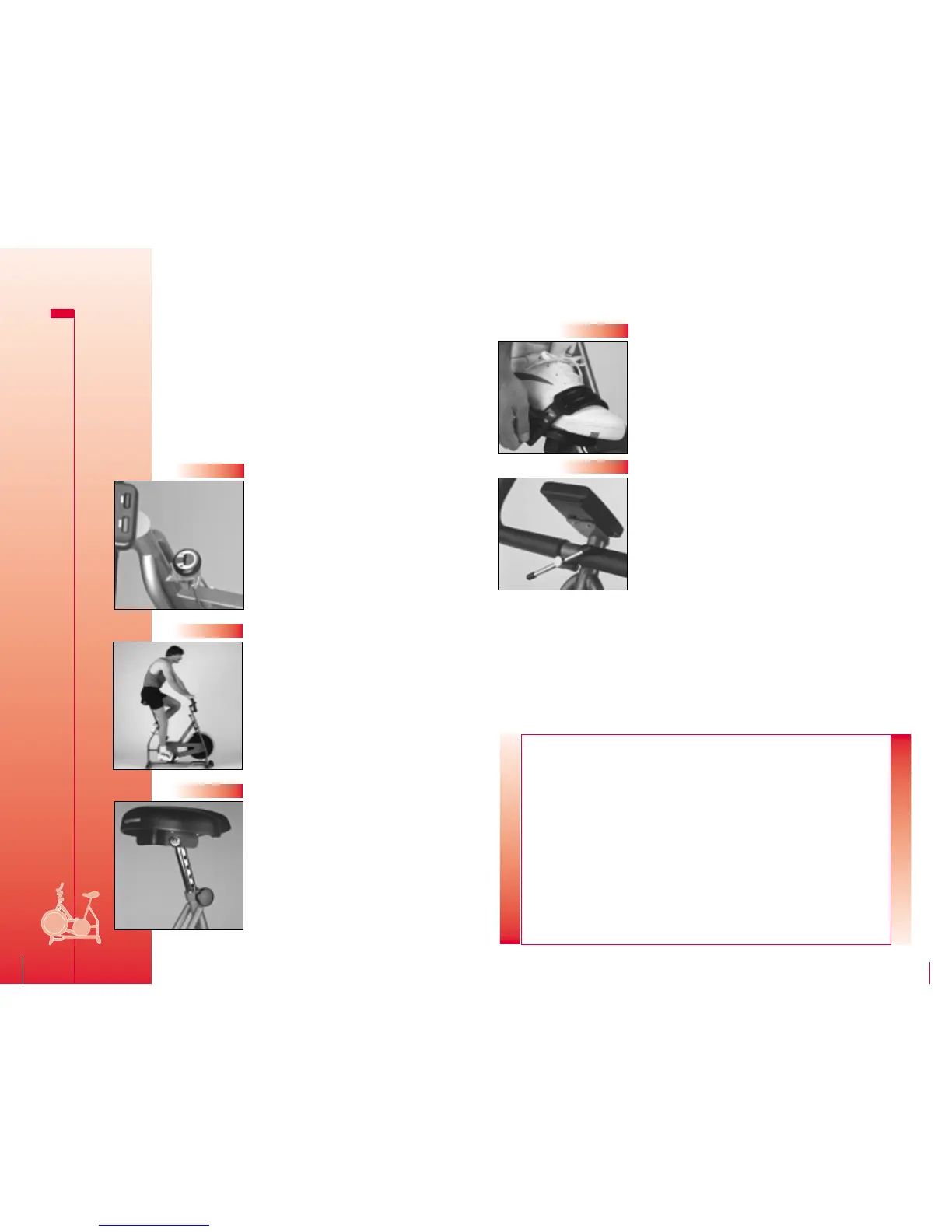
Pedal resistance adjustment
Pedaling resistance is controlled simply with the
pedal resistance adjustment control knob.
The adjustment control knob is located directly
below the on-board computer. Turning the
adjustment control knob clockwise (+) increases
the level of resistance. Turning the adjustment
control knob counter-clockwise (–) reduces the
level of resistance. Adjustments can be easily
made before, after or while you are riding (Fig. 1).
■ Seat adjustment
Proper seat height helps ensure maximum
exercise efficiency and comfort, while
reducing the risk of injury.
1. Place one pedal at the bottom of the pedal
stroke, and center the ball of your foot over the
center of the pedal. Your leg should be slightly
bent at the knee (Fig. 2).
2. If your leg is too straight or your foot cannot
touch the pedal, you will need to adjust the seat
down. If your leg is bent too much, you will
need to move the seat up.
3. Dismount the bike. Loosen the seat adjust-
ment knob by turning it counterclockwise.
Unscrew the knob completely and extract the
locking pin from its collar (Fig. 3).
4. Raise or lower the seat to the desired position.
5. When the seat is in the desired position, align
the closest hole in the seat post with the hole in
the collar and reinsert the locking pin. Turn the
knob clockwise to secure the seat.
■ Foot positioning/pedal strap adjustment
Place the ball of each foot on the pedals. Rotate the pedals
until one foot is within arm’s reach. Then, fasten the rubber
strap over your shoe and secure it to the pedal by slipping the
nub at the end of the pedal through one of the slots in the
strap. Pull down the strap until it snaps into place (Fig. 4).
Repeat for the other foot. Point your toes and knees directly
forward to ensure maximum pedal efficiency.
■ Lower body workout
Once you are in position and sitting comfortably, slowly begin
pedaling, with your arms relaxed at your sides and with your
hands resting on the top of your thighs or on the handlebars.
Pedal at an easy pace, at a low resistance level until you feel
secure and comfortable. As you feel more comfortable,
experiment with the range of resistance levels available,
via the adjustment control knob.
IMPORTANT: Do not dismount the bike until pedals are
completely stopped.
■ Upper body positioning/handlebar adjustment
For added enjoyment, comfort and variety during your work-
out, experiment with moving the handlebar to various posi-
tions, from straight up to lowered. Simply dismount the bike,
then turn the quick release lever counter-clockwise to loosen.
Put the handlebar in the desired position and then tighten
securely by turning the lever clockwise (Fig. 5).
OPERATION
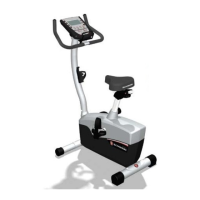
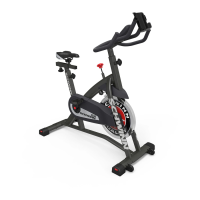
HOW TO USE THE DX 900
®
EXERCISE BIKE
4
5
FIG.4
FIG.5
FITNESS SAFEGUARDS
Failure to follow any of these safeguards may result in injury or serious health problems.
• Do not remove feet from the DX 900 pedals while they are in motion.
• Do not attempt to ride this bike at high RPMs until you have practiced and are comfortable riding at
slower RPMs.
• Do not place fingers or any other objects into moving parts of the exercise equipment.
• Keep children and pets away from the DX 900 Bike while machine is in use. A child’s curiosity may
result in injury. Do not allow children to use the DX 900 Bike. The pedal travel ranges are designed
and intended for adults, not children.
• Never turn pedal crank arms by hand. To avoid entanglement and possible injury, do not expose hands or
arms to the drive mechanism.
• Do not dismount the DX 900 Bike until the pedals are at a complete STOP.
• Warn bystanders to keep a safe distance. Do not allow anyone to touch the exerciser or person using it
while the machine is in motion.
• After exercising, turn the adjustment control knob clockwise (+) to increase tension so the pedals will not
rotate freely and possibly hurt someone.
FIG.2
FIG.3
FIG.1




 To Next Page