
 Need help?
Do you have a question about the Selco Quasar 270 and is the answer not in the manual?
Defines the required environmental conditions for using the equipment safely and effectively.
Details essential safety measures for users and bystanders during operation.
Explains how to protect against harmful fumes and gases produced during welding.
Outlines measures to prevent fires and explosions in the welding area.
Provides safety guidelines for the handling and use of gas cylinders.
Details measures to prevent electrical shock hazards during welding operations.
Discusses electromagnetic field effects and potential interferences with other devices.
Specifies the equipment's Ingress Protection (IP) rating and its meaning.
Provides instructions for safely lifting, transporting, and unloading the equipment.
Guidelines for placing the welding equipment in an optimal and safe location.
Instructions for connecting the welding equipment to the power supply and earth.
General notes on the installation process, emphasizing professional execution.
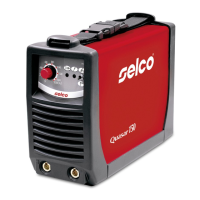
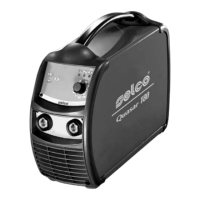
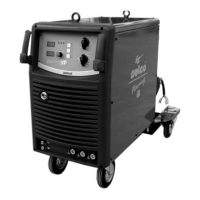
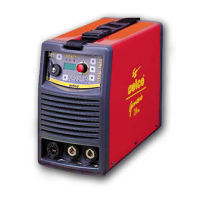
An overview of the Quasar 270/350 series constant current inverter power sources.
Details the controls and indicators on the front panel of the welding machine.
Describes the connectors and components located on the rear panel of the equipment.
Details the connection sockets available on the front or side panel for various connections.
Information regarding the operation of remote controls when connected to Selco power sources.
Details the RC 100 remote control unit for managing display and current/voltage adjustment.
Details the RC 200 remote control unit for managing all available parameters.
Details the RC 180 remote control unit for changing output current without interrupting welding.
Guidelines for performing regular maintenance operations on the system, including checks and cleaning.
Diagnoses and solutions for the issue where the system does not power on.
Troubleshooting steps for when the welding system fails to produce output power.
Addresses problems related to incorrect welding power output and its possible causes.
Identifies causes and solutions for unstable welding arc conditions.
Explains common causes of excessive weld spatter and how to mitigate them.
Troubleshooting steps for weld joints with insufficient penetration.
Addresses the causes and solutions for weld undercuts.
Explains how to prevent or resolve slag inclusions in weld joints.
Discusses causes of porosity in welds and methods for prevention.
Covers prevention and resolution of tungsten inclusions in TIG welding.
Troubleshooting common causes of blowholes in welding.
Provides solutions for when the electrode sticks to the workpiece during welding.
Addresses the causes and prevention of hot cracks in welded joints.
Explains the causes and prevention of cold cracks in welded materials.
Detailed explanation of the Manual Metal Arc welding process, including preparation and electrode selection.
Guidance on selecting the appropriate welding current based on electrode type and application.
Describes the process of initiating and sustaining the welding arc, including hot start.
Explanation of the TIG welding process, including arc initiation and gas protection.
Specific procedures and considerations for TIG welding of steel materials.
Guidelines for TIG welding of copper materials, noting thermal conductivity.
Explanation of Direct Current Straight Polarity (DCSP) and Reverse Polarity (DCRP) in welding.
 General
| Output Current Range | 10-270A |
|---|---|
| Weight | 17.5 kg |
| Rated Output Current | 270A |
| Input Voltage | 230V |
| Protection Class | IP23 |




 To Next Page