EasyManua.ls Logo

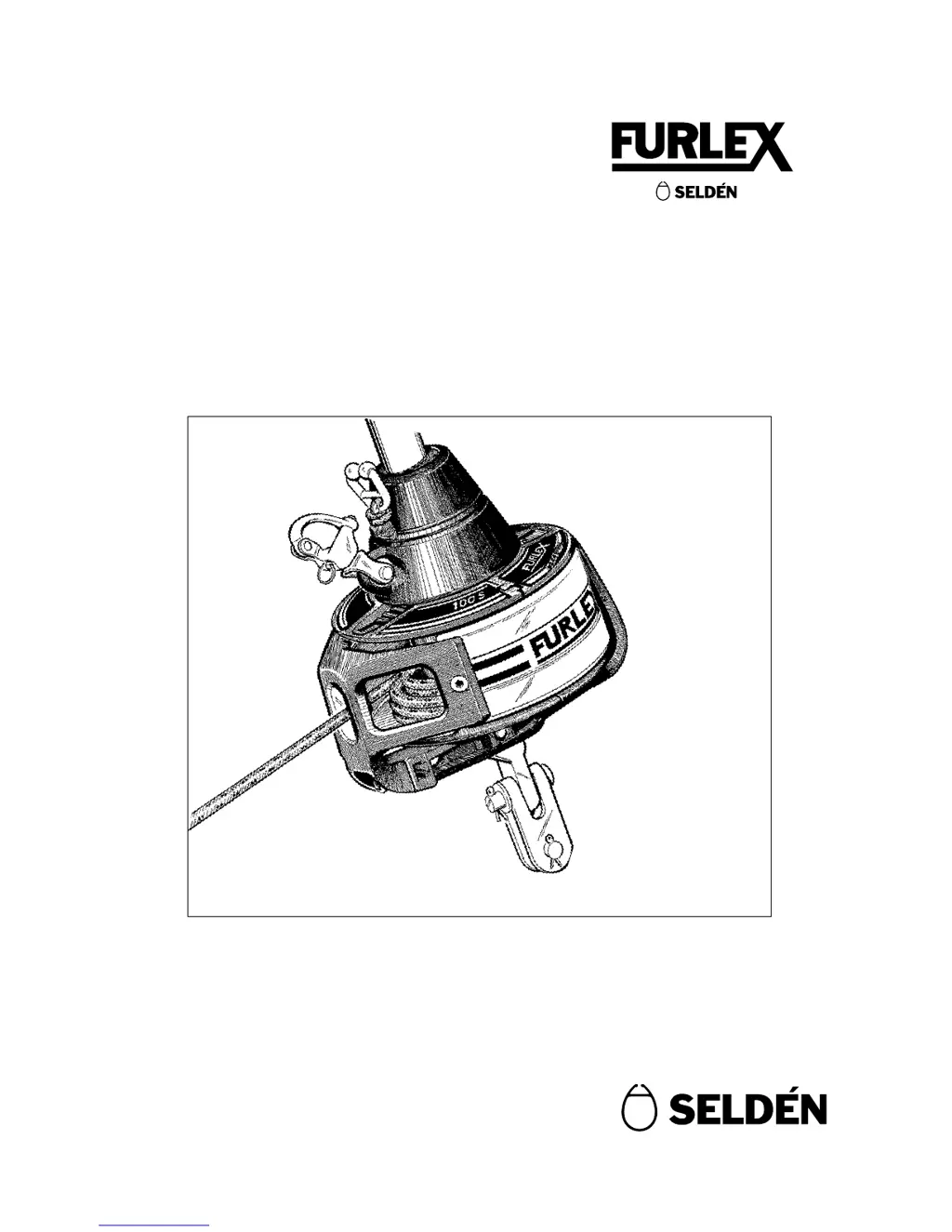
Selden Furlex 100 S - User Manual

Selden Furlex 100 S
52 pages
Print Icon
To Next Page IconTo Next Page
Loading...
Manual
Furlex
100 S
595-102-E
2011-04-15
100 S

Table of Contents

Questions and Answers

  • K
    Kim ZamoraAug 20, 2025
    What to do if my Selden Furlex 100 S sail will not unfurl?
    • K
      Keith HernandezAug 20, 2025
      If your Selden Marine Equipment sail won't unfurl, or only partly unfurls, it could be due to several reasons: * The jib halyard or another halyard might be wrapped around the luff extrusion. Ease the halyard slightly and try to reverse the system. * The furling line may not be free to run or has become tangled. Furl the system and free the halyard. * The forestay might be too slack. Tension the forestay, first by tensioning the backstay adjuster or backstays. If that doesn’t help, decrease the length of the Furlex system. Adjusting the forestay. * Dirt and salt in the bearings can cause this issue. Rinse the bearings with fresh water and lubricate with Furlex grease. * Too much strain on the halyard can also prevent unfurling. Ease the halyard off.
  • J
    Jessica DanielsAug 23, 2025
    What to do if my Selden Furlex 100 S Marine Equipment sail unfurls after reefing?
    • C
      Christian LewisAug 23, 2025
      If your Selden Marine Equipment sail unfurls after reefing or furling, it could be because: * The sail isn't furled tightly enough. Furl with some drag on the line. * The furling line isn't belayed. Furl and belay the furling line.
  • R
    raymondvalentineAug 26, 2025
    Why does my Selden Marine Equipment system wobble when furling?
    • M
      Matthew BellAug 26, 2025
      If your Selden Marine Equipment system wobbles when furling and unfurling, the forestay might be too loose. To fix this, tension the forestay and/or backstay.
  • H
    Hunter SilvaAug 28, 2025
    Why is my Selden Furlex 100 S Marine Equipment sail hard to hoist?
    • C
      cameron83Aug 28, 2025
      Your Selden Marine Equipment sail might be hard to hoist due to these reasons: * The luff tape might be too thick. Return the sail to the sailmaker. * The sail might be caught on something or is not sufficiently loose on the foredeck. Arrange the sail better on the foredeck. * There could be a fault in the halyard routing. Check the sheaves, winch, etc. * Dirt and salt in the luff groove can cause friction. Clean the luff groove.
  • C
    christopherbrownAug 31, 2025
    What causes wrinkles at the tack of my Selden Furlex 100 S sail?
    • D
      Denise RobinsonAug 31, 2025
      Wrinkles at the tack of your Selden Marine Equipment sail can occur because: * The tack ring was twisted in the wrong direction before tacking the sail. Unfurl the sail, ease off the halyard, undo the tack snap shackle, rotate the tack ring around the system, and retack the sail. * The sail is old or incorrectly cut.
  • M
    Melody ValdezSep 3, 2025
    Why can't I tension the luff on my Selden Furlex 100 S Marine Equipment?
    • P
      Peter SharpSep 3, 2025
      You might not be able to tension the luff of your Selden Marine Equipment because: * The halyard swivel comes into contact with the top guard. The luff of the sail is too long. Have the sail shortened by the sailmaker. * The angle between the forestay and the halyard is too great. Shorten the sail or move the halyard lead up.
  • S
    stephanie75Sep 5, 2025
    What to do if I cannot take down my Selden Furlex 100 S Marine Equipment sail?
    • E
      Eric FarleySep 5, 2025
      If you cannot take down your Selden Marine Equipment sail: * The halyard might be wrapped around the top of the luff extrusion. Ease the halyard off and try to reverse the system. * The halyard wraps around the luff extrusion as the sail is coming down. Tension the halyard manually, keeping a slight drag on it while taking the sail down. * The halyard is stuck. Check the halyard routing (sheaves, stoppers, etc.).
  • M
    Mr. Jason JonesSep 8, 2025
    Why is the UV protection on the inside of my Selden Furlex 100 S furled sail?
    • J
      Jessica PattersonSep 8, 2025
      The sail’s UV protection might be on the inside of the furled sail because the furling line is wound on the drum in the wrong direction. Remove the sheet from the sail and gather the sail around the Furlex system with a rope. Pull on the line until the drum is empty. Wind a couple of turns on the drum by hand in the right direction. Unfurl the sail. Furl again, checking the number of turns of furling line on the drum.
  • R
    Randall MccallSep 12, 2025
    Why does the leach flog on my Selden Furlex 100 S sail?
    • T
      thompsonnicholeSep 12, 2025
      The leach of your Selden Marine Equipment sail might flog despite sheeting hard due to: * An incorrect sheeting point. Move the sheeting point forward. * An incorrectly tensioned leach line. Adjust the leach line.
  • M
    Margaret SpencerSep 13, 2025
    Why does the leach close on my Selden Marine Equipment sail?
    • T
      Theresa BergSep 13, 2025
      The leach of your Selden Marine Equipment sail might close (bend inwards) due to: * An incorrect sheeting point. Move the sheeting point backwards.

Summary

1 Introduction

1.1 The manual

Guidance on studying the manual for maximum benefit and understanding its structure.

1.2 Product information

ASSEMBLY

2 Checklist

List of components included in the Furlex box assembly kit.

2.2 Foil pack

Details and components of the foil pack for the Furlex system.

2.3 Tools

List of tools required for assembly and specific tools for halyard leads.

3 Assembly preparations

Steps and considerations before assembling the Furlex system.

3.1 Forestay attachment - guiding principle

Guiding principle for forestay connections allowing sufficient articulation.

3.2 Mast attachment

Options for attaching the Furlex system to the mast, with diagrams.

3.3 Deck attachment

Details on attaching the Furlex system to the deck fitting at the stemhead.

3.3.1 Dimensions of lower bearing assembly (mm)

Specifications and diagrams for the lower bearing assembly dimensions.

3.3.2 Dimensions of top eye terminal

Specifications and diagrams for the top eye terminal dimensions.

3.3.3 Table of measurements for toggles

Table detailing measurements for various types of toggles available for the Furlex.

3.4 Assembly below deck

Methods for fitting the lower bearing assembly below deck inside an anchor well.

3.5 Calculating the length of the forestay wire

Procedure for determining and calculating the correct length of the forestay wire.

3.5.1 Table1: Calculation of forestay wire length

Table for recording and calculating the forestay wire length.

3.6 Calculating the length of the luff extrusion

Procedure for calculating the required length of the luff extrusion.

3.6.1 Table 2: Calculation of luff extrusion length

Table for recording and calculating the luff extrusion length.

4 Assembly of the Furlex System

Detailed instructions for assembling the main components of the Furlex system.

4.1 Assembly of the luff section

Step-by-step instructions for assembling the luff section of the Furlex system.

4.2 Fitting the wire terminal (or rigging screw)

Instructions for fitting the wire terminal or rigging screw to the forestay wire.

4.3 Fitting the line drum and line guide

Instructions for fitting the line drum and line guide components of the Furlex system.

5 Halyard routing

5.1 Halyard leads

Information on halyard leads, their material, inspection, and replacement.

5.2 Halyard sheave box

Details on fitting and using a halyard sheave box for optimal halyard angle.

5.3 Spinnaker halyard

Guidance on routing the spinnaker halyard to avoid interference with the Furlex system.

5.4 Fitting the halyard lead

Instructions for fitting the halyard leads, including insulation and positioning.

6 Furling line arrangement

6.2 Winding the line onto the drum

Procedure for winding the furling line onto the line drum for proper operation.

6.3 Routing of the furling line

Instructions for routing the furling line aft to the cockpit using lead blocks.

6.4 Fitting the stanchion blocks

Guide to fitting the stanchion blocks for the furling line on stanchions or pulpit.

7 The Sail

7.1 Adapting the sail to the Furlex system

Modifications required for existing sails to be compatible with the Furlex system.

7.1.1 Table of sail measurements 100 S

Table of sail measurements and deductions for the Furlex 100 S system.

7.3 Determining the length of the pendant

Procedure for determining the correct length of the pendant for the sail tack.

11 Sailing with Furlex

11.1 To hoist the sail

Step-by-step guide on how to properly hoist the sail with the Furlex system.

11.2 Unfurling the sail

Procedure for safely unfurling the sail, with options for controlled release.

11.3 Furling the sail

Instructions for tightly and evenly furling the sail for optimal performance and safety.

12 Reefing

12.1 Free turn

Explanation of the 'free turn' function and its effect on reefed sail shape.

12.2 Reefing under sail

Procedure for reefing the sail while sailing, focusing on tightness and shape.

12.3 Setting a reefed sail from the furled position

Method for setting a reefed sail from a fully furled state for best shape.

12.4 Adjusting the sheeting position

Guidance on adjusting sheeting position for optimal sail trim when the sail is reefed.

13 Furlex for racing

14 Adjusting the forestay length

14.1 Furlex with rigging screw

Procedure for adjusting forestay length using a rigging screw and relevant tables.

14.1.1 Rigging screw adjustment

Table detailing rigging screw adjustment values and part numbers.

14.2 Furlex without rigging screw

Methods for adjusting forestay length on systems without a rigging screw.

15 Maintenance of the Furlex System

15.1 Lubricating the lower bearing assembly

Instructions for lubricating the ball bearings of the lower bearing assembly.

15.2 Lubricating the halyard swivel

Instructions for lubricating the grease recesses in the halyard swivel.

15.3 Cleaning the Furlex

Procedure for washing and cleaning the Furlex system with fresh water and detergent.

15.4 Storage

Recommendations for storing the Furlex system, especially during winter.

16 Rigging

16.1 Fitting the Furlex on a stepped mast

Step-by-step guide for fitting the Furlex system onto a mast that is already stepped.

16.2 Stepping the mast with Furlex fitted

Procedures for safely stepping the mast when the Furlex system is already fitted.

17 Dismantling

17.1 Halyard swivel

Instructions for removing the halyard swivel from the Furlex system.

17.2 Sail feeder

Instructions for removing and re-installing the sail feeder.

17.3 Lineguide; Line drum

Instructions for removing the line guide and line drum from the Furlex system.

17.4 Forestay

Instructions for shortening or removing the forestay wire.

17.5 Lower bearing assembly

Instructions for removing the lower bearing assembly.

17.6 Luff extrusion system

Instructions for separating and reassembling the luff extrusion system.

18 Trouble shooting

18.1 The sail will not unfurl or will only partly unfurl

Troubleshooting steps for sail unfurling issues.

18.2 The sail will not furl, is hard to furl or can only be partly furled

Troubleshooting steps for sail furling difficulties.

18.5 The sail is hard to hoist

Troubleshooting steps for sail hoisting difficulties.

18.6 The luff cannot be tensioned

Troubleshooting steps for issues with luff tension.

19 Checklist

19.1 Points to check before sailing

Checklist of critical points to verify before sailing the boat for safety and reliability.

Selden Furlex 100 S Specifications

General IconGeneral
TypeFurling System
ModelFurlex 100 S
ManufacturerSelden
Pin Diameter6 mm
MaterialAluminum
Recommended Boat Length6-8 m

Related product manuals