running at its full capability when transmitting. SGC recommends using #6 gauge stranded
copper cable for power runs on 12-volt operation for the SG-2000. Some smaller gauges
might work satisfactorily, but it's best to be safe and keep the installation as solid as
possible--especially when it only involves a small additional cost for cable.
Connecting the ground The ground connector on the SG-2000 is simply a non-insulated ring terminal
screwed onto a bolt. Remove the nut and the ring terminal. Run the ground wire or ground strap into the end
of the ring terminal. Crimp it in place with a pair of pliers, then solder it, to make a good physical and
electrical connection.
Connecting the feedline The SG-2000
uses a standard SO-239 connector for its RF
input/output. Simply stick the end of the PL-259
plug (of the antenna feedline) in the SO-239 and
screw the sleeve in place until it is tight. The
connection is only electrical, so just tighten the
connection with your hand, don't use any tools!
Connecting the audio I/O jack
assembly
On the SG-2000, the audio I/O,
ground, and external PTT line are all contained on
one jack assembly. The audio I/O means different
things to different people, but in this case, it is
intended for digital communications: to connect a
modem, for weather fax, or for Telerex
TM
. This
connector can also be used for some other functions, such as a key jack for Morse code (CW) operation. Just make
sure that you have the mating connector soldered to the appropriate wires (refer to the SG-2000 manual for pin out
information). Plug it in and you're ready to roll.
74
The SGC Building, 13737 S.E. 26th St. Bellevue, Washington 98005 USA
P.O. Box 3526, 98009 Tel: (425) 746-6310 Fax: (425) 746-6384
© 1997 SGC Inc.
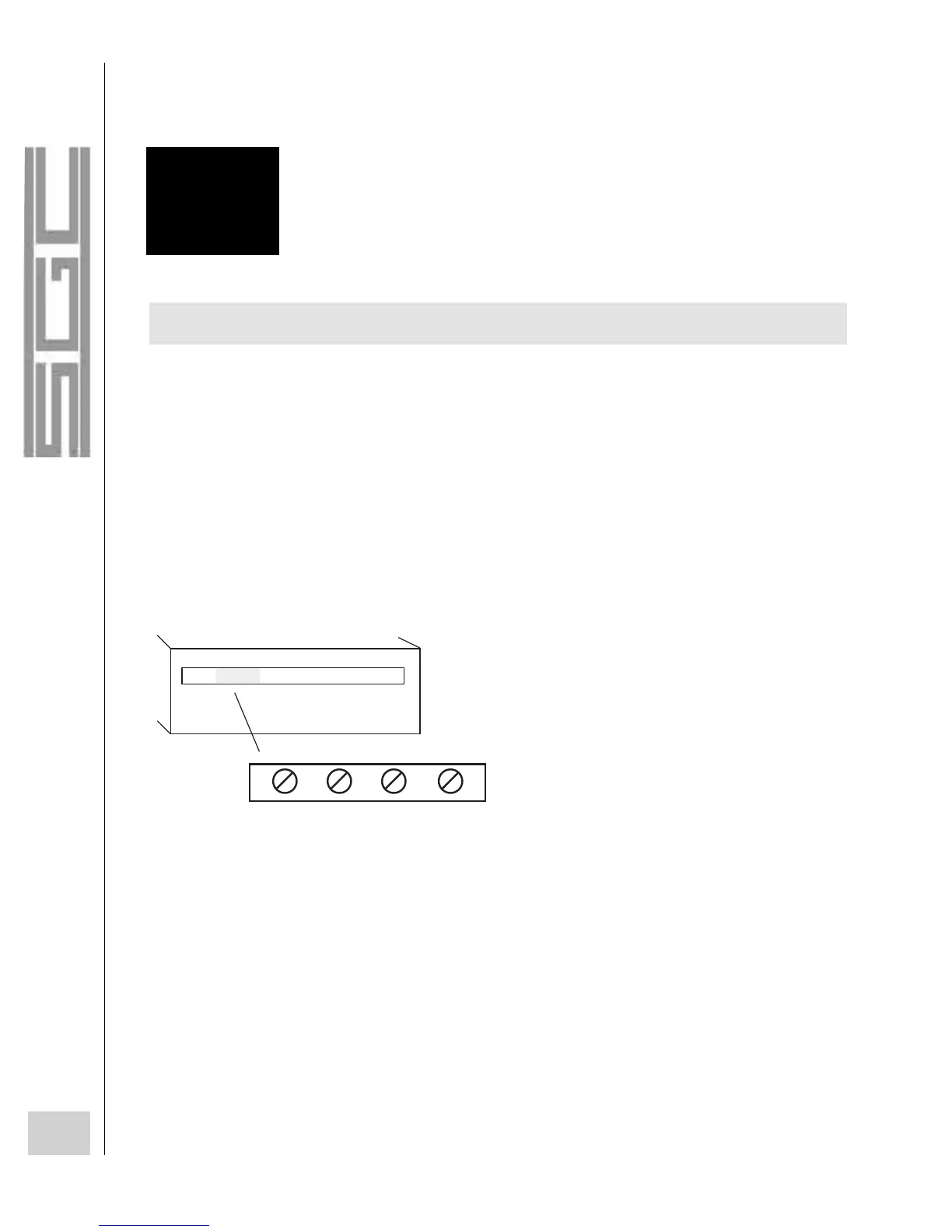
Use #6 gauge
stranded copper
cable for power
runs on 12-volt
HF systems.
CONNECTING AND CONNECTOR TYPES



 To Next Page