Shure Incorporated
7/16
The DFR22 includes Shure's patented Adaptive Notch Filter algorithm that can discriminate between feedback and
non-feedback sounds. When this algorithm detects feedback, it inserts a shallow, narrow filter into the audio path,
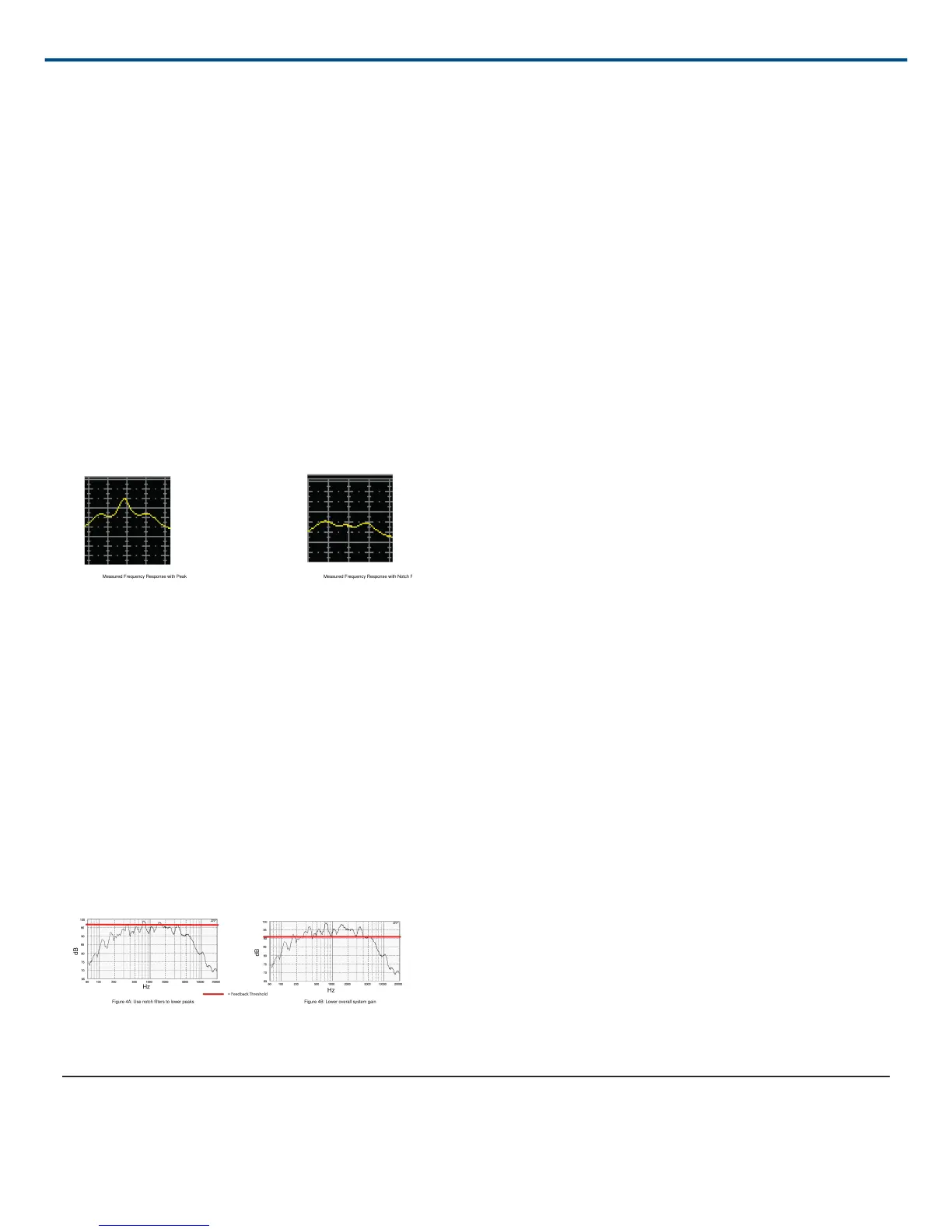
reducing gain at the frequency that is feeding back. (See Figure 3.) This filter is called a notch filter, since it affects
a narrow section of the audio spectrum. If the feedback does not stop, the filter depth is increased. By default, fil
ters in the DFR22 are deployed as HIGH Q filters. As a High Q filter gets deeper, its Q increases up to a Q of 101
(1/70th of an octave). Using the DFR22 software, you can also set filters to deploy as LOW Q. Low Q filters affect
a slightly wider range of frequencies by maintaining a Q of 14.42 (1/10th of an octave) as they deepen. By default,
the DFR22 can insert up to 16 notch filters per channel to reduce feedback.
The DFR22's feedback reduction algorithm can be used as a tool during system setup and for peace of mind
against unexpected feedback. When setting up a sound system with the DFR22, you can ring out the system by
slowly raising the gain while talking into the microphones until the first frequency begins to feed back. The DFR22
will automatically insert a notch filter to attenuate that frequency. Once the system stops feeding back, you can fur
ther raise the level and repeat the process for additional frequencies. Typically, you can raise the gain 3-9 dB
above the level at which feedback first occurred. You should leave some filters available to catch feedback that
might occur later, when the sound system is in use.
Figure 3: Effects of Notch Filter on Frequency Response
DFR22 Limitations
The DFR22 (or any other feedback reduction processor) will not let you to increase gain beyond the physical limits
of the sound system. In most cases, the point of diminishing returns is reached once 5 to 8 notch filters have been
set. This is because there are usually only a few dominant peaks in a system's frequency response (Figure 4A). In
most cases, you can expect a 6 to 9 dB improvement in gain-before-feedback. When you are ringing out a system
and notice that many frequencies feed back simultaneously, even when you increase the gain slowly, you have
reached the point of diminishing returns. If the system still has insufficient gain before feedback at this point, other
changes must be made to the sound system, such as changing the placement of the microphones and/or loud
speakers.
Figure 4: Frequency Response of an Unequalized Sound System
Rack Mounting The DFR22
Mount the DFR22 in any standard 19-inch audio equipment rack, using the supplied screws. Refer to Figure 5.


 To Next Page