EasyManua.ls Logo

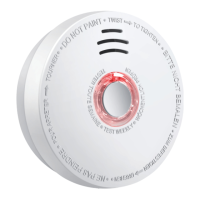
Siterwell GS558A - User Manual

Siterwell GS558A
5 pages
Print Icon
To Next Page IconTo Next Page
Loading...
Document NO.RD-558A-39-001 1 / 5 Version: F
EN14604:2005/AC:2008
Smoke Alarm User Manual
Model number: GS558A Ref
ST558
Thank you for purchasing our smoke alarm with wireless and
heat detection. Please take a few minutes to read the users
manual thoroughly and familiarize yourself and your family with
its operation. And save it for future reference.
Product Specifications:
Power : DC2*1.5V Alkaline AA battery (Gold Peak Group:
GP 15A LR6 or Energize: E91 or Raymax: LR6)
Operation current : <4uA (standby), <40mA (alarm)
Alarm volume : >85dB(A) at 3 meters.
Smoke sensitivity : 0.100-0.163dB/m
Heat sensitivity: 54-70
Local smoke alarm sound pattern:
BI 0.5s - pause 0.5s BI 0.5s pause 0.5s BI 0.5s
pause 1.5s, with the red LED flash, repeat this alarm
pattern.
Local heat alarm sound pattern:
BI 0.2s - pause 0.1s, with the red LED flash, repeat this
alarm pattern.
Wireless alarm sound pattern:
Bi - Bi - pause 1.2s, with the red LED flash, repeat
this alarm pattern.
Description:
The unit is a photoelectric 3V DC smoke alarm. It is operated by
3v AA Alkaline battery. With the photoelectric technology, it is
more sensitive to detecting slow smolder fires which general
thick, black smoke, little heat and may smolder for hours before
bursting into flames. The smoke alarm do not contain the
radioactive material which is harmless to the environment.
The smoke alarm should be installed in every room (except the
bathroom), and every other area of the home, making sure the
people in the home will be able to hear and respond to the alarm
sound. For minimum protection you should fit an alarm in the
hallway between the living areas and sleeping areas. Place the
unit near to the living areas as possible and ensure the alarm is
audible when the bedrooms are occupied.
Typical single storey dwelling with recommended:
Install a smoke alarm on the ceiling inside each bedroom and in
the hallway outside each separate sleeping area. If a bedroom
area hallway is more than 30 feet long, install a smoke alarm at
each end. If there is a basement: install a smoke alarm on the
basement ceiling at the bottom of the stairwell.
Typical multi-storey dwelling with recommended protection.
Install a smoke alarm on the ceiling inside each bedroom and in
the hallway outside each separate sleeping area. If a bedroom
area hallway is more than 30 feet long, install a smoke alarm at
each end install a smoke alarm at the top of a first to- second
floor stairwell.
Important Safety Information:
1: The test button accurately tests smoke alarm functions. Do not
use any other test method. Test smoke alarm weekly to ensure
proper operation.
2: Do not remove or disconnect battery. This will take out your
protection. Open windows or fan the air around smoke alarm
for silence it.
3: This smoke alarm should be installed only by a licensed,
qualified electrician. Observe and follow all local and
national electrical and building codes for installation.
4: This smoke alarm is designed to be used inside a single family
only. In multifamily buildings, each individual living unit
should have its own smoke alarms. Do not install in
non-residential buildings. And this smoke alarm is not a
substitute for a complete alarm system.
5: Install a smoke alarm in every room and on every level of the
home. Smoke may not reach the smoke alarm for many
reasons. For example, if a fire starts in a remote part of the
home, on another level, in a chimney, wall, roof, or on the
other side of a closed door, smoke may not reach the smoke
alarm in time to alert household members. A smoke alarm
will not promptly detect a fire except in the area or room in
which it is installed.
6: Smoke alarm may not alert every household member every
time. The alarm horn is loud in order to alert individuals to a
potential danger. However, there may be some circumstances
where a household member may not hear the alarm (i.e.
outdoor or indoor noise, sound sleepers, drug or alcohol
usage, the hard of hearing, etc.). If you suspect that this
smoke alarm may not alert a household member, install and
maintain specialty smoke alarms. Household member must
hear the alarm’s warning sound and quickly respond to it to
reduce the risk of damage, injury, or death that may result
from fire, If a household member is hard of hearing, install
Question and Answer IconNeed help?

Do you have a question about the Siterwell GS558A and is the answer not in the manual?

Overview

This document describes the GS558A smoke alarm, a photoelectric 3V DC device with wireless and heat detection capabilities. It is designed to provide early warning of developing fires in residential settings.

Function Description:

The GS558A smoke alarm utilizes photoelectric technology, making it particularly sensitive to slow smoldering fires that produce thick, black smoke and little heat, often for hours before bursting into flames. Unlike some alarms, it does not contain radioactive material, making it harmless to the environment. The device also incorporates heat detection, activating an alarm when temperatures reach between 54-70°C.

The alarm is designed for installation in every room of a home (except bathrooms) and other areas to ensure all occupants can hear and respond to the alarm sound. For minimum protection, it should be installed in the hallway between living and sleeping areas, as close to living areas as possible, ensuring audibility in bedrooms.

For typical single-story dwellings, it is recommended to install a smoke alarm on the ceiling inside each bedroom and in the hallway outside each separate sleeping area. If a bedroom hallway exceeds 30 feet, an alarm should be installed at each end. In basements, an alarm should be installed on the basement ceiling at the bottom of the stairwell.

For multi-story dwellings, the recommendation is to install a smoke alarm on the ceiling inside each bedroom and in the hallway outside each separate sleeping area. If a bedroom hallway is over 30 feet long, an alarm should be installed at each end, and an additional alarm at the top of a first-to-second floor stairwell.

The device features a test button that accurately verifies its functions. Weekly testing is recommended to ensure proper operation. The alarm also includes a "silence mode" to temporarily pause nuisance alarms, such as those triggered by cooking particles. During an alarm, pressing the test button will pause the alarm for approximately 10 minutes, with the red LED flashing once every 8 seconds to indicate silence mode. The alarm will automatically reset after 10 minutes, and if combustion particles are still present, it will sound again. This silence feature can be repeatedly activated until the air is clear.

The GS558A also boasts wireless functionality, allowing multiple smoke alarms to communicate. When one alarm detects smoke or heat, it can trigger other connected alarms. This feature enhances early warning across different areas of the home.

Important Technical Specifications:

  • Model Number: GS558A
  • Reference: ST558
  • Compliance: EN14604:2005/AC:2008
  • Power: 2 x 1.5V Alkaline AA batteries (Gold Peak Group: GP 15A LR6 or Energize: E91 or Raymax: LR6 recommended)
  • Operation Current: <4uA (standby), <40mA (alarm)
  • Alarm Volume: >85dB(A) at 3 meters
  • Smoke Sensitivity: 0.100-0.163dB/m
  • Heat Sensitivity: 54-70°C
  • Wireless Frequency: 433MHz
  • RF Receiver Current: <5mA
  • RF Emitter Current: <10mA
  • Wireless Distance: >20 meters

Local Smoke Alarm Sound Pattern: BI 0.5s - pause 0.5s – BI 0.5s pause 0.5s - BI 0.5s – pause 1.5s, with a red LED flash, repeating this pattern. Local Heat Alarm Sound Pattern: BI 0.2s - pause 0.1s, with a red LED flash, repeating this pattern. Wireless Alarm Sound Pattern: Bi - Bi - pause 1.2s, with a red LED flash, repeating this pattern.

LED Indicator:

  • Normal Operation: Red LED flashes 1 time per 40 seconds.
  • Battery Failure/Low Battery: Alarm "chirps" 1 time and red LED flashes 1 time per 40 seconds. (Pressing the test button will pause this warning tone for 8 hours, allowing normal smoke detection during this period, but removing nuisance warning tone.)
  • Unit Fault: Alarm "chirps" 1 time per 40 seconds.
  • Silence Mode: Red LED flashes once every 8 seconds.

Usage Features:

  • Installation: The unit is installed by fixing two AA batteries, operating the wireless function as described in the manual, marking and drilling installation holes, attaching the bracket with screws (3*25mm) into plastic plugs, and then fitting the alarm body onto the bracket by turning it clockwise.
  • Wireless Coding Mode: To send wireless coding, press and hold the test button until the red LED lights for about 1 second, then release. The LED will stay ON. If no wireless learning signal is received within 30 seconds, the LED will turn OFF. If other alarms receive this command, the red LED flashes for 2 seconds, then re-enters sending status.
  • Learning Mode: To enter learning mode, press the test button for 1 second, then release. This mode is active only if other alarms are in "Send Wireless coding mode." If learning is successful, the red LED flashes for 2 seconds, then exits learning mode.
  • Clear Code Mode: To clear codes, press and hold the test button until the red LED flashes for about 1 second, then release. If the red LED lights up, release it when the LED is off. Hearing a "BI" sound after two cycles indicates successful code clearing, resetting the alarm's wireless code to a new random code.
  • Matching Multiple Alarms: One alarm enters "send wireless coding mode," while another enters "learning mode." A 2-second red LED flash indicates successful learning. This process is repeated for all alarms. After matching, press the test button on one alarm to exit "send wireless coding mode" (red LED OFF, wait 30 seconds). Then, press and hold the test button on one alarm for about 30 seconds to confirm all other alarms enter wireless alarm status, indicating a successful match.
  • Placement Guidelines:
    • Install one unit in the bedroom and pathway; in homes with multiple bedrooms, install an alarm in every room.
    • Install in stairways and on every floor.
    • Place alarms in the middle of the ceiling to ensure smoke, heat, and burning particles spread horizontally and reach the alarm.
    • If middle-of-ceiling installation is not possible, ensure the alarm is at least 50cm from wall corners (Diagram 1).
    • If a room or hall is over 30 feet long, install several alarms.
    • On slanting ceilings, install the alarm at least 500mm away from the highest ceiling point (Diagram 2).
  • Areas to Avoid for Installation:
    • Near appliances or areas with normal combustion (kitchens, furnaces, hot water heaters). Use specialized smoke alarms with unwanted alarm control for these areas.
    • High humidity areas (bathrooms, near dishwashers, washing machines). Install at least 10 feet away.
    • Near air returns or heating/cooling supply vents. Install at least 3 feet away to prevent air from blowing smoke away.
    • Rooms where temperatures fall below 40°F or rise above 100°F.
    • Extremely dusty, dirty, or insect-infested areas, as particles can interfere with operation.

Maintenance Features:

  • Weekly Testing: Test the smoke alarm weekly using the test button to ensure proper operation.
  • Periodic Cleaning: Clean the alarm at least once a month to remove dust, dirt, and debris. Use a vacuum cleaner with a soft brush to clean all sides and covers, ensuring vents are free of debris. Do not attempt to remove the cover, as this will affect the warranty.
  • Battery Replacement: Replace batteries at least once a year. To replace, turn the alarm body counterclockwise to remove it from the bracket, take out the old batteries, fix two new batteries (observing polarity), and then fit the alarm body back onto the bracket by turning it clockwise. Reinstall immediately after cleaning and test the unit.
  • Troubleshooting:
    • If the alarm does not sound when tested, remove it from the bracket and check if the battery is properly connected.
    • If the alarm beeps with a red LED flash every 40 seconds, replace the battery.
    • If the alarm sounds unwanted alarms intermittently (e.g., when cooking or showering), clean the smoke alarm or move it to a new location.
    • If the alarm sounds differently than usual (starts and stops), it may be operating correctly, but cleaning is still recommended.
  • Repair: Do not attempt to repair the alarm, as it will affect the warranty. If the alarm is under warranty and not operating properly, return it to the place of purchase in a well-padded carton. If out of warranty, have a licensed electrician replace it with a comparable alarm.
  • Battery Specification: Rating voltage: DC 1.5V, Package: AA alkaline battery. Recommended batteries: Energize: E91, Gold Peak Group: GP15ALR6, Raymax: LR6.

Important Safety Information:

  • Do not use an open flame to test the alarm.
  • Do not remove or disconnect batteries, as this will disable protection.
  • Installation should only be performed by a licensed, qualified electrician, adhering to all local and national electrical and building codes.
  • This smoke alarm is designed for single-family use only and is not a substitute for a complete alarm system or for use in non-residential buildings.
  • Smoke alarms may not alert every household member every time, especially if there are loud noises, sound sleepers, drug/alcohol usage, or hearing impairment. Specialty smoke alarms with lights or vibrating devices may be needed for hearing-impaired occupants.
  • Smoke alarms only detect smoke or combustion particles; they do not sense heat, flame, or gas. They may not provide sufficient warning for fast-burning, explosive, or intentional fires.
  • Smoke alarms have limitations and are not foolproof; they are not warranted to protect lives or property from fire and are not a substitute for insurance. Homeowners and renters should insure their lives and property.
  • Replace the unit every 10 years.

Fire Safety Practice:

  • Develop and regularly practice family escape plans.
  • Determine two exits from each room and an escape route outside.
  • Teach household members to touch doors for heat and use alternate exits if hot; do not open hot doors.
  • Instruct household members to crawl along the floor to stay below dangerous smoke, fumes, and gases.
  • Determine a safe meeting place outside the building.
  • In case of fire, stay calm, leave the building quickly, meet at the pre-arranged meeting place, call the fire department from outside, and do not re-enter a burning building.

Siterwell GS558A Specifications

General IconGeneral
BrandSiterwell
ModelGS558A
CategorySmoke Alarm
LanguageEnglish

Related product manuals