MAINTAINING YOUR SAW
_ARE OF
GUIDE BAR
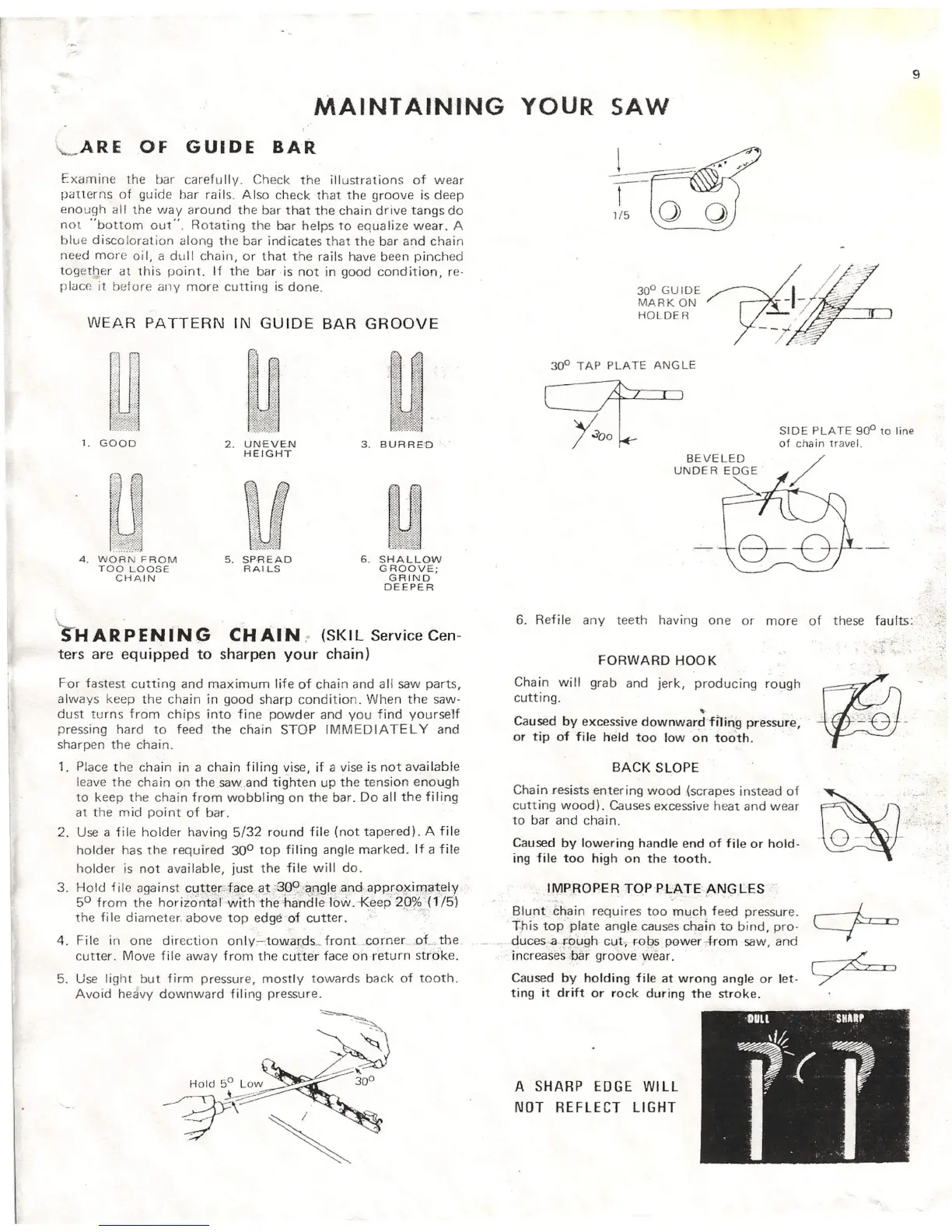
EXamine the bar carefully. Check the illustrations of wear
patterns of guide bar rails. Also check that the groove is deep
enough all the way around the bar that the chain drive tangs do
not "bottom out". Rotating the bar helps to equalize wear. A
blue discoloration along the bar indicates that the bar and chain
need more oil, a dull chain, or that the rails have been pinched
together at this point. If the bar is not in good condition, reo
place it before any more cutting is done.
WEj\..R PATTERN IN GUIDE BAR GROOVE
I
"~·,.'
--:
-:
.-:
.:
U
1. GOOD
2. UNEVEN
HEIGHT
3. BURRED
4. WORN FROM
TOO LOOSE
CHAIN
6. SHALLOW
GROOVE;
GRIND
DEEPER
5. SP·READ
RAILS
SH ARPENING CHAIN ~
(SKIL Service Cen-
ters are equipped to sharpen your chain)
For
fastest cutting and maximum life of chain and all saw parts,
always keep the chain in good sharp condition. When the saw-
dust turns from chips into fine powder and you find yourself
pressing hard to feed the chain STOP IMMEDIATELY and
sharpen the chain.
1. Place the chain in a chain filing vise, if a vise is not available
leave the chain on the sawand tighten up the tension enough
to keep the chain from wobbling on the bar. Do all the filing
at the mid point of bar.
2. Use a file holder having 5/32 round file (not tapered). A file
holder has the required 30
0
top filing angle marked. If a file
holder is not available, just the file will do.
3. Hold file against
cutter.face.at
·309.'angle.andappro,l<iO'lately
50 from the horizontal with the
+iand
ie low .Keep' 20%·(1'/5)
the file diameter. above top edge of cutter. . ..
4. File in one direction onlv=towards., fron.t .corner ot.. tbe
cutter. Move file away from the cutter face on return stroke.
5. Use light but firm pressure, mostly towards back of tooth.
Avoid heavy downward filing pressure.
1/5
0
9
30°
GUIDE ~~/~'~~;"~-
MARK ON - -
=r: --:
HOLDER ,/ -
---/
.
..:'
/ -==?
30°
TAP PLATE ANGLE
BEVELED
UNDER EDGE
~~
SIDE PLATE
90°
to
line
of chain travel.
6. Refile any teeth having one or more of these faults:
FORWARD HOOK
Chain will grab and jerk, producing rough
cutting.
...
Caused
by
excessivedownward filing pressure;
or tip of file held too Iowan tooth.
BACK SLOPE
Chain resists entering wood (scrapes instead of
cutting wood). Causesexcessiveheat and wear
to bar and chain.
Caused
by
lowering handle end of file or hold-
ing file too high on the tooth.
IMPROPER TOP PLATE AN9LES
Blunt. chain requires too much feed pressure.
.This top plate angle causeschain to bind, pro-
duces..a..r-9ugh cut,
·f-OGS
power-from saw, and
increasesbar groove wear.
Caused by holding file at wrong angle or let-
ting it drift or rock during the stroke.
~-
~-
>'" •
A SHARP EDGE WILL
NOT REFLECT LIGHT


 To Next Page