10
Neck resection technique when using the
stem in a challenging primary application
The femoral neck resection may need to
be modied in some challenging primary
applications such as angular and rotational
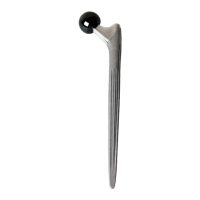
deformity. The conical, uted design is
particularly well-suited for these cases due to
the stability that is possible with this design.
The shoulder of the implant is intended to match
the center of the femoral head for average
anatomy, and this should correspond to the tip of
the greater trochanter. Templating will determine
the proper level of the prosthesis with respect
to the greater trochanter. Individual adjustments
should be made as necessary.
Causes of proximal femoral deformity or
dysplasia may require trochanteric osteotomy or
femoral osteotomy. The nal level of the shoulder
of the prosthesis may have to be adjusted in
these cases. Placement of the box osteotome
and insertion of the canal nder may have to be
modied in these cases.
Femoral preparation
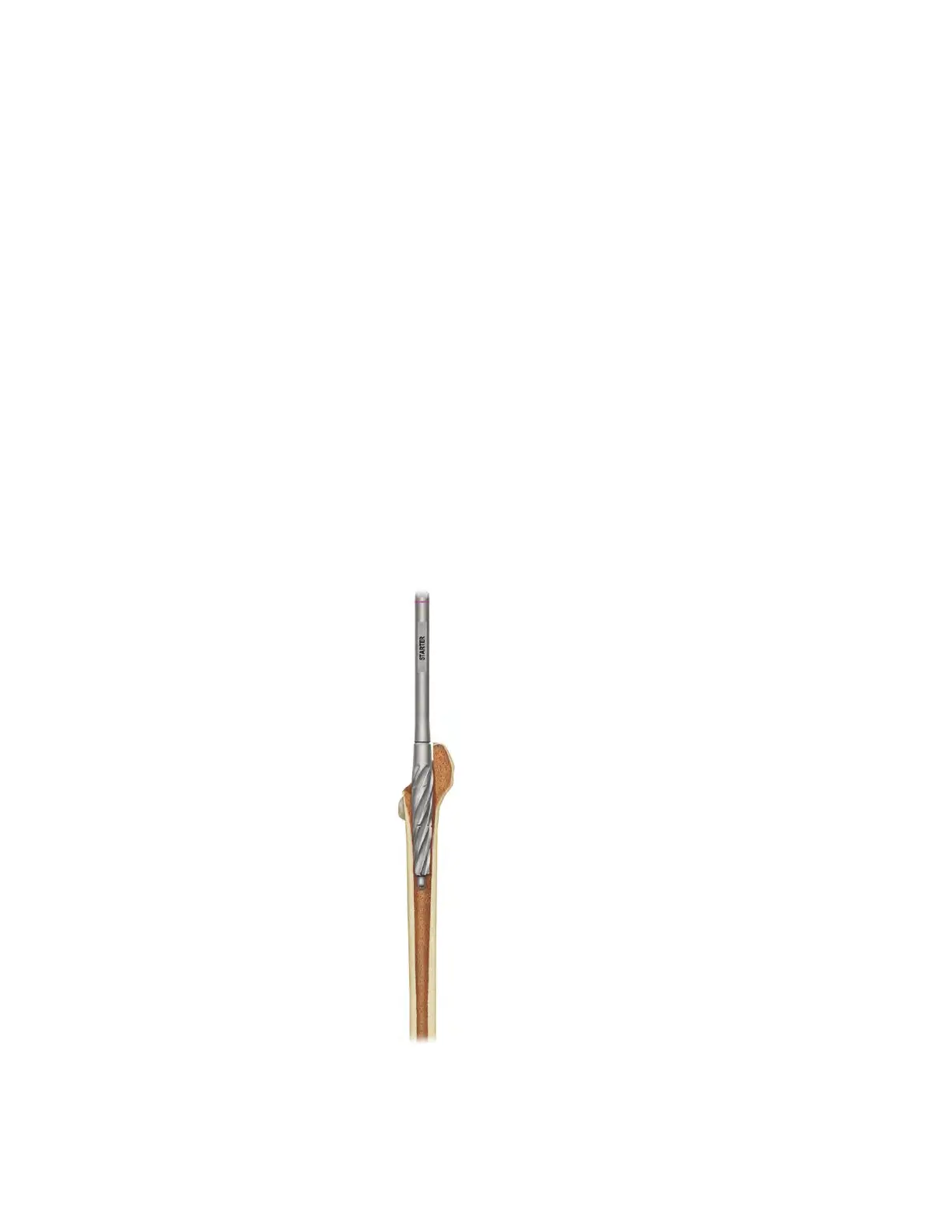
The starter reamer can be used to open the
proximal aspect of the femur to remove bone
from the greater trochanteric or medial calcar
regions. The presence of this bone will be largely
dependent on the stem previously implanted
and the stem removal process. Use the starter
reamer to remove lateral bone as shown in
(Figure 4). Removing lateral bone is important for
maintaining neutral stem placement.
Caution Align etched depth mark on starter
reamer to greater trochanter to ensure proper
proximal t of, while taking care not to fracture
potentially compromised bone.
Figure 4
Surgical Technique continued



 To Next Page